
Naira appreciates to ₦1,465/$ at parallel FX market
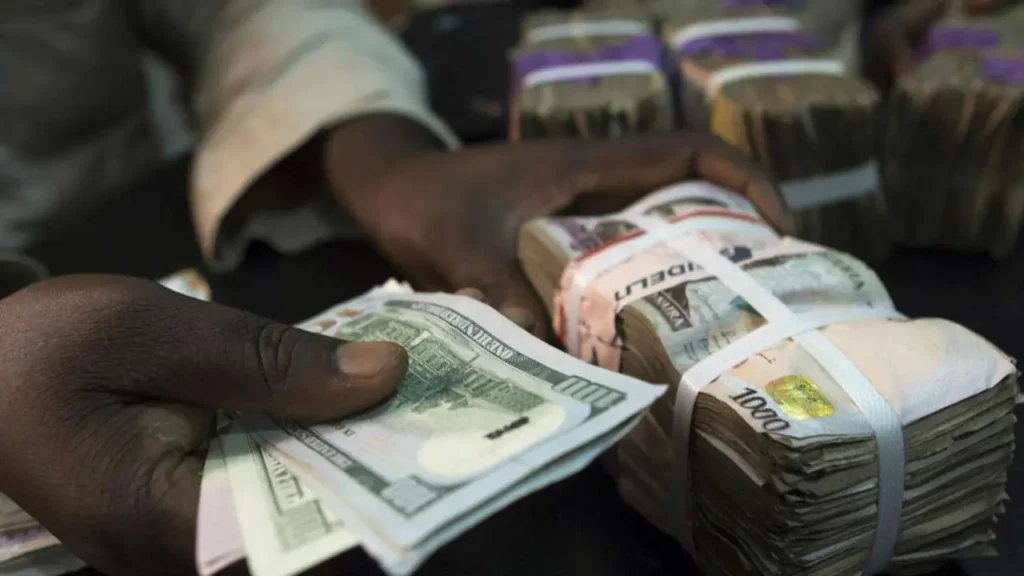

The Nigerian Naira showed renewed resilience on Tuesday, gaining ground in the informal foreign exchange (FX) market as it traded at ₦1,465 per US dollar in the parallel (black) market. This marks an improvement from the ₦1,470/$ level recorded at the close of last week, according to market data tracked by currency watchers.
In the official Nigerian Foreign Exchange Market (NFEM) the regulated window monitored by the Central Bank of Nigeria (CBN) the naira also firmed up, strengthening to ₦1,384.50/$1, compared with ₦1,391 per dollar previously. The divergence between the parallel and official rates widened marginally to about ₦80.5/$, a reflection of changing supply and demand dynamics across market segments.
Drivers of the Recent Appreciation
Several factors are contributing to the softer black‐market dollar rate:
- Improved Forex Liquidity: Market participants have attributed the relative strengthening of the naira to improved flows of foreign exchange into the market, ranging from official dollar sales to remittances and portfolio inflows sustaining supply. This has eased some pressure in the informal market, where rates often reflect real‐time supply shortages.
- Central Bank Interventions: The CBN’s active participation in the FX market including targeted dollar interventions through authorized dealers and innovative mechanisms such as the Electronic Foreign Exchange Matching System (EFEMS) launched earlier continues to support rate stability. While the impact varies across markets, these policies have helped to temper volatility.
- Market Confidence and Strategic Positioning: Positive sentiment among traders and investors, partly driven by improved transparency and policy communication from the apex bank, has also buoyed the naira in recent months. Analysts point to the narrowing gap between official and parallel rates as a sign of gradual convergence and market confidence.
A Broader FX Landscape
To understand today’s move, it’s important to look at recent exchange rate trends:
In late January, the naira held steady around ₦1,386/$1 in the official market and ₦1,465/$1 in the parallel, indicating a firming trend prior to Tuesday’s trading.
Historically, the currency has experienced wide fluctuations, with the parallel market at times trading higher, reflecting persistent demand pressure and supply constraints.
Despite these improvements, analysts caution that the FX market remains sensitive to external shocks such as shifts in global oil prices and dollar demand as well as domestic policy actions that influence capital flows and investor sentiment.
Implications for the Nigerian Economy
The strengthening of the naira in both official and parallel markets carries several potential implications:
- Inflationary Pressures: A firmer exchange rate could help moderate inflation by lowering the cost of imported goods and services, particularly where firms rely on dollar denominated inputs.
- Business Planning: Greater stability provides clearer signals for businesses engaged in international trade, encouraging investment and operational planning
- Consumer Confidence: For households and consumers reliant on remittances or dollar savings, a stronger naira supports purchasing power, especially as price pressures ease in FX-linked sectors.
However, the gap between official and parallel market rates remains a concern highlighting ongoing structural challenges in forex allocation and dollar access across segments of Nigeria’s economy.
What’s Next
Most market observers expect the naira to continue trading within the mid-₦1,300s to ₦1,400s range in the official market, with parallel rates adjusting in line with liquidity conditions and central bank interventions. Continued stability hinges on sustained FX inflows, policy consistency, and global economic conditions that influence Nigeria’s export earnings and dollar supply.
As the FX environment evolves, both policymakers and market participants will be monitoring key indicators — including external reserves, oil revenues, and capital flows — to gauge the durability of recent gains.












Comments