
Nigeria Hands Over Africa Energy Bank Facility, Clearing Path for April Operations
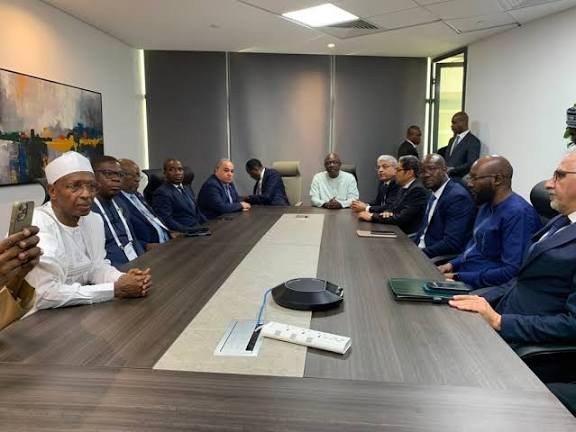

Nigeria’s long-anticipated Africa Energy Bank (AEB) is finally poised to become a reality, with operations expected to begin as early as April 2026 after the federal government officially handed over the bank’s headquarters to its key promoters.
This development marks a major milestone in Nigeria’s commitment to mobilizing financing for Africa’s energy sector and supporting the continent’s energy infrastructure at a time of shifting global capital flows.
At a ceremony in Abuja the Federal Government, through the Minister of State for Petroleum Resources (Oil), Senator Heineken Lokpobiri, handed over the fully completed and furnished headquarters of the Africa Energy Bank to the African Petroleum Producers’ Organisation (APPO) and the African Export-Import Bank (Afreximbank).
The event signifies the fulfilment of Nigeria’s obligations as host country and clears what had been a final major hurdle delaying the launch of the bank.
Lokpobiri, speaking at the official handover, said Nigeria had met all its commitments a process that included procurement, construction and furnishing of the bank’s headquarters. “Nigeria has fulfilled all her commitments, and the last commitment was this bank,” he said, underlining the government’s determination to see the institution operational.
The journey to this milestone was not straightforward: earlier attempts to construct suitable headquarters were abandoned due to issues with size and location. According to Lokpobiri, the first design was “too enormous” and the second was rejected over locational concerns, but the current facility met expectations and has now been formally transferred to APPO and Afreximbank.
“It is paid for and furnished, and Nigeria is happy to hand over this well-furnished Africa Energy Bank building to APPO and Afreximbank, who are the enablers of the bank,” he added.
The Africa Energy Bank is envisaged as a pan-African financial institution designed to address the persistent financing gap in Africa’s energy sector, particularly in oil and gas.
The gap has widened as traditional international financiers reduce support for fossil fuel projects in response to climate change commitments, creating a funding vacuum for traditional energy investments even as energy demand grows across the continent.
By filling this void, the AEB aims to catalyse investment in energy exploration, production and infrastructure. The headquarters handover is more than symbolic it clears the final procedural steps ahead of commencement, which includes shareholder meetings, board appointments and recruitment of staff ahead of full operations.
Officials now anticipate that after these preparatory steps, the institution could begin lending and financing activities by April 2026.
Nigeria’s hosting of the Africa Energy Bank headquarters also reflects its strategic role in Africa’s energy ecosystem. As a leading oil and gas producer on the continent, the country’s push to facilitate this bank underscores its long-standing interest in building indigenous solutions to structural financing challenges.
The bank itself is slated to support not just Nigeria but energy projects across multiple African countries, reinforcing the continent’s drive towards self-sustaining economic development.
While some reports suggest a June operational launch, with variation in timelines cited by different stakeholders and media outlets, the consensus remains that 2026 will be a breakthrough year for the institution’s formal takeoff.
What is clear is that the latest handover and completion of the headquarters after earlier delays reflect a renewed momentum behind pan-African financial infrastructure that could reshape energy investment flows in the years ahead.
In summary, the Africa Energy Bank’s imminent launch signals a major advance in Africa’s capacity to mobilize capital for energy development, reduce dependence on external financing, and strategically harness the continent’s resources.
With headquarters ready and key obligations fulfilled, all eyes are now on the AEB’s official operational debut a pivotal moment for Nigeria and Africa’s broader energy future.












Comments