
BUA Chairman Highlights Value Addition as Key to Sustainable African Economic Expansion
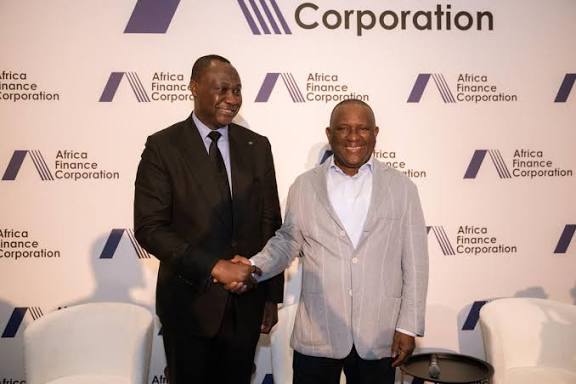

The Chairman of BUA Group, Abdul Samad Rabiu, has called for a decisive shift in Africa’s economic strategy from the export of raw materials to large-scale industrial processing and value addition, stressing that the continent’s long-term prosperity depends on its ability to transform its abundant natural resources into finished goods.
Rabiu made this call while speaking as Special Guest of Honour at a high-level forum hosted by the Africa Finance Corporation during the Mining Indaba 2026 in Cape Town.
Addressing policymakers, investors and industry leaders, Rabiu noted that Africa continues to export vast quantities of unprocessed commodities including minerals and agricultural produce while importing finished goods at significantly higher prices.
According to him, this long-standing structure limits job creation, weakens currencies, and deprives African economies of the full value embedded in their resources. He emphasized that the issue is not the absence of natural wealth but the shortage of processing capacity, infrastructure and coordinated industrial policy.
Drawing from BUA’s own experience in Nigeria’s cement industry, Rabiu recounted how the company transitioned from importing cement to mining limestone and producing cement locally at scale. At a time when Nigeria was heavily dependent on imports despite having large limestone deposits, BUA invested in domestic production facilities, a move that contributed to the country’s evolution into a net exporter of cement.
“The real challenge was not whether the raw materials existed, but whether we had the conviction and long-term financing to process them locally,” he said, underscoring the importance of patient capital and strategic vision.
He further highlighted the critical role development finance institutions play in supporting industrial expansion across Africa, noting that access to long-term funding remains a major constraint for manufacturers and processors.
Rabiu urged governments to create enabling environments through stable policies, improved power supply, efficient transport networks and incentives that encourage domestic value addition rather than the continued export of raw materials.
Analysts argue that as global supply chains continue to evolve, Africa has a strategic opportunity to position itself not merely as a source of commodities but as a competitive hub for processing and manufacturing.
Rabiu concluded that Africa’s industrial transformation will require deliberate collaboration between governments, private sector players and financial institutions. Without a structured shift toward value addition, he warned, the continent risks remaining at the lower end of global value chains.
However, with the right policies and sustained investment, Africa can unlock significant economic growth, boost foreign exchange earnings and create millions of jobs through homegrown industrial capacity.











Comments