
Nigeria Positions for Entry Into the Booming $800 Billion EV Market
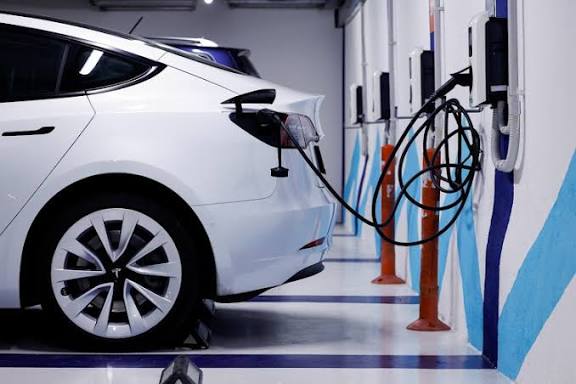

Nigeria is positioning itself to join the fast-expanding global electric vehicle (EV) industry a market estimated to be worth more than $800 billion and one of the most strategically important sectors of the clean-tech economy. With abundant critical mineral resources, growing domestic demand, supportive government policy, and early investments in local EV manufacturing and infrastructure, Africa’s largest economy is seeking to become a significant player in the worldwide EV value chain.
The Global EV Boom and Nigeria’s Strategic Opportunity
Global electric vehicle sales have surged in recent years, with more than 14 million units sold in 2023 and projections indicating annual sales could exceed 20 million units before the end of the decade. This rapid growth is powered by stringent climate commitments, government incentives, and a worldwide transition away from internal combustion engines. The collective value of the global EV ecosystem encompassing vehicles, batteries, charging infrastructure, and adjacent services is estimated at more than $800 billion.
For Nigeria, this represents a pivotal moment. The country is rich in rare earth elements and lithium, key components in EV batteries and motors. Geological surveys confirm the presence of commercially viable deposits of lithium in states like Nasarawa, Kogi, and Kaduna, as well as rare-earth minerals such as monazite resources that position Nigeria as a potential supplier for the global EV industry.
Policy Shifts and Government Support
Nigeria’s leadership has acknowledged the necessity of moving beyond exporting raw commodities to adding value through processing and manufacturing. The Minister of Solid Minerals Development has emphasized a shift towards local processing of critical minerals and linking this to EV manufacturing efforts.
Policy momentum has also emerged in broader automotive initiatives. The federal government has extended 10-year tax incentives for electric vehicle manufacturers to attract investment and spur local production, while broader automotive support policies aim to enhance technology transfer and develop Nigeria’s automotive ecosystem.
There is also political backing through large-scale events like the Abuja International Motor Fair, where the Vice President highlighted the government’s commitment to building a competitive automotive industry that supports EV growth alongside other alternative vehicle technologies.
Industry Innovation and Partnerships
Private sector innovators and international partners are beginning to plant roots across Nigeria’s EV landscape:
- South Korea Partnership: Recent agreements with South Korean development groups aim to establish what could be Africa’s first EV manufacturing factory on Nigerian soil — a transformative development that would anchor local production and export capabilities.
- Chinese Investment: Chinese automotive firms have been active in Nigeria, acquiring stakes in lithium operations and scaling EV deployment — reflective of Nigeria’s growing appeal to global EV supply chains.
- Local EV Deployment: Indigenous efforts, including domestic assembly of EVs and deployment of electric buses and cars in states like Nasarawa, demonstrate tangible progress in adoption and technology transfer.
What Needs to Happen
While the blueprint for Nigeria’s EV strategy is gaining clarity, critical factors remain:
- Scaling production capacity: Move from assembly of limited models to full-scale manufacturing.
- Infrastructure build-out: Expand charging networks and sustainable energy integration.
- Policy continuity and incentives: Maintain investor confidence with stable, long-term support.
- Capacity development: Train engineers, technicians, and business leaders for the EV economy.
- Strategic partnerships: Continue fostering collaborations that link Nigeria to global supply chains.










Comments