
President Tinubu Signs Order Redirecting NNPC Oil Proceeds to Federation Account
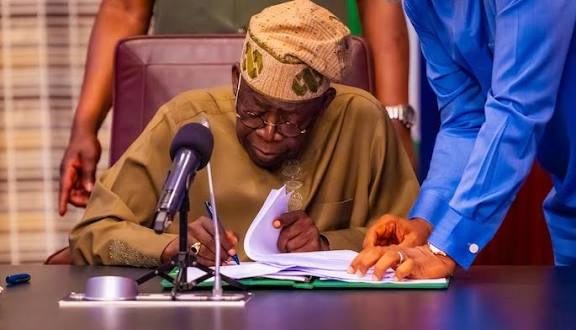

President Bola Ahmed Tinubu has signed a sweeping Executive Order that radically reshapes how Nigeria’s oil and gas revenues are collected, curbing longstanding deductions previously retained by the Nigerian National Petroleum Company Limited (NNPC Limited) and mandating that statutory oil sector proceeds be paid directly into the Federation Account for appropriation by the federal, state and local governments.
This landmark directive, signed on February 13, 2026 and gazetted the same day, is part of the administration’s broader strategy to strengthen fiscal transparency, boost government earnings and eliminate what it describes as “wasteful and duplicative deductions” that have eroded Nigeria’s revenue base under the existing Petroleum Industry Act (PIA) framework.
The Executive Order is anchored in Sections 5 and 44(3) of the 1999 Constitution, which vest ownership and control of all mineral resources, including crude oil and natural gas, in the Government of the Federation.
According to the statement released by the presidency, one of the key objectives of the directive is to “restore the constitutional revenue entitlements” of all tiers of government by ensuring that all revenues from oil and gas royalties, taxes, profit oil and profit gas are remitted directly to the Federation Account instead of being siphoned off through layered deductions implemented under the PIA.
Under the previous fiscal architecture, NNPC Limited retained up to 30% of profit oil and profit gas from Production Sharing Contracts, Profit Sharing Contracts and Risk Service Contracts as a management fee, on top of additional retention for working capital and a Frontier Exploration Fund.
These deductions, which the government now terms excessive, were seen as significantly reducing net remittances into the Federation Account, depriving the public sector of vital resources for budgeting, service delivery and development spending. The new order abolishes the 30% management fee and the Frontier Exploration Fund allocation, redirecting those funds straight into the Federation Account.
In addition to changes in oil revenue flows, the Executive Order tackles revenues from gas flaring penalties. Payments that were previously channelled into the Midstream and Downstream Gas Infrastructure Fund (MDGIF) will now be remitted to the Federation Account, with future spending from the MDGIF subject to public procurement rules.
The government justified this realignment by noting the existence of separate environmental remediation funds established under the PIA to support host communities affected by petroleum operations.
The directive also imposes new remittance rules on all operators and contractors under production sharing arrangements, requiring them to pay royalty oil, tax oil, profit oil, profit gas and any other government entitlements directly to the Federation Account effective from February 13.
This move signals a shift away from intermediary collection models and is expected to increase fiscal inflows to the Federation, which in turn can strengthen allocations to states and local governments through the Federation Account Allocation Committee (FAAC).
To oversee the implementation of this complex reform, President Tinubu has approved the establishment of a high-level Implementation Committee comprising key ministers, the Chairman of the Federal Inland Revenue Service, representatives from relevant ministries, and the Director-General of the Budget Office, who will serve as secretary. The committee’s mandate is to ensure coordinated execution of the order and address emerging challenges as the new remittance regime takes effect.
Tinubu and his team have framed the Executive Order as a response to structural leakages that have hindered Nigeria from fully benefiting from its hydrocarbon wealth. In statements explaining the rationale, the President emphasized the urgency of reforms to support national budgeting, debt sustainability, economic stability and the general welfare of Nigerians. He also signaled plans for a comprehensive review of the Petroleum Industry Act to align the legal and fiscal framework with the new revenue architecture.
The policy shift has significant implications for Nigeria’s fiscal landscape. By eliminating overlapping deductions and mandating direct remittances, the government anticipates increased revenue flows that could enhance funding for security, education, healthcare and infrastructure.
Analysts suggest the changes may also improve transparency and accountability in the management of the nation’s oil and gas wealth long a subject of debate among policymakers and civil society. While implementation will require concerted effort and regulatory rigor, the Executive Order marks one of the most substantial reforms to Nigeria’s oil revenue regime in recent years.











Comments