
Trump Announces 10% Universal Tariff on All US Imports
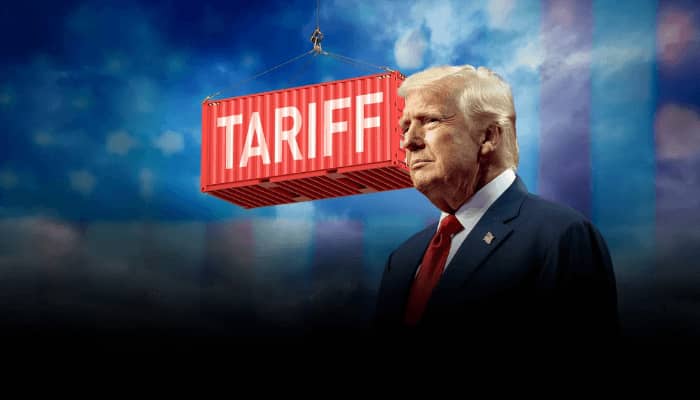

US President Donald Trump has announced that he will impose a 10 percent global tariff on imports into the United States, a dramatic move that follows a major legal setback and is poised to reshape international trade dynamics and have ripple effects for economies around the world, including Nigeria’s.
Late Friday, Trump unveiled a new tariff strategy after the U.S. Supreme Court struck down the sweeping global tariffs he had previously imposed, ruling that his use of emergency powers under the International Emergency Economic Powers Act (IEEPA) to unilaterally levy broad import duties was unconstitutional.
The Court’s 6-3 decision emphasized that only Congress has explicit authority to enact such tariffs, marking a significant blow to Trump’s signature trade policy.
Unbowed by the ruling, Trump signed an executive order under Section 122 of the Trade Act of 1974, a lesser-used statute allowing a temporary tariff when the U.S. is judged to face “large and serious” balance-of-payments issues.
The 10 percent global tariff will apply to most imports in addition to existing duties and is set to take effect within days, remaining in place for up to 150 days unless extended by Congress
The White House has framed the tariff as a pragmatic response to persistent trade imbalances and a bloated U.S. goods deficit, citing the need to protect domestic industries and strengthen American competitiveness.
At a press briefing and on social media, Trump made clear his intention to continue aggressive trade action, even as he criticized the Supreme Court for curbing his previous powers.
Economists warn that the new tariff regime though temporary could inject fresh uncertainty into already volatile global markets. Tariffs raise the cost of imported goods, potentially leading to higher prices for consumers and businesses in the United States and partner countries alike. Many nations reliant on exports to the U.S. for economic growth could see export revenues shrink as cost-sensitive buyers look for cheaper alternatives.
For Nigeria, a country whose export sector has already felt strain from U.S. tariff policies, the development could complicate trade prospects further. Previous tariff actions by the U.S. led to a notable reduction in Nigerian exports, with data showing a drop of about $615 million in exports in 2025 compared to the previous year, largely attributed to higher duties on Nigerian goods.
Non-oil export sectors such as agricultural products and manufactured items were especially vulnerable.
Trade and industry experts in Nigeria have warned that further duties on imports into the U.S. risk disrupting market access for Nigerian producers, undermining competitiveness and dampening investor confidence.
While Nigeria’s oil exports which account for the vast majority of foreign exchange earnings may be somewhat insulated due to existing global energy demand, non-oil segments that depend on tariff-free access under agreements like AGOA (African Growth and Opportunity Act) face renewed pressure.
The broader geopolitical implications are also significant. A global tariff regime signals a departure from decades of trade liberalization and multilateral cooperation, potentially triggering retaliatory measures from key economic partners. Past U.S. tariffs have prompted responses from China and others, exacerbating trade tensions and impacting supply chains.
As the 150-day tariff window opens, international markets, governments, and business leaders will be watching closely. For Nigeria, the priority for policymakers will be balancing domestic economic resilience with diplomatic engagement to mitigate potential fallout from the U.S. tariff policy shift, even as global trade uncertainty persists.










Comments