
Do Online Businesses Pay Tax in Nigeria?
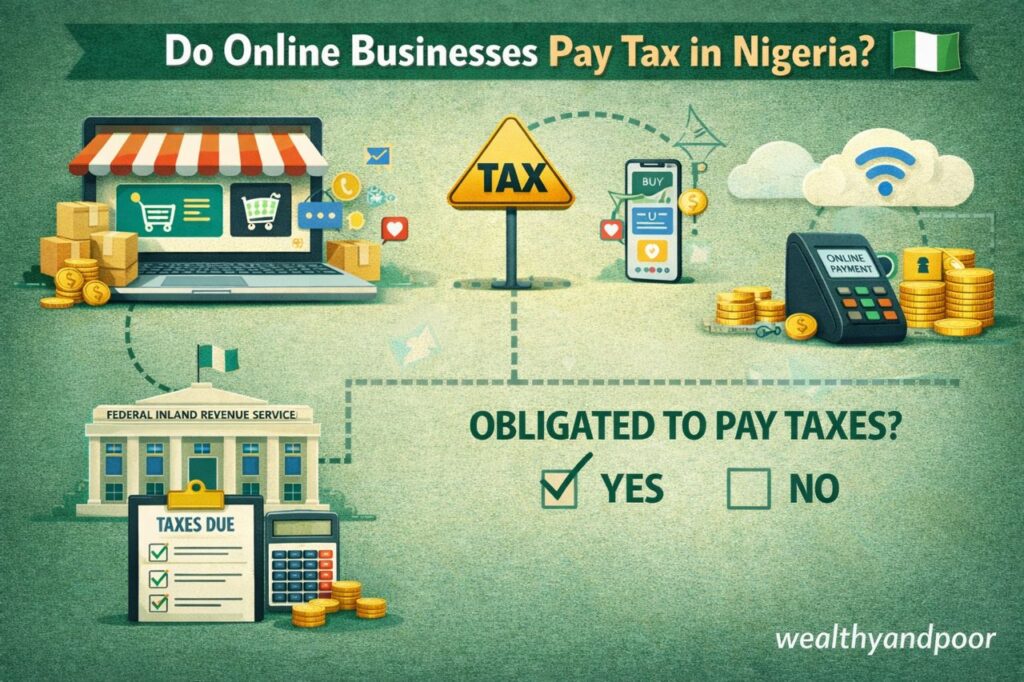

In Nigeria’s evolving digital economy, online businesses spanning e-commerce stores, digital service providers, freelancers, influencers, and app platforms are increasingly under the spotlight of tax authorities. With various legislative reforms and global trends pushing for broader taxation of digital activities, Nigerian online entrepreneurs must understand their obligations to avoid penalties and ensure sustainable growth. This article unpacks the key issues around taxation of online businesses in Nigeria.
The Legal Framework: Who Collects and What Applies
The Nigeria Revenue Service (NRS), formerly the Federal Inland Revenue Service (FIRS), is the federal agency mandated to assess and collect federal taxes in Nigeria, including those affecting online businesses. Tax laws have undergone significant reform in recent years, culminating in consolidated acts set to take effect from January 1, 2026, aimed at modernising tax administration and widening the tax base.
Under this framework, online businesses must consider a range of taxes not just a single “digital tax” depending on how the enterprise is structured and where value is created or consumed.
Core Tax Obligations for Online Businesses
Online business operators in Nigeria can face several tax liabilities. The most common include:
- Company Income Tax (CIT)
If your online business is registered as a company, it is subject to Company Income Tax on profits earned. The 2025 tax reforms retain income tax on corporate profits, and depending on size and turnover, companies may fall into different tax brackets with varying rates. - Value Added Tax (VAT)
Value Added Tax is a key indirect tax for online businesses:
- Local VAT: Nigerian businesses selling goods or services online must charge and remit VAT on taxable supplies.
- Expanded Digital VAT: Recent reforms explicitly impose VAT on digital services supplied to consumers in Nigeria, regardless of whether the supplier is local or foreign. This includes online advertising, streaming services, cloud computing, app stores, and other digital platforms, with a standard rate of 7.5% under the current VAT regime (subject to future legislative changes).
- Registration Requirement: Non-resident companies providing taxable services to Nigerian customers may be required to register for VAT, charge VAT on their invoices, and remit this to the NRS. The law in effect from 2026 aims to align foreign digital service providers with this obligation.
- Personal Income Tax (PIT)
Sole proprietors, individual freelancers, content creators, and influencers may fall under personal income tax, which is levied by state tax authorities based on income levels.
- Withholding Tax (WHT)
In certain transactions especially in B2B arrangements or when making payments to contractors businesses must deduct withholding tax and remit it to the appropriate revenue authority.
- Other Taxes
Depending on the nature of business activities, online sellers might also encounter other taxes such as Capital Gains Tax on asset disposals and local levies like commercial premises charges.
Non-Resident Digital Operations and ‘Significant Economic Presence’
One of the most notable developments in Nigeria’s tax landscape is how non-resident digital companies are treated. Nigerian tax law now recognises that physical presence is no longer the only trigger for tax liability significant economic presence (SEP) in Nigeria can also attract tax obligations.
Under past provisions and ongoing reforms, digital companies deriving income from Nigeria are considered to have taxable presence if they engage in activities like data transmission, online sales, or sustained digital interaction with Nigerian users, even without a physical office.
For example, e-commerce giants and digital platforms without local offices may need to register for tax, charge VAT, and remit taxes based on revenue attributable to Nigeria. This principle aims to capture online economic activity fairly and reduce revenue losses due to cross-border digital transactions.
Additionally, Nigeria’s updated tax laws tighten VAT obligations on digital services: foreign suppliers making taxable supplies to Nigerian consumers must register and charge VAT, and in some cases Nigerian customers are required to withhold and remit VAT where the supplier fails to do so.
Compliance, Digital Tools, and Penalties
Tax compliance for online businesses is increasingly digital. The NRS is introducing measures such as e- invoicing platforms to ensure real-time reporting and transparent tax administration for VAT-registered entities.
Failure to comply with registration, filing, or remittance requirements can attract penalties, interest, and in some cases administrative sanctions. The expanded law emphasises the need for proper record-keeping and regular tax filing, irrespective of whether a business operates entirely online.
Practical Takeaways for Online Entrepreneurs
Here are practical steps every online business operator in Nigeria should consider:
- Register Your Business and Get a Tax ID – Whether you’re a sole proprietor or company, obtain a Tax Identification Number (TIN) to formalise your operations.
- Understand Your Tax Type Obligations – Assess whether your business is subject to CIT, VAT, PIT, or WHT based on your legal structure and activities.
- Charge and Remit VAT Correctly For taxable supplies, ensure your pricing includes VAT and that you remit collected tax promptly.
- Monitor Foreign Taxation Rules Non-resident online platforms serving Nigerian users now face VAT and digital tax compliance requirements soon to be enforced .
- Stay Informed on Reforms Tax law is evolving rapidly; staying updated with NRS guidance can save you from compliance missteps.
Conclusion
The era when online businesses could operate without clear tax responsibilities in Nigeria is fading. With robust reforms, expanded VAT rules, and new legal tests like significant economic presence, online businesses of all sizes now face measurable tax obligations whether the enterprise is local or international.
Compliance strengthens your reputation, shields you from legal risk, and contributes to a more vibrant and equitable digital economy in Nigeria.












Comments