
How to Respond to a Tax Notice in Nigeria
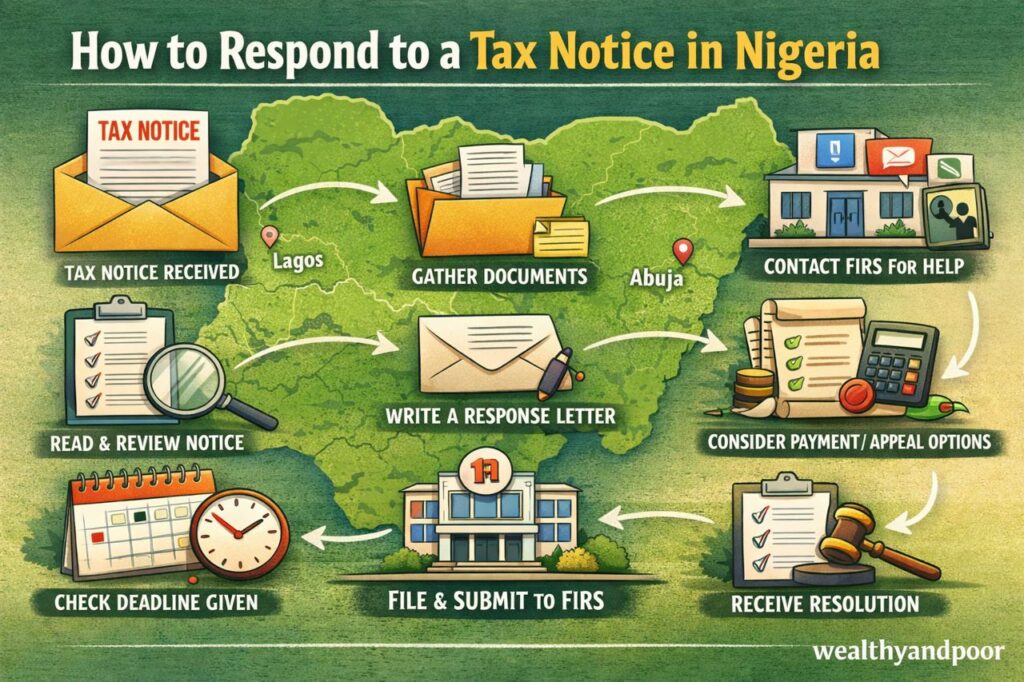

Receiving a tax notice from the Federal Inland Revenue Service (FIRS) or a state internal revenue service can be unsettling for individuals and businesses alike. However, a tax notice does not automatically mean wrongdoing or imminent penalties. In many cases, it is simply a request for clarification, additional information, or payment of an assessed tax liability.
Understanding how to respond appropriately is essential for protecting your rights, avoiding penalties, and maintaining tax compliance. This article explains what tax notices mean in Nigeria and outlines the practical steps taxpayers should take to respond effectively.
Understanding a Tax Notice in Nigeria
A tax notice is an official communication from a tax authority informing a taxpayer about an issue relating to their tax affairs. The notice may request information, notify the taxpayer of an assessment, or demand payment of taxes owed.
In Nigeria, tax notices are typically issued by FIRS for federal taxes such as Company Income Tax (CIT), Value Added Tax (VAT), and Withholding Tax (WHT), while state internal revenue services handle Personal Income Tax and other state-level taxes.
Common types of tax notices include:
- Notice of Assessment: Indicates the amount of tax the authority believes you owe.
- Demand Notice: Requests payment of outstanding tax liabilities.
- Audit Notification: Announces that the taxpayer’s records will be reviewed.
- Query Letter: Requests clarification or additional documentation.
In many cases, a notice of assessment may be followed by a demand notice if the taxpayer fails to respond or settle the assessed liability within the required period.
Step 1: Read the Notice Carefully
The first step is to carefully review the contents of the notice. Important details to note include:
- The type of notice
- The tax period involved
- The amount of tax assessed
- The deadline for response
- The reference number of the notice
Most tax authorities specify a response deadline. Missing this deadline could lead to additional penalties or enforcement actions, including sealing business premises in extreme cases.
Ensure the notice is genuine by verifying the sender and the contact details. Tax authorities typically communicate through official letters, emails, or recognized channels.
Step 2: Do Not Ignore the Notice
Ignoring a tax notice is one of the most costly mistakes taxpayers make. Failure to respond within the stipulated period may result in the tax authority treating the assessment as final.
In Nigeria, taxpayers generally have about 30 days to object to an assessment if they disagree with it. If no response is submitted within this period, the assessed amount may become payable along with additional penalties and interest.
Responding promptly signals cooperation and allows you to resolve issues before they escalate.
Step 3: Gather Relevant Documents
After reviewing the notice, assemble all documents that relate to the tax issue raised. These may include:
- Tax returns filed for the relevant period
- Bank statements
- Invoices and receipts
- Contracts and payment records
- Accounting books or financial statements
Maintaining organized records is critical because tax authorities may base assessments on estimated income if proper documentation is unavailable. Providing accurate records helps clarify discrepancies and may reduce the assessed tax liability.
Step 4: Prepare a Written Response
Your response should be professional, clear, and structured. A typical response letter should include:
- Acknowledgement of the notice
Reference to the notice number and date - A clear explanation addressing each issue raised
- Supporting documents or evidence
- Your position regarding the assessment
For example, if the tax authority believes your company underreported revenue, your response should explain the actual income figures and attach relevant records to support your position.
Providing precise and factual information improves the chances of resolving the issue quickly.
Step 5: File a Notice of Objection (If Necessary)
If you disagree with the assessment contained in the notice, Nigerian tax law allows taxpayers to file a formal Notice of Objection.
The objection must typically:
- Be submitted within 30 days of receiving the notice
- State the specific grounds for disputing the assessment
- Include relevant documentation to support the claim
Once submitted, the tax authority will review the objection and may revise the assessment if satisfied with the taxpayer’s explanation. If the dispute persists, the matter can proceed to the Tax Appeal Tribunal or courts for resolution.
Step 6: Engage a Tax Professional
Responding to a tax notice can involve complex legal and financial issues. Many businesses therefore engage professionals such as:
- Chartered accountants
- Tax consultants
- Tax lawyers
These professionals can help interpret the notice, prepare accurate responses, and represent the taxpayer during negotiations or audits.
Professional advice is especially important when large sums of money are involved or when the tax authority initiates an audit or investigation.
Step 7: Communicate with the Tax Authority
Maintaining open communication with the tax authority can often prevent disputes from escalating.
Taxpayers may contact FIRS through its official support channels, including designated helplines and email services for inquiries relating to tax returns, payments, and compliance matters.
In some cases, a meeting with tax officials may help clarify misunderstandings and facilitate a settlement agreement.
Step 8: Pay Any Confirmed Liability
If, after reviewing the notice, you agree with the tax assessment, the most practical step is to settle the liability promptly.
Early payment helps avoid:
- Additional penalties
- Interest charges
- Enforcement actions
Once payment is made, ensure you obtain an official receipt and keep copies of all correspondence for future reference.
Conclusion
Tax notices are a routine part of tax administration and should not automatically be viewed as a sign of wrongdoing. What matters most is how the taxpayer responds.
By carefully reviewing the notice, gathering relevant documents, submitting a well-structured response, and seeking professional advice when necessary, individuals and businesses can resolve tax issues efficiently.
In Nigeria’s evolving tax environment where authorities are increasingly using digital data and compliance monitoring timely responses and accurate recordkeeping are essential for maintaining a smooth relationship with tax authorities.
Ultimately, treating tax notices seriously and responding promptly is one of the most effective ways to avoid costly penalties and ensure long-term compliance.












Comments