
Nigeria Targets $50 bn+ Trade Deals at 2027 Intra-African Trade Fair in Lagos
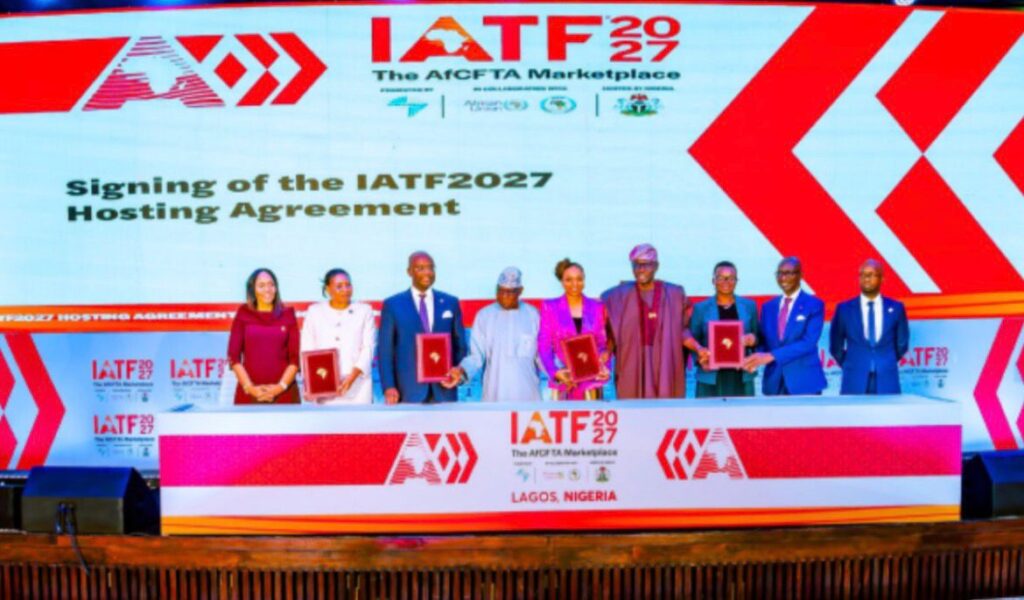

Nigeria is positioning itself to unlock more than $50 billion in trade and investment deals when it hosts the 2027 Intra-African Trade Fair (IATF) in Lagos, in what government officials describe as a strategic move to deepen continental commerce under the African Continental Free Trade Area (AfCFTA) framework.
The Federal Government formally signed the hosting rights agreement with the African Export-Import Bank (Afreximbank) for the 2027 edition of the trade fair, marking a major milestone in Nigeria’s drive to strengthen its role as a regional trade hub and expand intra-African trade.
The fair, scheduled to take place in November 2027, is expected to attract tens of thousands of participants including policymakers, investors, manufacturers, and entrepreneurs from across the African continent and beyond.
Nigeria Signs Hosting Agreement with Afreximbank
At the official signing ceremony held in Lagos, the Nigerian government reaffirmed its commitment to advancing trade integration across Africa.
President Bola Ahmed Tinubu, represented by the Minister of Industry, Trade and Investment, Dr. Jumoke Oduwole, said the upcoming trade fair is projected to generate over $50 billion in trade and investment transactions, building on the success of previous editions.
According to the government, the IATF has already proven to be one of Africa’s most influential business platforms. Earlier editions of the fair have collectively generated more than $167 billion in trade and investment deals, highlighting the growing importance of intra-African commerce.
The fourth edition of the trade fair held in Algeria alone recorded $48.3 billion in transactions, setting a benchmark the Nigerian government hopes to surpass when Lagos hosts the event in 2027.
What the Intra-African Trade Fair Represents
The Intra-African Trade Fair (IATF) is a flagship initiative aimed at boosting trade among African nations under the AfCFTA, the world’s largest free trade area by number of participating countries.
The event brings together:
- African manufacturers and exporters
- International investors
- Trade promotion agencies
- Government officials
- Financial institutions
Through exhibitions, conferences, and deal-making sessions, the fair provides a marketplace where businesses can sign contracts, showcase products, and form strategic partnerships.
The initiative is also expected to accelerate Africa’s push toward economic integration by encouraging countries to trade more with one another rather than relying heavily on external markets.
Lagos Positioned as Africa’s Trade Gateway
Nigeria’s commercial capital, Lagos, was selected as the host city for the 2027 fair due to its strong economic infrastructure, large consumer market, and growing role as a financial and logistics hub in West Africa.
The Lagos State Government has expressed readiness to host the event and leverage it to showcase the state’s economic potential and investment opportunities.
Governor Babajide Sanwo-Olu assured stakeholders that the state will work closely with federal authorities and Afreximbank to ensure the event delivers significant economic value for Nigeria and the continent.
Hosting the fair also reflects Lagos’ historical role in promoting African economic cooperation. The city was previously the venue where African leaders adopted the Lagos Plan of Action, a landmark strategy aimed at reducing dependence on raw material exports and promoting industrialisation across Africa.
Expected Participation and Economic Impact
The 2027 edition of the IATF is projected to be one of the largest business gatherings ever hosted in Africa.
According to organisers, the event is expected to attract:
- More than 100,000 participants
- Thousands of exhibitors from African countries
- Global investors seeking African opportunities
- Trade institutions and financial organisations
These stakeholders are expected to negotiate trade contracts, investment partnerships, and supply chain agreements that could exceed $50 billion in value.
For Nigeria, the event could translate into:
- Increased foreign direct investment
- Expansion of non-oil exports
- Job creation in trade and logistics
- Greater integration of Nigerian businesses into African markets
- Nigeria’s Strategy for Expanding Intra-African Trade
The federal government has intensified efforts to position Nigerian businesses to benefit from the AfCFTA framework.
Recent initiatives highlighted by policymakers include:
- The AfCFTA Air Cargo Corridor, designed to improve export logistics and reduce shipping delays.
- Digital trade platforms aimed at simplifying cross-border commerce.
- Policy reforms to boost manufacturing and non-oil exports.
These measures are expected to help Nigerian exporters access new markets across Africa and compete effectively within the continental free trade area.
Opportunities for Businesses and Investors
Experts say the 2027 trade fair could open new opportunities across several sectors including:
- Manufacturing
- Agriculture and agro-processing
- Energy and infrastructure
- Technology and digital services
- Creative industries
Businesses attending the event will have access to deal-making platforms, networking opportunities, investment forums, and export promotion sessions, enabling companies to expand their reach across African markets.
A Catalyst for African Economic Integration
Beyond the projected $50 billion in deals, policymakers believe the event will play a broader role in shaping the future of African trade.
By bringing together governments, financiers, and private sector players, the IATF aims to accelerate the goals of the AfCFTA including reducing trade barriers, improving supply chains, and boosting intra-African trade volumes.
For Nigeria, hosting the event is also a chance to strengthen its leadership role in driving Africa’s economic integration and industrial development.
Conclusion
Nigeria’s successful bid to host the 2027 Intra-African Trade Fair in Lagos marks a significant step toward strengthening regional commerce and attracting large-scale investment to the continent.
With the Federal Government targeting over $50 billion in trade deals, the event could become one of the most consequential economic gatherings in Africa’s recent history.
If successfully executed, the fair will not only boost Nigeria’s trade profile but also reinforce Africa’s broader ambition of building a more integrated and resilient continental economy.








Comments