
What Happens If You Don’t File Tax in Nigeria?
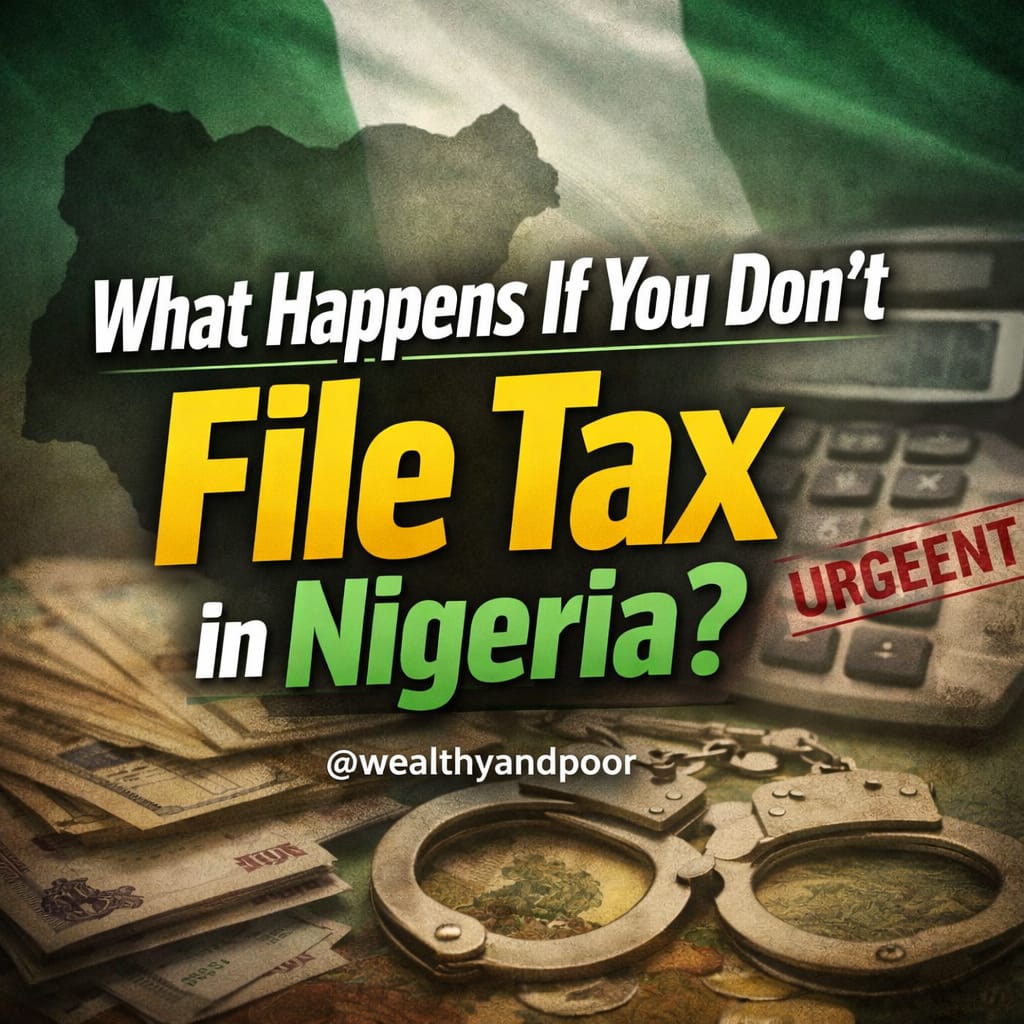

Failing to file your tax in Nigeria is not just a minor oversight , it carries real financial, legal, and even criminal consequences. With recent reforms in Nigeria’s tax system and stricter enforcement by authorities like the Federal Inland Revenue Service (FIRS), compliance is now taken more seriously than ever. If you ignore your tax obligations, here’s exactly what happens.
Non-filing of tax returns immediately attracts financial penalties. Under Nigeria’s updated tax laws, individuals or businesses that fail to file their tax returns are liable to pay ₦100,000 in the first month of default and ₦50,000 for every additional month the failure continues. This means the longer you delay, the more the penalty accumulates, often becoming significantly higher than the original tax owed.
In addition to penalties for non-filing, unpaid taxes also attract extra charges. Once your tax remains unpaid after the due date, a penalty of at least 10% of the tax amount is added, alongside interest calculated at the prevailing rate set by the Central Bank of Nigeria. This combination of penalties and interest can quickly turn a manageable tax bill into a serious financial burden.
Another major consequence is enforcement action by tax authorities. The law empowers tax agencies to recover unpaid taxes through aggressive measures. This can include freezing bank accounts, placing liens on assets, or taking legal steps to recover the debt. In some cases, businesses may also be denied access to government contracts or licenses due to non-compliance.
Failure to file taxes can also expose you to audits and investigations. When your tax records are missing or inconsistent, you are more likely to be flagged by tax authorities. This can lead to a full review of your financial activities, during which additional liabilities, penalties, or discrepancies may be discovered.
Beyond financial consequences, non-compliance can escalate into criminal liability. Under Nigerian tax laws, failure to file tax returns or comply with tax obligations may be treated as a criminal offence. Offenders risk fines, prosecution, and even imprisonment in serious cases. For example, certain offences can attract fines up to ₦1,000,000 or imprisonment of up to three years, or both. In some instances, even shorter jail terms or additional fines may apply depending on the nature of the default.
There are also indirect consequences that many taxpayers overlook. Not filing your taxes can limit your financial credibility. In Nigeria today, tax clearance certificates are often required for important transactions such as applying for loans, bidding for contracts, or processing visas. Without proper tax records, you may be locked out of these opportunities.
For businesses, the impact is even more severe. Companies that fail to comply with tax filing requirements may face operational restrictions, reputational damage, and in extreme cases, closure by regulatory authorities. Directors and key officers of such companies can also be held personally liable for tax offences committed by the business.
Ultimately, failing to file your tax in Nigeria creates a cycle of penalties, legal exposure, and financial strain that becomes harder to escape over time. What may start as a simple delay can quickly escalate into heavy fines, enforcement actions, and legal consequences. Staying compliant by filing your tax returns on time is not just a legal obligation—it is a critical step toward maintaining financial stability and avoiding unnecessary trouble with tax authorities.










Comments