
What To Do If FIRS Contacts You
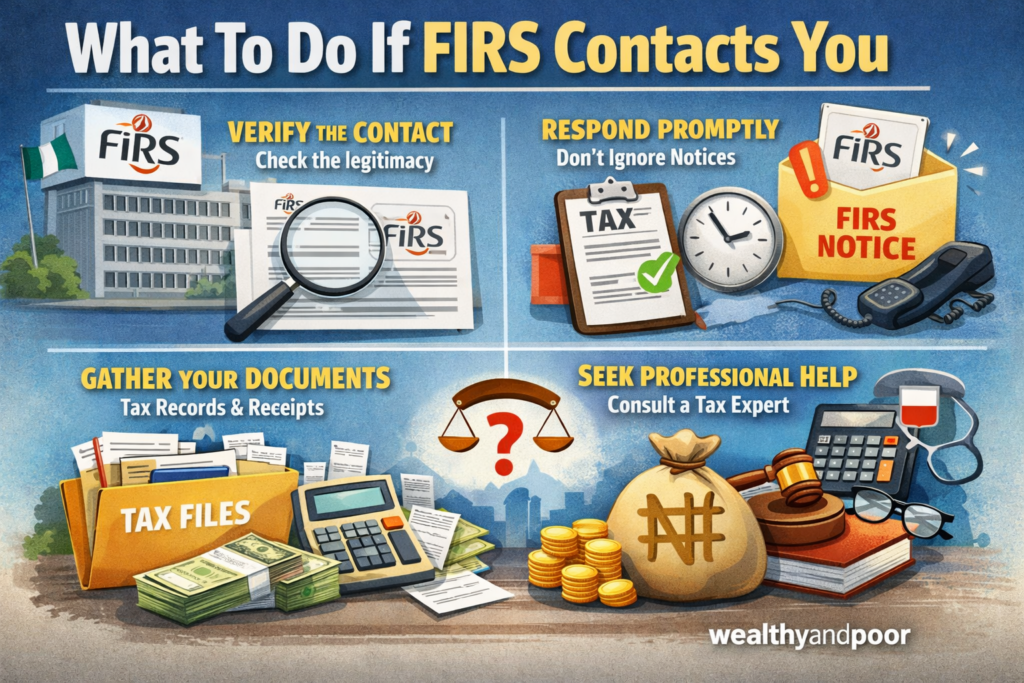

In Nigeria’s evolving tax environment, receiving a message, call, or letter from the Federal Inland Revenue Service (FIRS) can trigger anxiety for individuals and business owners alike. For many, it raises immediate questions: Have I done something wrong? Am I about to be penalised? What should I do next?
The reality, however, is more nuanced. FIRS contact does not automatically imply wrongdoing. In many cases, it is part of routine tax administration ranging from verification requests to compliance checks. Understanding how to respond calmly and correctly can save you from unnecessary stress, penalties, or costly mistakes.

Why FIRS May Contact You
Before reacting, it is important to understand why FIRS is reaching out. Common reasons include:
- Tax compliance checks (e.g., verifying filings or payments)
- Outstanding tax liabilities or discrepancies
- Requests for documentation such as invoices or financial records
- Tax audits or investigations
- TIN-related issues or updates
Nigerian tax law requires individuals and businesses to register, file returns, and pay taxes when due. Failure to comply can attract penalties, making FIRS outreach a standard enforcement tool.
- Stay Calm and Don’t Panic
The first rule is simple don’t panic.
Many taxpayers make poor decisions out of fear, such as ignoring the message or rushing into payments without proper verification. Both can worsen the situation.
Instead, treat the contact as a formal administrative process. Even in audit situations, you typically have time to respond, provide clarification, or correct errors.
- Verify That the Contact Is Genuine
Nigeria has seen a rise in impersonation and financial scams. Fraudsters sometimes pose as government agencies, including tax authorities, to deceive unsuspecting individuals.
A legitimate FIRS communication will usually come through:
- Official email domains (e.g., @firs.gov.ng)
- Recognised phone lines or help desks
- Formal letters with verifiable references
You can independently confirm by contacting FIRS through official channels such as their help desk or office address.
Be cautious of:
- Requests for urgent payment into personal accounts
- Messages asking for sensitive banking details
- Unsolicited “offers” or threats outside official procedures
As a general financial safety rule, never send money or personal information to unverified contacts, as fraud schemes often rely on urgency and pressure tactics.
- Understand the Nature of the Request
Once you confirm authenticity, carefully review the message or notice.
Ask yourself:
- Is it a query, notice of assessment, or audit request?
- What specific tax period or transaction is involved?
- What documents or actions are required?
Do not assume guilt. In many cases, the issue may be:
- A simple filing error
- A mismatch in reported figures
- Delayed remittance by a third party
- Clarity at this stage determines your next steps.
- Gather Your Financial Records
Documentation is your strongest defence in any tax-related engagement.
Relevant documents may include:
- Tax returns and payment receipts
- Bank statements
- Invoices and contracts
- Payroll records (for employers)
- VAT or withholding tax schedules
Having accurate records allows you to:
- Respond confidently
- Correct any discrepancies
- Avoid unnecessary penalties
- Engage FIRS Professionally
Avoid ignoring FIRS communications. Non-response can escalate the situation into penalties or enforcement actions.
Instead:
- Respond within the specified timeframe
- Be clear, factual, and professional
- Provide requested documents promptly
- Ask for clarification where necessary
Remember, tax authorities are more likely to cooperate with taxpayers who show willingness to comply.
- Consult a Tax Professional
If the issue is complex such as an audit, large assessment, or legal dispute it is wise to consult:
- A tax consultant
- A chartered accountant
- A tax lawyer
- Professional guidance can help you:
- Interpret tax laws correctly
- Negotiate assessments
- Avoid overpayment or penalties
- Pay Any Verified Liabilities (If Applicable)
If, after review, you genuinely owe taxes:
- Pay through official FIRS channels only
- Keep evidence of payment
- Request confirmation or receipt
Delaying payment can lead to additional penalties or enforcement measures, including account restrictions or legal action.
- Learn and Strengthen Future Compliance
A FIRS contact whether minor or serious should serve as a wake-up call for better tax management.
Going forward:
- File returns on time
- Maintain accurate records
- Use accounting systems or professionals
- Stay updated on tax regulations
Proactive compliance is always cheaper than reactive correction.
The Bigger Picture: Tax Compliance in Nigeria
Nigeria continues to push for stronger tax enforcement as part of its revenue strategy. Reports have shown that compliance gaps remain significant, even among high-income earners, highlighting the government’s increasing focus on enforcement and accountability.
For taxpayers, this means one thing: greater visibility and scrutiny are here to stay.
Conclusion
Being contacted by FIRS is not the end of the road it is often the beginning of a process that can be resolved smoothly with the right approach.
The key principles are simple:
Verify authenticity
Stay organised
Respond promptly
Seek professional help when needed
Handled correctly, a FIRS inquiry can move from a stressful experience to a manageable administrative task and even an opportunity to strengthen your financial discipline.












Comments