
How to Clear Tax Debt in Nigeria
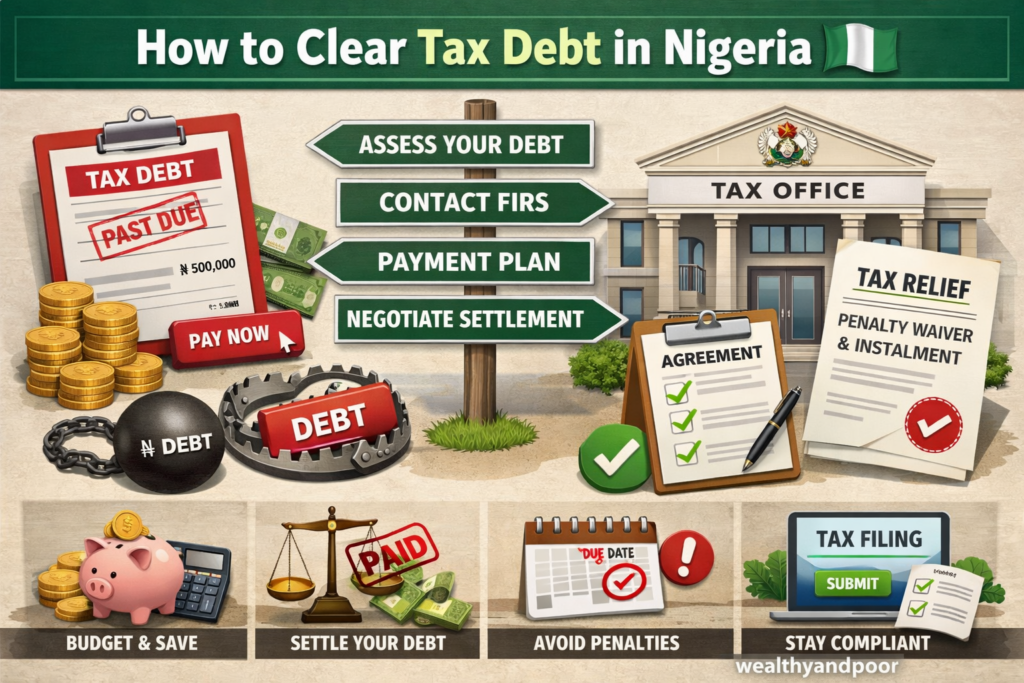

Tax debt is an increasingly common reality for individuals and businesses in Nigeria. Whether caused by cash flow challenges, poor record-keeping, or misunderstandings of tax obligations, unresolved tax liabilities can quickly escalate into penalties, enforcement actions, and reputational damage. In a country where tax compliance remains relatively low especially among high income earners clearing outstanding tax debt is not just a legal necessity but also a strategic financial decision.
This article provides a clear, structured guide on how to resolve tax debt in Nigeria efficiently and responsibly.
Understanding Tax Debt in Nigeria
Tax debt arises when a taxpayer fails to pay taxes due within the stipulated time. This may include:
- Personal Income Tax (PIT)
- Company Income Tax (CIT)
- Value Added Tax (VAT)
- Withholding Tax (WHT)
In Nigeria, tax authorities such as the Federal Inland Revenue Service (FIRS) and State Internal Revenue Services have the legal backing to enforce payment. Accumulated tax debt typically attracts penalties, interest, and in severe cases, enforcement actions such as bank account freezes or asset seizures.
- Confirm and Reconcile Your Tax Liability
The first step in clearing tax debt is to determine exactly how much you owe. This involves:
- Reviewing tax assessments issued by the tax authority
- Comparing them with your financial records
- Identifying discrepancies or errors
It is not uncommon for tax assessments to include estimated figures, especially where proper filings were not made. Reconciling your records ensures that you are not overpaying or disputing inaccurate liabilities.
- Engage the Relevant Tax Authority Early
Ignoring tax debt is one of the most costly mistakes taxpayers make. Early engagement with the relevant authority whether FIRS or a state tax body can significantly improve your outcome.
When you initiate contact:
- You demonstrate willingness to comply
- You may qualify for negotiations or concessions
- You reduce the risk of aggressive enforcement
Given Nigeria’s tax compliance challenges, authorities are often open to dialogue, especially when taxpayers show genuine intent to settle their obligations.
- Apply for a Payment Plan or Installment Arrangement
If you cannot pay your tax debt in full, you can request a structured payment plan. Many tax authorities in Nigeria allow installment payments based on:
- Your financial capacity
- The size of the debt
- The duration of default
A well-prepared proposal supported by financial statements can help you secure favorable terms. This approach allows businesses to remain operational while gradually clearing their liabilities.
- Request Penalty and Interest Waivers
Penalties and interest can significantly increase the total tax debt. However, Nigerian tax authorities occasionally grant waivers under specific conditions, especially during tax amnesty programs or voluntary disclosure initiatives.
To improve your chances:
- Be transparent about your financial situation
- Provide accurate documentation
- Show commitment to future compliance
While waivers are not guaranteed, they can substantially reduce your overall burden.
- Take Advantage of Tax Amnesty Programs
From time to time, the Nigerian government introduces tax amnesty programs designed to encourage voluntary compliance. These programs typically offer:
- Reduced penalties
- Partial interest forgiveness
- Flexible payment terms
Such initiatives are particularly beneficial for long-standing tax debts. They also align with broader efforts to improve Nigeria’s tax-to-GDP ratio, which remains relatively low due to widespread non-compliance.
- Correct Filing Gaps and Submit Outstanding Returns
In many cases, tax debt arises not just from unpaid taxes but from unfiled returns. Clearing your debt requires bringing your tax filings up to date.
This may involve:
- Filing overdue tax returns
- Regularizing your tax status
- Updating your taxpayer records
Proper documentation helps prevent future disputes and ensures that your liability is accurately assessed.
- Seek Professional Tax Advice
Tax laws and enforcement procedures in Nigeria can be complex. Engaging a tax consultant, accountant, or legal expert can help you:
- Negotiate better terms with tax authorities
- Identify errors in assessments
- Structure payments efficiently
Professional guidance is especially important for businesses with large or complicated tax exposures.
- Avoid Future Tax Debt
Clearing your tax debt is only half the battle; staying compliant is equally important. To avoid falling back into debt:
- Maintain accurate financial records
- File returns on time
- Set aside funds for tax obligations
- Use digital tax platforms where available
Improving compliance is critical not just for individuals but for the broader economy. Reports show that a significant portion of Nigeria’s wealthy population avoids tax obligations, contributing to revenue gaps and inequality . Strengthening compliance at all levels helps create a more sustainable fiscal system.
The Consequences of Ignoring Tax Debt
Failing to address tax debt can lead to serious consequences, including:
- Accumulation of penalties and interest
- Legal proceedings
- Business disruption
- Damage to creditworthiness and reputation
In extreme cases, enforcement actions can cripple business operations or lead to asset forfeiture.
Conclusion
Clearing tax debt in Nigeria requires a proactive, structured approach. From reconciling liabilities and engaging tax authorities to negotiating payment plans and leveraging amnesty programs, taxpayers have multiple pathways to resolve their obligations.
The key is early action. The longer tax debt is ignored, the more complex and expensive it becomes. By taking deliberate steps and seeking professional guidance where necessary, individuals and businesses can not only clear their tax debt but also build a more compliant and financially stable future.











Comments