
How to Confirm Your Tax Status in Nigeria
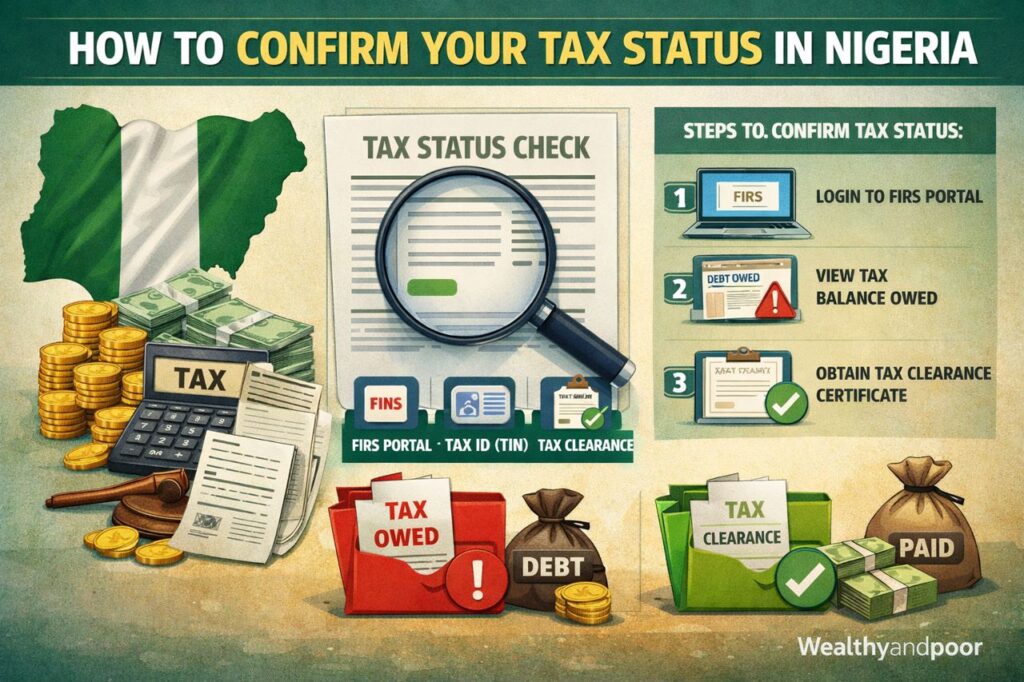

In Nigeria’s evolving tax environment, confirming your tax status is no longer optional it is a financial necessity. Whether you are a salaried employee, business owner, freelancer, or investor, understanding your standing with the tax authorities helps you avoid penalties, access financial opportunities, and maintain compliance with the law.
With growing concerns about low compliance reports suggest that a significant number of eligible taxpayers are outside the tax net the government has intensified enforcement. As a result, individuals and businesses must take proactive steps to verify their tax position.
This article explains, in clear terms, how to confirm your tax status in Nigeria and what to do if issues arise.
What Does “Tax Status” Mean?
Your tax status refers to your standing with the relevant tax authority primarily whether you are:
- Properly registered as a taxpayer
- Filing your tax returns as required
- Paying the correct amount of tax
- Free from outstanding tax liabilities
In Nigeria, personal income tax is typically handled by State Internal Revenue Services, while companies are regulated by the Federal Inland Revenue Service (FIRS).
Why It Is Important to Confirm Your Tax Status
Before diving into the process, it is important to understand why this matters.
- Avoid penalties and legal issues: Non-compliance can lead to fines, audits, or prosecution.
- Access financial services: Banks and lenders often request proof of tax compliance.
- Government contracts: Many public sector opportunities require a valid Tax Clearance Certificate (TCC).
- Peace of mind: Knowing your records are accurate prevents unexpected liabilities.
Step-by-Step Guide to Confirming Your Tax Status
- Verify Your Tax Identification Number (TIN)
Your Tax Identification Number (TIN) is the foundation of your tax record. Without it, you are effectively invisible in the tax system.
You can confirm your TIN by:
- Checking official tax documents
- Using online verification portals provided by tax authorities
- Contacting your state tax office
If you do not have a TIN, you must register immediately through the appropriate tax authority.
- Check Your Filing History
Once your TIN is confirmed, the next step is to review your filing records.
Ensure that:
- You have filed tax returns for all relevant years
- Your filings reflect accurate income and deductions
- There are no missing or incomplete submissions
For employees under the Pay-As-You-Earn (PAYE) system, your employer typically handles filings. However, it is still your responsibility to confirm that this has been done correctly.
- Confirm Payment Records
Filing alone is not enough payments must match your declared income.
To verify your payment status:
- Review receipts or payment confirmations
- Check bank records linked to tax payments
- Use official tax portals where available
Discrepancies between filings and payments are one of the most common causes of tax disputes.
- Obtain a Tax Clearance Certificate (TCC)
A Tax Clearance Certificate is the most reliable proof of your tax status in Nigeria.
It confirms that:
- You have filed your returns
- You have paid your taxes for the relevant period (usually the last three years)
You can apply for a TCC through your state tax authority or FIRS (for companies). If there are outstanding issues, your application may be delayed or denied this is often the first sign of a problem.
- Use Online Tax Platforms
Many tax authorities in Nigeria now offer digital platforms that allow taxpayers to:
- Check their tax profile
- View payment history
- Track outstanding liabilities
These platforms provide a faster and more transparent way to confirm your tax status without visiting an office physically.
- Contact the Relevant Tax Authority
If you are unsure about your records, the safest approach is to contact the appropriate authority directly.
You may need to:
- Visit a tax office
- Submit a formal inquiry
- Provide supporting documents
This is particularly important if you suspect errors or discrepancies in your records.
Common Issues You May Discover
When confirming your tax status, several issues may surface:
- Unpaid tax liabilities: Outstanding taxes from previous years
- Incorrect assessments: Overstated income or duplicated charges
- Missing filings: Years where returns were not submitted
- Employer non-compliance: PAYE deductions not remitted
Identifying these early allows you to resolve them before they escalate into penalties.
What to Do If There Is a Problem
If your tax status is not in good standing, take immediate action:
- Request a statement of account from the tax authority
- File any outstanding returns
- Settle unpaid taxes or negotiate a payment plan where applicable
- Submit corrections if errors are identified
Prompt resolution can help you avoid additional fines and enforcement actions.
The Bigger Picture: Why Compliance Matters
Nigeria’s tax system is under increasing scrutiny, with authorities seeking to expand the tax base and improve compliance. Reports indicate that a large portion of potential taxpayers remain outside the system, limiting government revenue and public service delivery .
For individuals, this means greater enforcement and fewer opportunities to remain unnoticed. Confirming your tax status is not just about compliance it is about staying ahead of regulatory changes.
Conclusion
Confirming your tax status in Nigeria is a straightforward but essential process. By verifying your TIN, reviewing your filings and payments, and obtaining a Tax Clearance Certificate, you can ensure that your records are accurate and up to date.
In a system that is becoming increasingly digitised and enforcement-driven, proactive compliance is the smartest financial decision you can make.








Comments