
How to Get a Tax Clearance Certificate
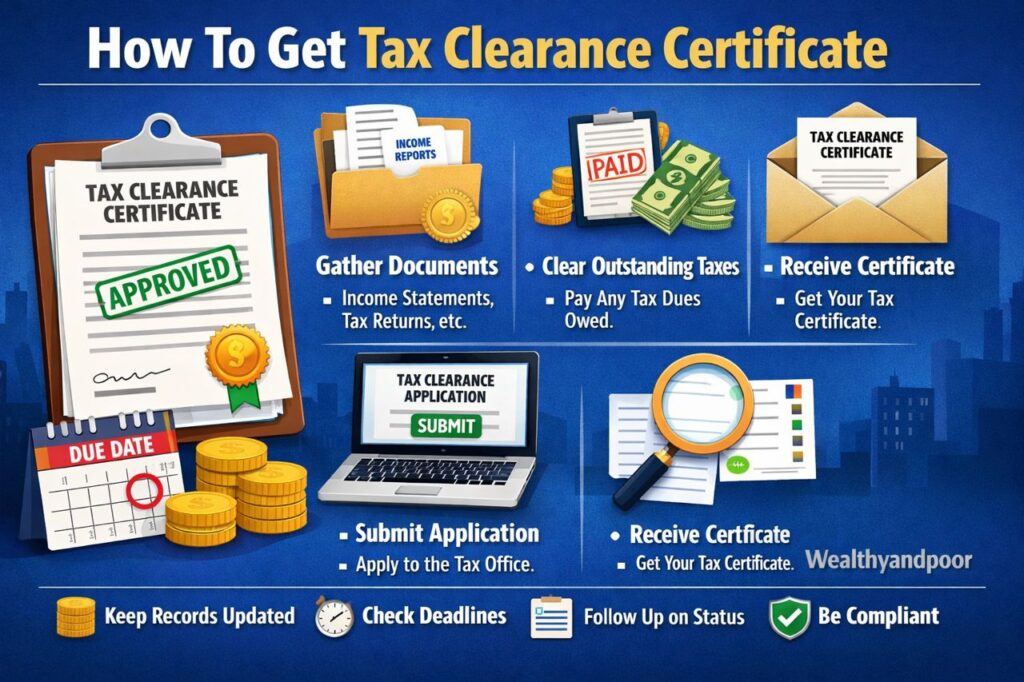

In today’s compliance-driven business environment, a Tax Clearance Certificate (TCC) is more than just a document it is a financial passport. Whether you are bidding for a government contract, applying for a loan, or simply proving tax compliance, obtaining a TCC is often a mandatory requirement in Nigeria.
This article provides a clear, structured, and practical explanation of how to get a Tax Clearance Certificate, reflecting current processes across federal and state tax authorities.
What Is a Tax Clearance Certificate?
A Tax Clearance Certificate is an official document issued by a tax authority confirming that an individual or company has fulfilled its tax obligations for a specified period typically the last three years.
It serves as proof of compliance and is required for:
- Government contracts and tenders
- Business licensing and renewals
- Loan and financial transactions
- Immigration and official verifications
In Nigeria, TCCs are issued by authorities such as the Federal Inland Revenue Service (FIRS) for companies and State Internal Revenue Services (like LIRS) for individuals.
Key Requirement: Full Tax Compliance
Before applying for a TCC, the most important condition is compliance with tax laws. This means:
- Filing tax returns for the relevant years
- Paying all assessed taxes
- Settling any outstanding liabilities or penalties
Tax authorities will not issue a TCC unless they are satisfied that your tax records are complete and accurate.
Step-by-Step Guide to Getting a Tax Clearance Certificate
- Register as a Taxpayer
If you are not already registered, you must obtain a Tax Identification Number (TIN). This is your unique identity in the tax system.
- Individuals register with their State Internal Revenue Service
- Companies register with the Corporate Affairs Commission (CAC) and FIRS
Without a TIN, you cannot proceed with any tax-related application.
- File Your Tax Returns
You must file tax returns for at least the last three years. This includes:
- Personal Income Tax (for individuals)
- Company Income Tax (for businesses)
Filing can now be done electronically through tax portals. For example, FIRS uses the Tax Pro Max platform, which integrates filing, payment, and certificate requests.
- Pay All Outstanding Taxes
After filing, ensure that all tax liabilities are fully settled.
Although the TCC itself is free, you may incur costs due to:
- Unpaid taxes
- Penalties for late filing
- Professional service fees
There is no shortcut here payment is a prerequisite.
- Submit an Application
To request a TCC, you must formally apply to the relevant tax authority.
Typical requirements include:
- Written application letter
- Completed application form
- Evidence of tax payments
- Financial records or income details
For employees, you may also need:
- A letter from your employer showing income and tax deductions
For businesses, additional documents may include:
- Certificate of incorporation
- Bank statements
- Tax registration evidence
- Verification by Tax Authority
Once your application is submitted, the tax authority will:
- Review your tax filings
- Verify payments and income declarations
- Request clarification if necessary
If everything is in order, approval is granted.
- Issuance of the Certificate
After approval, the TCC is issued.
Processing time varies:
- As fast as 72 hours after compliance in some states
- LIRS – Lagos Internal Revenue Service
- Up to a few weeks for more complex cases
With digital reforms, the process is becoming faster. In fact, taxpayers can now generate their TCC online through platforms like Tax Pro Max, sometimes “in a single click.”
Online vs Physical Application
Online (Recommended)
- Faster processing
- Less paperwork
- Accessible via tax portals
Physical (Traditional Method)
- Requires visiting tax offices
- Manual submission of documents
- Longer processing time
Most tax authorities in Nigeria are now transitioning fully to digital systems.
Special Cases: Employees vs Self-Employed
Employees
- Employer usually deducts tax (PAYE)
- Provide employer confirmation letter
- Tax authority verifies remittances
Self-Employed Individuals
- Must present proof of tax payments
- May undergo additional assessment
- Greater scrutiny due to self-declared income
- Validity and Renewal
A TCC typically covers the three years preceding the year of application.
It must be renewed annually, especially for individuals and businesses engaged in ongoing transactions.
Common Mistakes to Avoid
- Failing to file returns before applying
- Ignoring outstanding tax liabilities
- Submitting incomplete documentation
- Using incorrect or outdated taxpayer information
These issues can delay or even prevent issuance.
Why It Matters
- A Tax Clearance Certificate is not just a regulatory requirement it is a signal of credibility.
- For businesses, it enhances eligibility for contracts and financing.
- For individuals, it simplifies official processes and builds financial trust.
In an economy increasingly focused on transparency and accountability, being tax-compliant is no longer optional it is essential.
Conclusion
Getting a Tax Clearance Certificate in Nigeria is no longer as complicated as it once was. With digital platforms, improved processes, and clearer guidelines, compliant taxpayers can now obtain their certificates faster and more efficiently.
The key takeaway is simple: stay compliant, keep proper records, and leverage digital tools. Once these are in place, obtaining your TCC becomes a straightforward process rather than a bureaucratic hurdle.












Comments