
How Long Tax Clearance Takes in Nigeria
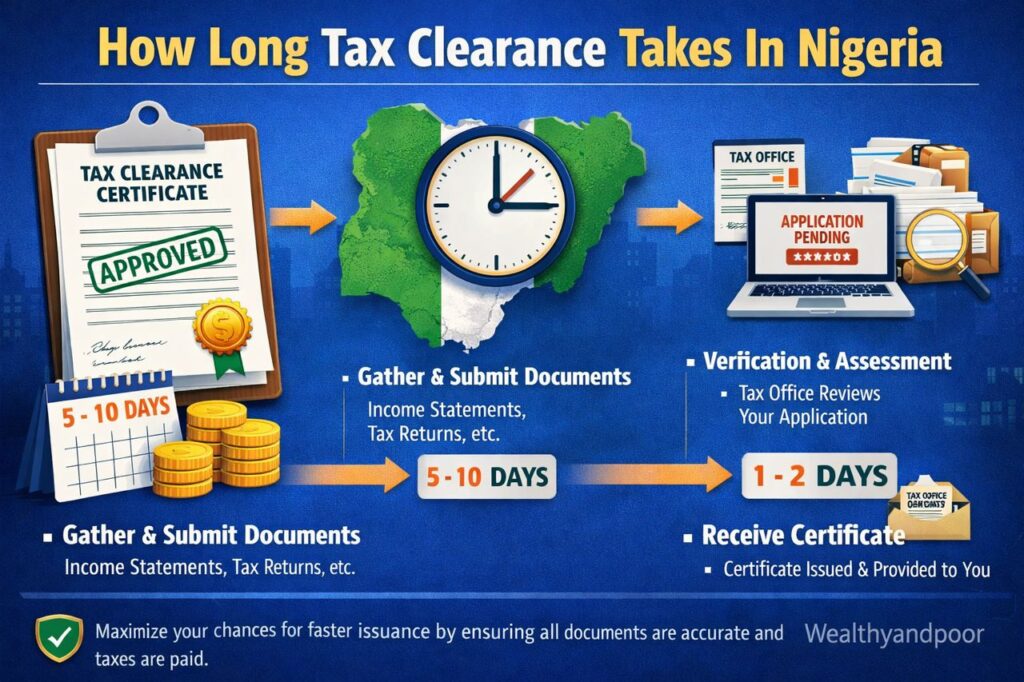

In Nigeria’s tax ecosystem, the Tax Clearance Certificate (TCC) is more than a compliance document it is a gateway to contracts, financial credibility, and regulatory legitimacy. For individuals and companies alike, one of the most frequently asked questions is straightforward: how long does it actually take to obtain a tax clearance certificate in Nigeria?
The answer, however, is not one-size-fits-all. It depends on several factors including the applicant’s compliance status, the tax authority involved, and the method of application. What has changed significantly in recent years is the speed of issuance, thanks to digitisation reforms.
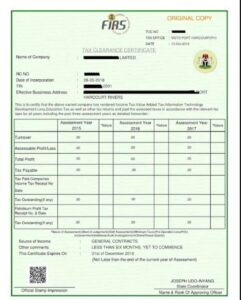
The Traditional Timeline: Days to Weeks
Historically, obtaining a tax clearance certificate in Nigeria was a manual and often bureaucratic process. Applicants were required to submit documents physically, undergo verification, and wait for approval from tax officers.
In this traditional system, the timeline typically ranged between:
- 3 days to 2 weeks for individuals
- 1 to 4 weeks for companies
This variation largely depended on how complete and accurate the applicant’s tax records were. Missing filings, unresolved liabilities, or discrepancies in documentation could easily extend the process beyond the standard timeframe.
The Modern Reality: 72 Hours or Less
With the introduction of electronic tax systems by state revenue services, the processing time has significantly improved. Many state tax authorities now issue an electronic Tax Clearance Certificate (eTCC).
For example, several state internal revenue services indicate that once all requirements are met:
- A tax clearance certificate can be issued within 72 hours after payment and proper documentation
In some cases, especially where the taxpayer has a clean compliance record, the process is almost seamless. The key condition remains that all tax obligations must already be fulfilled before the request is made.
The Digital Revolution: Same-Day Issuance
Perhaps the most significant shift in recent years has come from the adoption of automated platforms by the Federal Inland Revenue Service.
Through its Tax pro Max platform, the agency has introduced a system where:
- Tax clearance certificates that previously took up to two weeks can now be generated “in a single click”
This innovation represents a major leap in efficiency. For fully compliant taxpayers who have filed returns and paid their taxes, the certificate can now be generated almost instantly online.
Why Processing Time Still Varies
Despite technological advancements, not all applications are processed at the same speed. Several factors can affect how long it takes:
- Tax Compliance Status
If there are outstanding taxes, penalties, or unfiled returns, the application will be delayed until these issues are resolved.
- Accuracy of Documentation
Incorrect or incomplete submissions such as missing receipts or inconsistencies in declared income can trigger additional verification steps.
- Type of Taxpayer
Individuals (PAYE earners) tend to get faster approvals.
Businesses and companies often require deeper audits, leading to longer timelines.
- Tax Authority Workload
In peak periods such as year-end filings processing times may extend due to high application volumes.
Applicants using physical tax offices generally experience longer waiting times compared to those using online platforms.
Fast-Track Scenarios: When You Can Get It Quickly
There are situations where obtaining a tax clearance certificate is exceptionally fast:
- You have filed all returns for the past three years
- You have no outstanding liabilities
- Your Tax Identification Number (TIN) is active and valid
- You apply through an electronic platform
In such cases, issuance can occur within hours or the same day, especially under the automated system introduced by the Federal Inland Revenue Service.
Delayed Scenarios: When It Takes Longer
On the other hand, delays are common when:
- There are unresolved tax audits
- Payments cannot be verified
- Records across years are inconsistent
- Supporting documents are missing
In these cases, the process can revert to the traditional timeline or even exceed it until all discrepancies are cleared.
Practical Advice for Faster Processing
For taxpayers seeking to minimise delays, a few practical steps can make a significant difference:
- Ensure full tax compliance for at least the last three years
- Keep proper documentation, including receipts and returns
- Use digital platforms wherever available
- Resolve disputes early before applying for clearance
- Engage tax professionals for complex cases
Preparation, more than anything else, determines how quickly a tax clearance certificate can be issued.
The Bigger Picture: Efficiency vs Compliance
Nigeria’s move toward digitised tax administration reflects a broader effort to improve ease of doing business. The shift from a two-week waiting period to near-instant issuance signals progress but it also underscores an important reality: speed is now tied directly to compliance.
In other words, the system rewards taxpayers who keep their records clean and up to date.
Conclusion
So, how long does tax clearance take in Nigeria? The answer ranges widely:
Same day or instant (for fully compliant digital applicants)
Within 72 hours (for standard electronic processing)
3 days to several weeks (for manual or complex cases)
Ultimately, the timeline is less about bureaucracy today and more about readiness. For compliant taxpayers, obtaining a tax clearance certificate in Nigeria has never been faster. For others, the process still serves as a reminder that tax compliance is not just a legal obligation it is a prerequisite for speed, credibility, and opportunity.












Comments