
How to Stay Tax-Compliant Without Stress
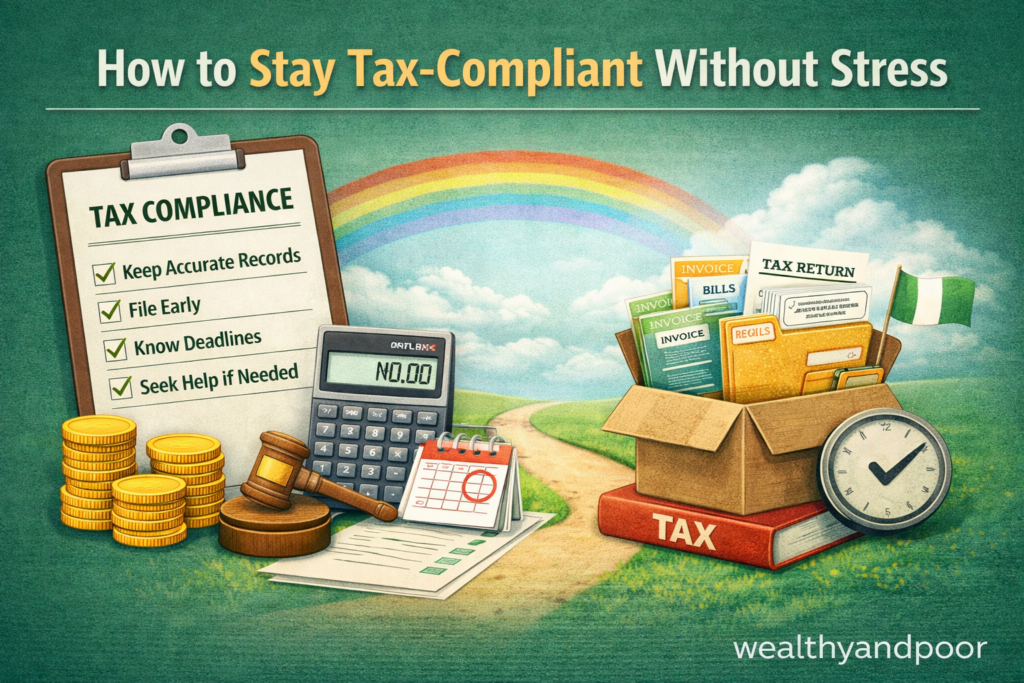

In Nigeria’s evolving fiscal landscape, tax compliance is no longer just a legal obligation it is increasingly a financial necessity for individuals and businesses that want to operate smoothly, access opportunities, and avoid penalties. Yet for many, the process feels complicated, time-consuming, and, at times, overwhelming.
This perception is not entirely unfounded. Experts have repeatedly pointed to complex tax rules, low public trust, and poor awareness as key barriers to compliance in Nigeria. At the same time, reports show that even among high-income earners, compliance remains low highlighting how confusion and systemic inefficiencies can affect everyone.
But staying tax-compliant does not have to be stressful. With the right approach, it can become a routine part of financial management rather than a recurring burden.
Understanding What Tax Compliance Really Means
Tax compliance goes beyond simply paying taxes. It involves:
- Registering with the appropriate tax authority
- Filing accurate returns on time
- Keeping proper financial records
- Paying the correct amount due
In Nigeria, this could mean dealing with agencies such as federal or state tax authorities depending on your income source. Whether you are employed, self-employed, or running a business, your obligations differ but the principles remain the same: accuracy, timeliness, and transparency.
Why Many People Find It Stressful
Before solving the problem, it helps to understand it. Tax compliance often becomes stressful due to:
- Complexity of Tax Laws
Nigeria’s tax system can feel fragmented, with multiple taxes, levies, and regulations. This complexity discourages voluntary compliance and creates room for mistakes.
- Poor Record-Keeping Habits
Many individuals and small businesses do not maintain proper financial records, making it difficult to calculate taxes accurately.
- Fear of Penalties
Uncertainty about what is owed and the consequences of getting it wrong creates anxiety.
- Mistrust in the System
A weak social contract between taxpayers and government institutions has historically reduced willingness to comply.
Practical Ways to Stay Tax-Compliant Without Stress
- Start With Proper Registration
The first step is ensuring you are properly registered as a taxpayer. This gives you a Tax Identification Number (TIN), which is essential for filing returns, opening business accounts, and even securing contracts.
Delaying registration often leads to rushed compliance later, which increases stress.
- Keep Simple, Consistent Records
You don’t need complex accounting systems to stay compliant. What matters is consistency.
Track:
- Income (daily, weekly, or monthly)
- Expenses
- Receipts and invoices
Even a basic spreadsheet or notebook can make a significant difference. When records are organized, filing taxes becomes straightforward rather than chaotic.
- Understand Your Tax Category
Different taxpayers have different obligations:
- Employees: Usually subject to Pay-As-You-Earn (PAYE)
- Business owners: Responsible for self-assessment
- Companies: Subject to corporate taxes and filings
Knowing where you fall helps you avoid overpaying or underpaying.
- Use Deadlines as a Strategy, Not a Threat
Many people wait until deadlines are close before acting, which creates unnecessary pressure.
Instead:
- Mark tax deadlines on your calendar
- Prepare documents weeks in advance
- File early when possible
Early filing reduces both errors and anxiety.
- Leverage Professional Help When Needed
Hiring an accountant or tax consultant is not just for large corporations. Even small businesses can benefit from occasional professional guidance.
A good advisor can:
- Clarify your obligations
- Identify legal deductions
- Ensure accurate filings
This often saves more money and stress than it costs.
- Take Advantage of Digital Tools
Tax authorities in Nigeria are gradually adopting digital platforms for registration, filing, and payments. Using these tools can simplify compliance by:
- Reducing paperwork
- Providing clear calculation templates
- Offering instant confirmation of filings
Digital systems also reduce the likelihood of errors associated with manual processes.
- Stay Informed, But Keep It Simple
Tax rules can change, especially with ongoing reforms aimed at improving revenue and fairness.
However, you don’t need to master every detail. Focus on:
- Updates that affect your income category
- Filing requirements
- Applicable rates
Reliable financial education platforms such as Wealthy & Poor can help simplify complex tax topics into practical guidance.
- Separate Personal and Business Finances
For entrepreneurs, one of the biggest sources of stress is mixing personal and business income.
Maintaining separate accounts helps:
- Track taxable income accurately
- Avoid confusion during filing
- Present cleaner financial records
This single habit can dramatically reduce compliance headaches.
The Bigger Picture: Why Compliance Matters
Beyond avoiding penalties, tax compliance plays a broader role in economic stability. Nigeria continues to struggle with low tax participation and revenue gaps, which affects public services and infrastructure development.
When individuals and businesses comply:
- Government revenue improves
- Public investments increase
- Economic inequality can be addressed more effectively
In this sense, compliance is not just a personal responsibility it is a contribution to national development.
Conclusion
Tax compliance in Nigeria does not have to be stressful. The key lies in shifting from a reactive approach marked by panic and last-minute filings to a proactive system built on organization, awareness, and routine.
Start small:
Keep better records
Understand your obligations
Act early
Over time, these habits turn tax compliance from a source of anxiety into a manageable and even predictable part of your financial life.











Comments