
How to invest as a low income earner
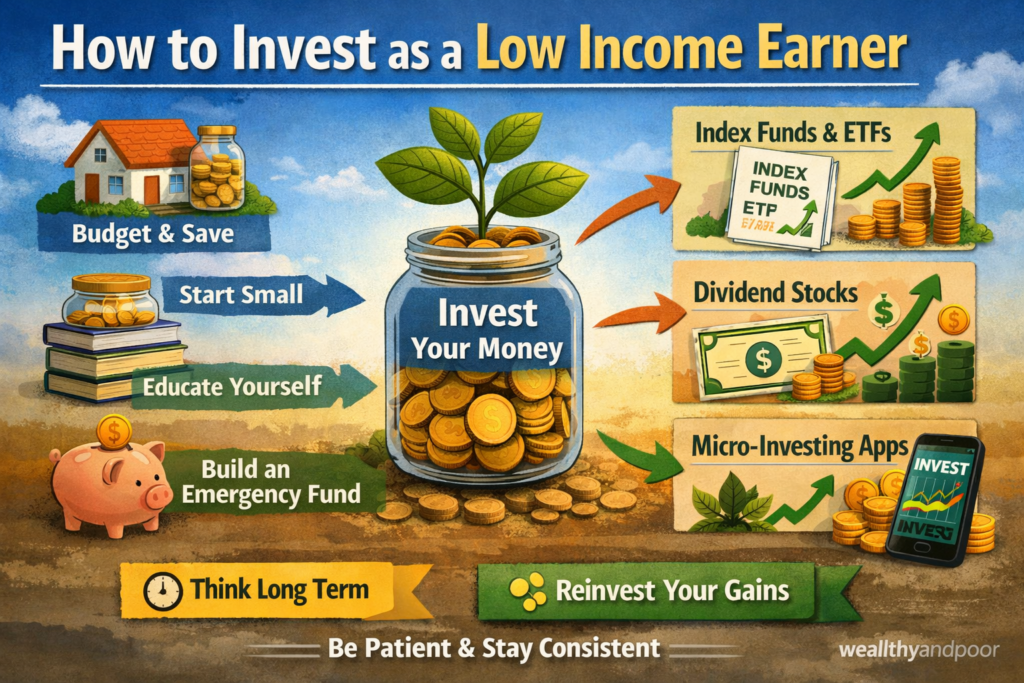

In many developing economies like Nigeria, investing is often seen as something reserved for high earners or financially privileged individuals. This belief, however, is both limiting and inaccurate. The truth is that investment is less about how much you earn and more about how consistently and intelligently you manage what you have. Even with a modest income, it is possible to build wealth over time through discipline, strategy, and informed decision-making.
Rethinking Investment: It’s Not About Income Size
A common misconception is that you need a large capital base before you can start investing. In reality, wealth creation begins with small, consistent steps. Financial experts emphasize that building wealth is more about habits and long-term consistency than income level.
Low-income earners often face tighter budgets and higher financial pressure, but this makes investing even more important. Without investment, income alone may never be enough to achieve financial security, especially in an environment affected by inflation and rising living costs.
- Step One: Build a Financial Foundation
Before diving into investments, it is crucial to establish a solid financial base. This includes:
- Tracking your income and expenses: Understanding where your money goes helps identify areas to cut back.
- Creating a budget: A realistic budget ensures you can consistently set aside funds for investment.
- Building an emergency fund: Even a small safety net can prevent you from falling into debt during unexpected situations.
For low-income earners, this stage is non-negotiable. Investing without financial stability can lead to withdrawing funds prematurely, which defeats the purpose of long-term growth.
- Start Small, But Start Early
One of the biggest advantages of investing is compound growth the ability of your money to generate returns, which then generate more returns over time. Starting early, even with small amounts, can make a significant difference.
You do not need thousands of naira to begin. Many modern investment platforms and financial instruments allow individuals to start with very small amounts. The key is consistency. Whether it is ₦5,000 or ₦10,000 monthly, what matters is building the habit.
- Choose Accessible Investment Options
Low-income earners should prioritize simple, low-risk, and accessible investment vehicles. In Nigeria, some of the most practical options include:
- Mutual Funds and Money Market Funds
These are professionally managed funds that pool money from multiple investors. They are relatively low-risk and ideal for beginners.
- Government Bonds
Instruments like Federal Government Savings Bonds offer stability and predictable returns, making them suitable for conservative investors.
- Stocks and Exchange-Traded Funds (ETFs)
While slightly riskier, stocks and ETFs provide higher long-term growth potential. Even small investments can grow significantly over time.
- Cooperative Savings and Investment Schemes
Local cooperative societies (ajo or esusu) can also serve as a stepping stone to disciplined saving and investing.
- Automate Your Investments
One effective strategy for low-income earners is automation. By setting up automatic transfers into a savings or investment account, you remove the temptation to spend. This approach ensures consistency and builds financial discipline over time.
Small, automated contributions can accumulate into substantial investment capital, especially when maintained over several years.
- Increase Income Streams
While managing your current income is essential, increasing your earning capacity can accelerate your investment journey. Relying on a single income source makes wealth building slower and more difficult.
Consider:
- Freelancing or side hustles
- Selling digital products
- Learning high-income skills
Multiple income streams not only provide more funds to invest but also reduce financial vulnerability.
- Avoid Common Pitfalls
Low-income earners must be particularly cautious of financial mistakes that can derail progress. These include:
- Lifestyle inflation: Increasing spending as income rises
- High-interest debt: This can quickly erode any investment gains
- Get-rich-quick schemes: These often lead to losses rather than wealth
True wealth building is gradual. It requires patience, not speculation.
- Think Like an Asset Builder
The fundamental difference between financially stable individuals and struggling earners is asset ownership. Wealth is created not just by earning money, but by owning assets that generate income or appreciate in value.
As a low-income earner, your goal should be to gradually shift from depending solely on your salary to owning income-generating assets no matter how small they start.
- Stay Consistent and Patient
Investing is not a one-time event but a long-term commitment. There will be periods of slow growth and even temporary losses, especially in market-based investments. However, consistency and patience are what ultimately yield results.
Studies and financial insights consistently show that disciplined investors even those with modest incomes can build substantial wealth over time through regular contributions and long-term focus.
Conclusion
Investing as a low-income earner is not only possible it is essential. Waiting until your income increases may delay financial freedom indefinitely. The journey begins with small, intentional steps: budgeting, saving, and investing consistently in accessible opportunities.
In the end, wealth is not determined by how much you earn, but by how well you manage, grow, and sustain what you have. With the right mindset and strategy, even the smallest income can become the foundation for lasting financial security.












Comments