Mbah Allocates ₦1.3 Trillion To Infrastructure, Signals Growth for Real Estate
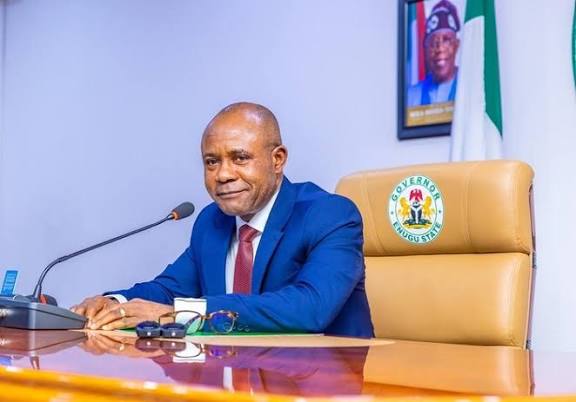

The recently unveiled 2026 budget by Governor Peter Mbah for Enugu State commits a record‑breaking ₦1.62 trillion, of which around ₦1.296 trillion roughly 80 per cent is devoted to capital projects.
The emphasis is on infrastructure and economic development, with major allocations for extensive road construction and dual carriage ways, including 1,200 urban roads, numerous rural roads, the 40‑kilometre Owo‑Ubahu–Amankanu–Neke‑Ikem dual carriageway, dualisation of Abakpa Nike–Ugwogo Nike–Ekwegbe–Opi‑Nsukka Road, and the 21.65‑kilometre Enugu–Abakaliki Expressway.
Beyond transport arteries, the budget proposes five new transport terminals and designates resources toward 15,000 mass‑housing units under a broader New Enugu City plan.
These moves signal a direct intention to expand urban footprint, improve connectivity, and stimulate real‑estate growth beyond the traditional city core.
For the real‑estate sector, the consequences are likely profound. Improved road networks and transport infrastructure typically unlock formerly peripheral land — making suburban and peri‑urban areas viable for residential, commercial, and industrial development.
Prospective homeowners and businesses may be encouraged to relocate further from crowded city centers as connectivity improves, boosting demand for land and housing. The mass‑housing initiative could also help reduce the housing deficit while creating upward pressure on property values.
Moreover, as economic activity rises through infrastructure and public investment, more jobs and better incomes are expected.
That in turn would raise purchasing power, enabling more individuals to rent, buy, or invest in real estate. Over time, this could lead to a more diversified property market, increased investments, and accelerated urban expansion across Enugu State.








Comments