
Fixed Deposit vs Savings Account: Which Is Better?
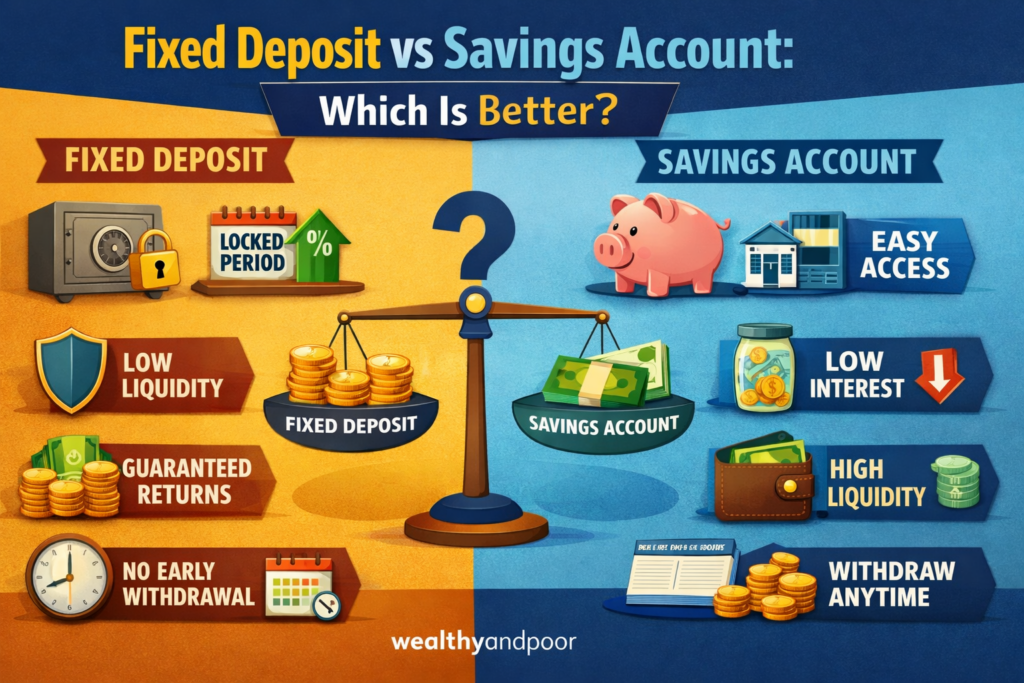

Choosing where to keep your money is one of the most fundamental financial decisions anyone can make. For most Nigerians and indeed savers globally the choice often comes down to two familiar options: the traditional savings account and the fixed deposit. Both are offered by banks, both earn interest, and both are considered relatively safe. Yet, they serve very different purposes.
This article breaks down how each works, their strengths and weaknesses, and ultimately answers the question: which one is better?
Understanding the Basics
A savings account is the most common type of bank account. It allows you to deposit, withdraw, and transfer money easily while earning a modest interest rate. It is designed primarily for flexibility and day-to-day financial management.
A fixed deposit, on the other hand, is a type of investment account where you lock away a lump sum for a predetermined period ranging from a few weeks to several years in exchange for a fixed interest rate.
At a glance, the difference is simple:
- Savings account = flexibility
- Fixed deposit = higher returns with restrictions
But the real decision goes deeper.
Interest Rates: Where Your Money Grows Faster
If your primary goal is to grow your money, fixed deposits clearly have the edge.
Savings accounts typically offer relatively low interest rates often around 3% to 4% annually in many banking systems. In contrast, fixed deposits can offer significantly higher returns, often ranging between 5% and 10% or more depending on tenure and amount.
In Nigeria specifically, fixed deposit rates can even reach double digits in some cases, particularly for large deposits or longer durations.
What this means:
- Savings accounts help preserve money
- Fixed deposits actively grow money
If maximizing interest is your goal, fixed deposit is the stronger option.
Liquidity: Access to Your Money
Liquidity how easily you can access your funds is where savings accounts shine.
With a savings account, you can withdraw money anytime using ATMs, mobile banking, or over-the-counter services. There are usually no penalties for accessing your funds.
Fixed deposits, however, come with restrictions. Your money is “locked in” for a fixed period, and early withdrawals often attract penalties or reduced interest earnings.
What this means:
- Savings account = immediate access
- Fixed deposit = restricted access
If you need emergency funds or frequent transactions, a savings account is the better choice.
Risk and Security
Both savings accounts and fixed deposits are considered low-risk financial instruments because they are typically offered by regulated banks.
Fixed deposits are particularly attractive to conservative investors because they provide guaranteed returns you know exactly how much interest you will earn at maturity.
Savings accounts also offer security, but their interest rates are variable and may change over time.
What this means:
- Both are safe
- Fixed deposits offer more predictability
- Minimum Deposit Requirements
- Another important factor is accessibility.
Savings accounts are easy to open and maintain, often requiring very little initial deposit. In many cases, you can start with a small amount and build over time.
Fixed deposits, however, typically require a larger lump sum upfront. This makes them more suitable for individuals who already have significant savings.
What this means:
- Savings account = beginner-friendly
- Fixed deposit = better for larger capital
- Purpose and Financial Goals
The “better” option ultimately depends on what you are trying to achieve.
When a Savings Account Is Better
A savings account is ideal if:
- You need quick access to your money
- You are saving gradually over time
- You want to manage everyday finances
- You are building an emergency fund
- When a Fixed Deposit Is Better
A fixed deposit is more suitable if:
- You have a lump sum to invest
- You don’t need immediate access to the funds
- You want higher, predictable returns
- You are saving for a specific future goal
Can You Use Both?
Interestingly, the smartest approach may not be choosing one over the other but combining both.
Many financially savvy individuals use savings accounts for liquidity and daily transactions, while placing excess funds into fixed deposits to earn higher interest.
This hybrid strategy balances flexibility with growth.
The Verdict: Which Is Better?
There is no universal winner between fixed deposits and savings accounts only what is better for your situation.
If flexibility and access matter most → choose a savings account
If higher returns and discipline are your priority → choose a fixed deposit
In practical terms:
- Savings accounts are for short-term needs
- Fixed deposits are for medium- to long-term goals
Conclusion
Financial decisions are rarely about absolutes they are about alignment. A savings account keeps your money accessible and safe, while a fixed deposit puts your money to work more aggressively within a controlled, low-risk environment.
For most people, the real advantage lies in understanding how each tool works and using them strategically. In a time when inflation continues to erode purchasing power, simply leaving money idle is no longer enough. Whether you choose flexibility or higher returns or a combination of both the key is intentional saving.










Comments