
Why First Bank of Nigeria Transfers Delay
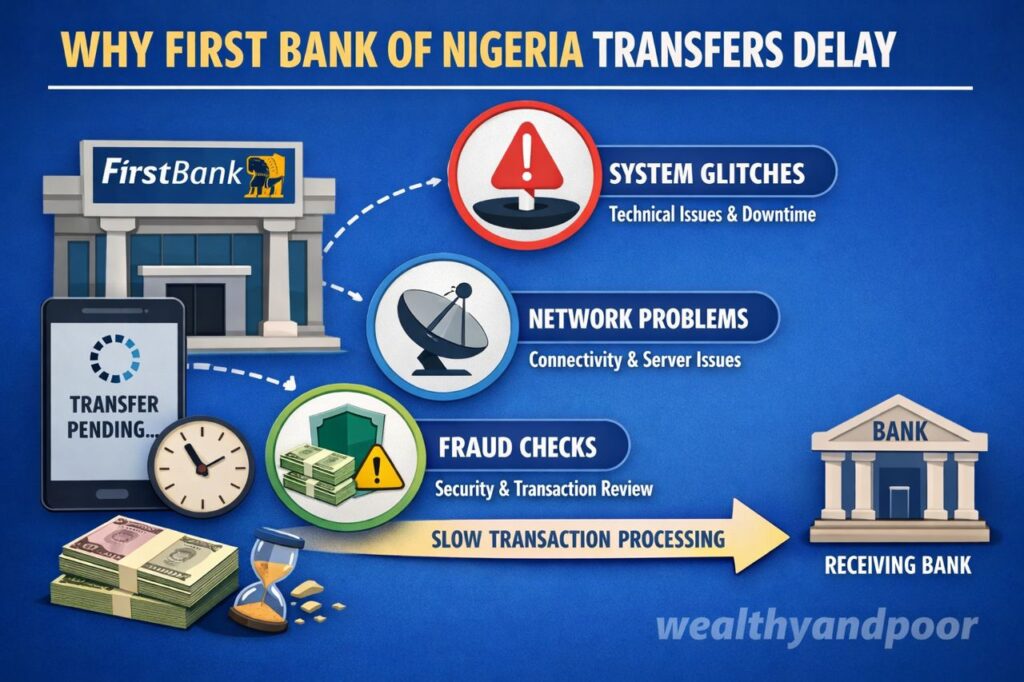

In the world of modern banking, transfer delays are one of the most frustrating experiences customers face, especially when it involves a bank as prominent as First Bank of Nigeria (FBN). As one of Nigeria’s oldest and most established financial institutions, customers rely heavily on First Bank for seamless banking services, particularly for local and international transfers.
However, delays in transfers can occur, and understanding the reasons behind these disruptions is crucial for both the bank and its customers. In this article, we will explore the common causes behind First Bank of Nigeria transfer delays, the steps the bank is taking to resolve these issues, and what customers can do to avoid or mitigate these delays.
- Network Issues and System Outages
One of the most common reasons for delays in bank transfers is technical failure, particularly system outages or network issues. The banking industry relies heavily on complex technology infrastructure, including servers, networks, and payment systems, to process transactions. These systems must communicate effectively to ensure that funds are moved from one account to another in real time.
When there’s a system outage, whether at First Bank or within the wider payment ecosystem (such as Nigeria Inter Bank Settlement System (NIBSS) or Central Bank of Nigeria (CBN) systems), it can lead to significant delays. This is often outside the control of the bank and might require time to resolve, causing frustration for customers.
What can customers do?
Regularly check the status of the bank’s online banking platform or mobile app for system maintenance announcements.
Contact the bank’s customer service to confirm if a system issue is affecting their transaction.
- Poor Connectivity and Internet Issues
Another significant cause of delays is poor internet connectivity. While banking institutions like First Bank make every effort to maintain robust infrastructure, poor network conditions on the customer’s end whether on a mobile phone or computer can impede successful transactions. This can result in transfers that are stuck in limbo, with customers unaware that the transfer has not been completed.
Additionally, for cross-border transactions, slower international bank connections or routing issues can also cause delays. In cases where the network infrastructure isn’t optimized for the volume of transactions, this can further delay transfer times.
What can customers do?
Ensure a stable and fast internet connection before initiating any transaction.
Consider using alternative methods, like visiting the bank branch directly, if urgent transactions are required.
- Inadequate Clearing and Settlement Times
Nigerian banks, including First Bank, rely on the clearing systems governed by the CBN and other regulatory bodies to settle inter bank transfers. Even though transfers between accounts in the same bank are usually processed instantly, transactions between different banks (inter-bank transfers) may require more time, particularly if they are conducted via a third party platform or international channels.
One major factor in inter-bank transfer delays is the clearing cycle. While Nigerian banks have adopted Real Time Gross Settlement (RTGS) for faster transactions, delays can still occur when there is high volume or technical problems during the clearing and settlement stages.
What can customers do?
For urgent transfers, request a faster clearing method such as RTGS if available.
Use alternative transfer methods like mobile money or mobile wallet options for quicker processing.
- Fraud Prevention and Compliance Checks
In an era of increasing financial crime, Nigerian banks, including First Bank, have to maintain a vigilant stance against fraudulent activities. One of the reasons a transfer may be delayed is if it is flagged for additional verification under the bank’s fraud detection systems. These systems examine patterns such as large amounts being transferred, unusual account activity, or transactions across different jurisdictions that could raise red flags.
Additionally, compliance with regulatory requirements such as Anti Money Laundering (AML) and Know Your Customer (KYC) regulations can sometimes delay a transfer. These rules require that banks verify the identities of their customers before processing significant transfers.
What can customers do?
Ensure their bank records are up to date and reflect accurate personal details.
Avoid sending large or irregular amounts without informing the bank or providing the necessary documentation.
- Public Holidays and Weekends
Like all financial institutions, First Bank of Nigeria follows a specific processing schedule that is often dictated by public holidays and weekends. While some transfers can be processed outside of normal working hours, others may require the next working day for completion. Transfers initiated on weekends or public holidays may experience a delay due to non operational hours.
What can customers do?
Schedule transfers ahead of time, especially if they know they will be initiating payments during a weekend or holiday period.
Contact First Bank to understand their holiday schedule and adjust transactions accordingly.
- Regulatory and Government Policy Changes
Changes in government policies or regulations often impact how Nigerian banks process transactions. For instance, regulatory changes from the Central Bank of Nigeria (CBN) could lead to delays as banks adjust to comply with new requirements. For example, changes in foreign exchange rates, or restrictions on certain types of cross border transfers, can lead to delays as systems undergo updates to accommodate the new regulations.
What can customers do?
Keep abreast of any official announcements from the CBN regarding policy changes and how these might affect transfer processes.
Regularly check the bank’s website or customer service channels for updates on policy and regulatory impacts on transfers.
- Inaccurate Transfer Details
Sometimes delays occur simply because of incorrect information provided by the sender. Incorrect account numbers, names, or transaction references can cause the bank to reject or delay processing a transfer.
This is particularly common in international transfers or transfers involving multiple banks. These discrepancies can result in the funds being returned, and the process of correcting the error takes time.
What can customers do?
Always double check the transfer details before submitting.
Ensure that the receiving account information is accurate, especially for international transfers.
Conclusion
Transfer delays at First Bank of Nigeria, while frustrating, are often due to factors outside the bank’s immediate control, such as network issues, system outages, or regulatory requirements. Customers can take proactive steps to minimize delays by ensuring their transactions are made during operational hours, verifying transfer details, and maintaining good connectivity.
However, the bank is continually working to streamline processes and improve the overall customer experience. By understanding the potential causes of delays, customers can better navigate the challenges and take appropriate steps to avoid inconvenience.












Comments