Are New Businesses Exempted from Tax in Nigeria?
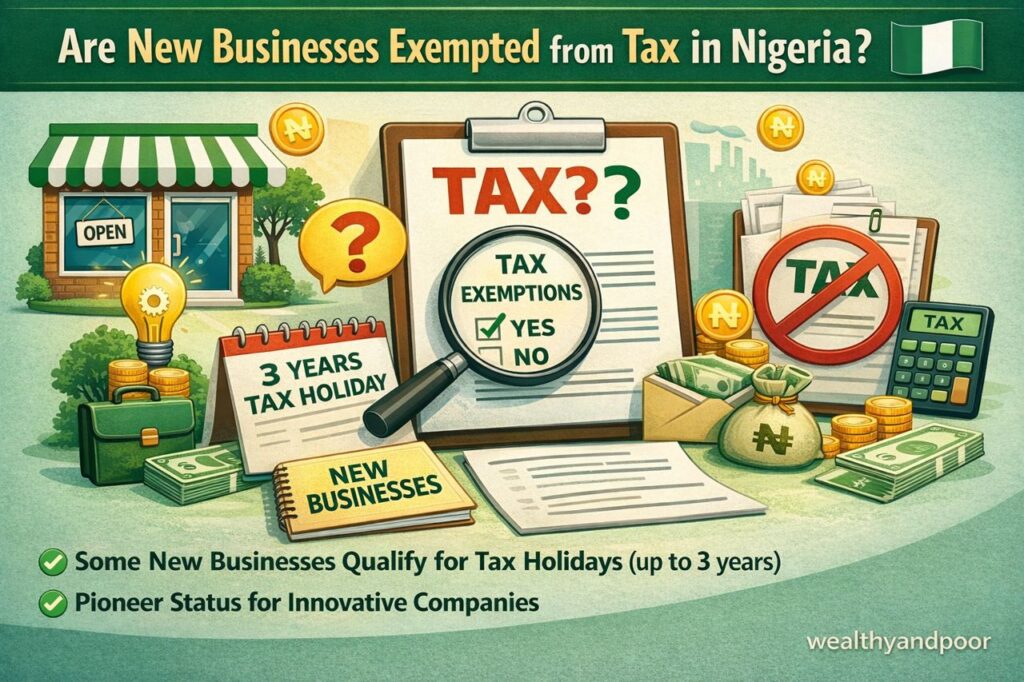

Starting a business in Nigeria often comes with many financial considerations, and taxation is one of the most important. A common question among entrepreneurs and startup founders is whether newly established businesses are automatically exempt from paying taxes.
The answer is not entirely straightforward. While some new businesses in Nigeria may enjoy tax exemptions or reduced tax obligations, they are not completely free from tax responsibilities. Instead, Nigerian tax laws provide targeted relief for small companies and startups based on their annual turnover, sector, and compliance with tax regulations.
Understanding how these rules work is essential for entrepreneurs who want to operate legally while taking advantage of the incentives available to early-stage businesses.
Understanding Business Taxation in Nigeria
Businesses operating in Nigeria are subject to various taxes administered by the Federal Inland Revenue Service (FIRS) and state tax authorities. The most common taxes affecting companies include:
- Companies Income Tax (CIT)
- Value Added Tax (VAT)
- Withholding Tax (WHT)
- Education Tax
- Capital Gains Tax (CGT)
However, several reforms introduced through Nigeria’s Finance Acts and tax policy changes have created relief mechanisms designed to support startups and small businesses.
These incentives aim to encourage entrepreneurship, stimulate economic growth, and reduce the financial pressure on emerging businesses.
Small Companies May Pay Zero Company Income Tax
One of the most significant tax incentives in Nigeria is the Company Income Tax exemption for small companies.
Under current tax rules, businesses with an annual turnover below ₦25 million are classified as small companies and are exempt from paying Company Income Tax, which normally stands at 30% for large corporations.
This means that qualifying small businesses can legally operate without paying corporate income tax on their profits.
Example
If a small startup records:
- Annual turnover: ₦15 million
- Profit: ₦4 million
The business will pay 0% Company Income Tax, allowing the company to reinvest the profit into growth and expansion.
Recent tax reform proposals have even suggested expanding the threshold for small companies to as high as ₦50 million or more, further increasing the number of businesses that qualify for tax exemption.
Tax Exemption Does Not Mean No Tax Compliance
A common misunderstanding is that tax-exempt businesses do not need to deal with tax authorities. In reality, even companies that qualify for a 0% tax rate must still comply with tax regulations.
For example, the Federal Inland Revenue Service requires small businesses to:
- Register with the tax authority
- Obtain a Tax Identification Number (TIN)
- Prepare financial records
- File annual tax returns
Even if the final tax payable is zero, businesses must still go through the tax computation process and submit their returns.
Failure to file tax returns can lead to penalties, despite the business being exempt from paying the actual tax.
Medium and Large Businesses Pay Different Tax Rates
Businesses that exceed the small company threshold are subject to different tax rates depending on their turnover.
Nigeria currently uses a tiered corporate tax structure:
- Business Category
- Annual Turnover
- CIT Rate
This structure ensures that small businesses are not taxed at the same level as large corporations with far greater financial capacity.
VAT Exemption for Very Small Businesses
Another important tax relief available to new businesses relates to Value Added Tax (VAT).
Businesses with annual turnover below ₦25 million are not required to charge or remit VAT. This reduces administrative burden and allows very small businesses to operate without complex tax reporting requirements.
However, once a business crosses the VAT threshold, it must:
- Register for VAT
- Charge VAT on goods and services
- Remit collected VAT to the government
Additional Tax Incentives for Startups
Apart from the general tax exemptions for small companies, certain sectors in Nigeria enjoy additional incentives designed to promote investment.
Examples include:
- Agricultural Businesses
Agriculture startups may qualify for tax holidays of up to five years, depending on the specific investment program.
- Pioneer Status Incentive
Companies operating in priority sectors such as manufacturing, technology, and infrastructure may qualify for a tax holiday under the Pioneer Status Incentive scheme, which allows companies to operate without paying corporate income tax for several years.
- Startup Act Incentives
Under the Nigeria Startup Act, eligible startups can benefit from tax reliefs, funding programs, and regulatory support aimed at strengthening the country’s innovation ecosystem.
These programs are designed to encourage long-term investment and support Nigeria’s growing entrepreneurial sector.
When New Businesses Must Start Paying Tax
A business will start paying taxes once it exceeds the exemption thresholds or engages in taxable activities.
Situations where taxes become mandatory include:
- Annual turnover exceeding ₦25 million
- Registering as a medium or large company
- Employing staff and deducting PAYE tax
- Selling VAT-eligible goods or services above the VAT threshold
Once these conditions apply, the business must begin paying the applicable taxes.
Common Misconceptions About Startup Tax in Nigeria
Many entrepreneurs misunderstand how tax exemptions work. Some common misconceptions include:
- “New businesses do not pay any tax.”
Not entirely true. Some taxes may still apply depending on the nature of the business.
- “If a business is exempt from tax, it does not need to file returns.”
Incorrect. Filing tax returns is still mandatory.
- “Only registered companies pay tax.”
Even sole proprietors may be liable for Personal Income Tax on business profits.
Understanding these distinctions helps entrepreneurs avoid compliance issues.
Why Tax Incentives Exist for New Businesses
Governments often provide tax incentives for startups to encourage economic growth.
In Nigeria, small businesses account for a large share of employment and economic activity. Providing tax relief allows startups to:
- Reinvest profits into expansion
- Hire more workers
- Stabilize operations during early stages
- Formalize their businesses
By lowering the tax burden, policymakers hope to create a more supportive environment for entrepreneurs.
Conclusion
New businesses in Nigeria are not automatically exempt from all taxes, but many do enjoy significant tax relief especially if they qualify as small companies with low annual turnover. These businesses may benefit from 0% company income tax and VAT exemptions, making it easier for startups to grow in their early years.
However, tax exemption does not eliminate compliance obligations. Businesses must still register with tax authorities, maintain proper financial records, and file annual tax returns.
For entrepreneurs, understanding the structure of Nigeria’s tax system is essential. Proper compliance not only prevents penalties but also allows businesses to fully benefit from the incentives designed to support their growth.







Comments