
Difference Between Personal and Company Tax
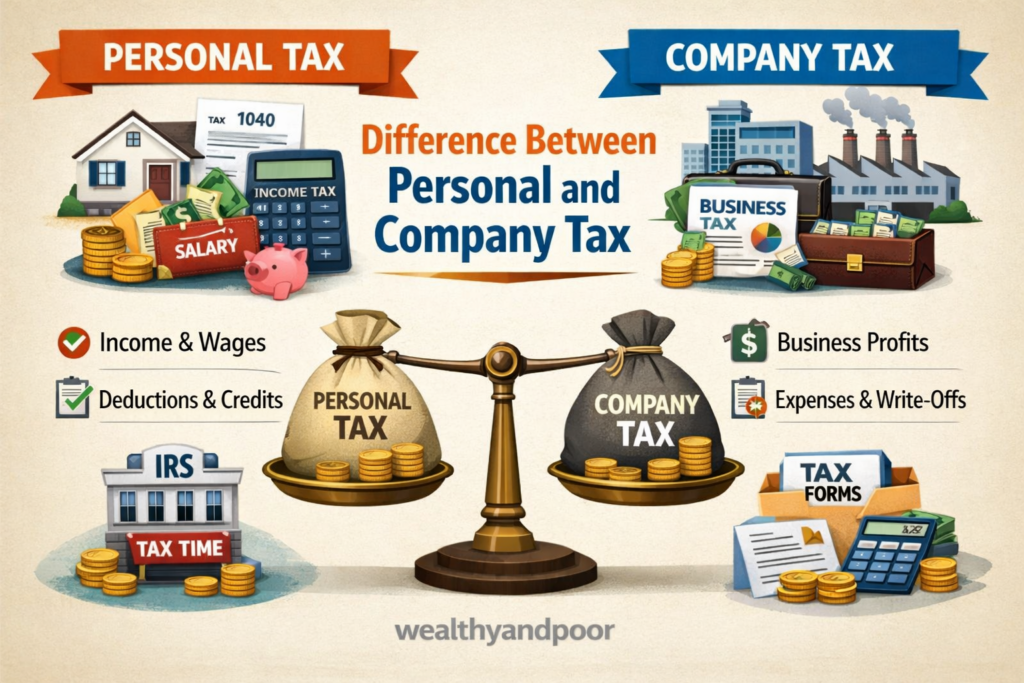

Taxation is one of the most important pillars of any functioning economy. It funds public infrastructure, education, healthcare, security, and other government services. However, taxes are not applied uniformly across all income earners. Individuals and companies are taxed under different frameworks, with distinct rules governing how income is assessed, reported, and paid.
Understanding the difference between personal tax and company tax is crucial for entrepreneurs, employees, freelancers, and business owners. Misunderstanding these obligations can lead to penalties, legal complications, or inefficient tax planning. In Nigeria and many other jurisdictions, personal and corporate taxes are administered under separate laws and systems.
This article explains the key differences between personal tax and company tax, including how they are calculated, who pays them, and the legal frameworks that govern them.
What Is Personal Tax?
Personal tax often referred to as Personal Income Tax (PIT) is the tax imposed on the income earned by individuals. This includes employees, freelancers, sole proprietors, and other self-employed persons.
In Nigeria, personal income tax is governed by the Personal Income Tax Act (PITA), which requires individuals to pay taxes on their earnings such as salaries, wages, bonuses, business profits, rental income, dividends, and other sources of personal income.
Employees typically pay personal tax through the Pay-As-You-Earn (PAYE) system. Under this arrangement, employers deduct taxes from employees’ salaries every month and remit them to the relevant state tax authority.
Self-employed individuals, on the other hand, are responsible for filing their own tax returns and paying taxes directly to the tax authority.
The tax rates under the Nigerian Personal Income Tax Act are progressive, meaning the rate increases as income increases. As of current regulations, personal income tax ranges from 7% to 24%, depending on income level.
Personal tax is administered primarily by state governments through their internal revenue services.
What Is Company Tax?
Company tax commonly referred to as Company Income Tax (CIT) is the tax imposed on the profits of registered companies operating in Nigeria.
Unlike personal income tax, which targets individual earnings, company income tax focuses on business profits after allowable deductions and expenses have been removed.
Company Income Tax in Nigeria is governed by the Companies Income Tax Act (CITA) and administered by the Federal Inland Revenue Service (FIRS).
Under current tax regulations, Nigerian companies are taxed according to their annual turnover:
- Small companies (turnover below ₦25 million): 0% Company Income Tax
- Medium companies (turnover between ₦25 million and ₦100 million): 20% Company Income Tax
- Large companies (turnover above ₦100 million): 30% Company Income Tax
These changes were introduced through the Finance Act 2019 and subsequent amendments to encourage the growth of small businesses.
Companies are also required to file annual tax returns with FIRS and may be subject to additional taxes such as Value Added Tax (VAT), Education Tax, and Withholding Tax depending on their operations.
Key Differences Between Personal and Company Tax
Although both personal and corporate taxes aim to generate government revenue, they differ significantly in structure, administration, and application.
- Who Pays the Tax
The most obvious difference lies in who is responsible for paying the tax.
- Personal tax is paid by individuals earning income, including employees, freelancers, consultants, and sole proprietors.
- Company tax, on the other hand, is paid by registered business entities such as limited liability companies.
A sole proprietor may pay personal tax on business profits, while a registered limited company pays company income tax.
- Governing Laws
Personal and company taxes operate under separate legal frameworks in Nigeria.
Personal tax is regulated by the Personal Income Tax Act (PITA), while company tax is governed by the Companies Income Tax Act (CITA).
These laws define tax rates, exemptions, filing procedures, and penalties for non-compliance.
- Tax Authorities
Another key distinction is the authority responsible for collecting the taxes.
- Personal income tax is generally administered by State Internal Revenue Services for individuals residing in each state.
- Company income tax is administered by the Federal Inland Revenue Service (FIRS), which oversees corporate tax compliance nationwide.
This separation reflects Nigeria’s federal tax structure.
- Tax Rates and Structure
Personal income tax follows a progressive rate system, meaning the percentage of tax increases as income rises.
Company tax, however, is typically applied at fixed rates depending on company size or turnover.
For example, a large company in Nigeria pays a flat 30% tax on its taxable profits, while individuals may pay varying rates between 7% and 24%.
- Tax Filing and Reporting
Individuals and companies also differ in how they file taxes.
Employees under PAYE may not need to personally file detailed returns because their employer handles deductions. However, self-employed individuals must file annual tax returns themselves.
Companies must file detailed annual tax reports that include:
- Audited financial statements
- Tax computations
- Capital allowances calculations
- Evidence of tax payments
Failure to file company tax returns can attract significant penalties.
Tax Deductions and Allowances
Both individuals and companies benefit from certain deductions, but they differ in scope.
Individuals can claim reliefs such as the Consolidated Relief Allowance (CRA) under the Personal Income Tax Act.
Companies, meanwhile, can deduct operational expenses such as salaries, rent, utilities, depreciation (capital allowances), and other business-related costs before calculating taxable profits.
This difference reflects the complexity of business operations compared to personal income.
Why Understanding the Difference Matters
For entrepreneurs and business owners, understanding the distinction between personal and company tax can influence how a business is structured.
For example, operating as a sole proprietor means paying personal income tax on profits. Registering a company, however, shifts the tax obligation to corporate tax rules.
This decision affects tax planning, legal liability, compliance obligations, and potential tax benefits.
Additionally, misunderstanding these rules can lead to compliance risks, including fines, penalties, and interest charges from tax authorities.
Conclusion
Personal tax and company tax serve the same purpose generating revenue for government operations but they apply to different taxpayers and follow different rules.
Personal tax applies to individuals earning income, while company tax applies to registered businesses making profits. They are governed by separate laws, administered by different tax authorities, and calculated using different tax structures.
As Nigeria continues to modernize its tax system through reforms such as the Finance Acts and digital tax administration, understanding these distinctions is becoming increasingly important for individuals and businesses alike.
For taxpayers, staying informed about these obligations not only ensures compliance but also supports smarter financial and business decisions.











Comments