
Difference Between VAT and Withholding Tax
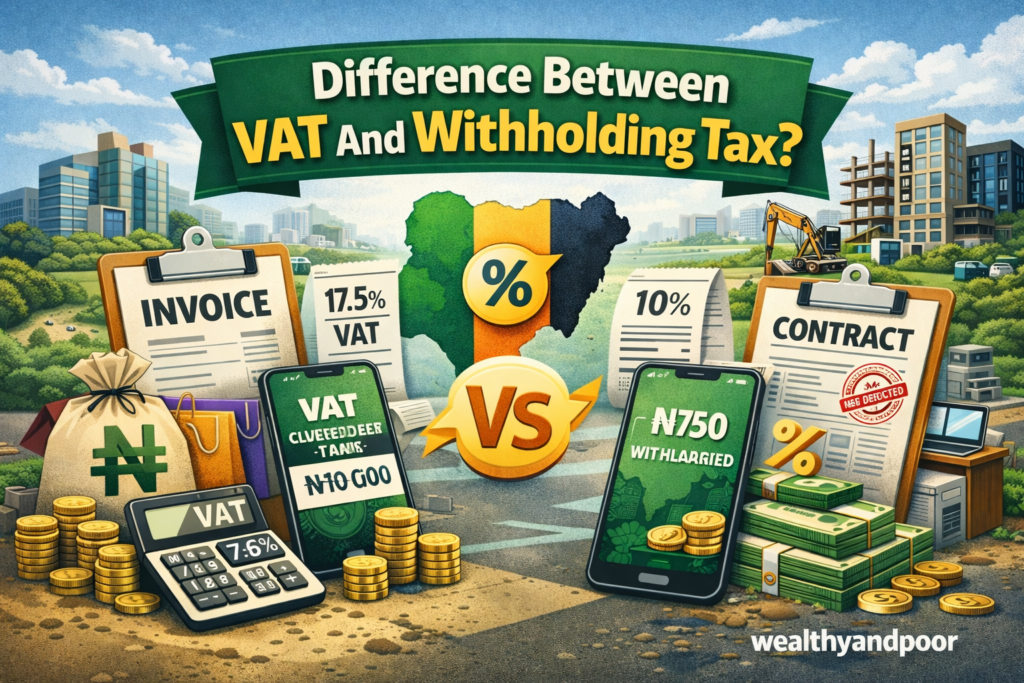

Taxation plays a central role in government revenue generation and economic regulation. In Nigeria, two commonly misunderstood taxes are Value Added Tax (VAT) and Withholding Tax (WHT). Although both taxes are frequently deducted or added during financial transactions, they serve different purposes, are governed by different laws, and affect taxpayers in different ways.
For businesses, contractors, and even consumers, understanding the difference between VAT and withholding tax is important for compliance, financial planning, and accurate accounting. This article explains how these two taxes work, their key differences, and why they are often confused.
Understanding Value Added Tax (VAT)
Value Added Tax (VAT) is an indirect consumption tax charged on goods and services supplied within Nigeria. The tax is usually added to the price of products or services and ultimately paid by the final consumer.
Businesses act as intermediaries in the VAT system. When they sell goods or provide services, they charge VAT on the invoice, collect it from customers, and remit it to the government through the Federal Inland Revenue Service (FIRS).
VAT is applied at multiple stages of the supply chain, from manufacturing to retail. However, because businesses can claim credits for VAT paid on inputs, the final tax burden usually falls on the end consumer.
For example, if a consulting firm charges ₦100,000 for professional services, it will add 7.5% VAT, bringing the total invoice to ₦107,500. The additional ₦7,500 represents VAT that the company must remit to the government.

Understanding Withholding Tax (WHT)
Withholding Tax (WHT) is a direct tax deduction from income at the point of payment. Unlike VAT, which is added to a transaction, withholding tax is deducted from the payment made to a supplier, contractor, or service provider.
In essence, withholding tax serves as an advance payment of income tax. The person or company making the payment deducts the tax and remits it to the appropriate tax authority on behalf of the recipient.
For example, if a company hires a contractor and agrees to pay ₦1,000,000 for services, it may deduct 5% withholding tax before making payment. This means the contractor receives ₦950,000, while ₦50,000 is remitted to the tax authority as a credit against the contractor’s future income tax liability.
Because withholding tax is essentially a prepayment of income tax, the beneficiary can use the amount deducted as a tax credit when filing annual tax returns.
Why VAT and Withholding Tax Are Often Confused
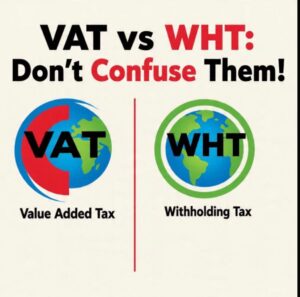
VAT and withholding tax often appear together on invoices and payments, especially in business-to-business transactions. This is one of the main reasons many people assume they are the same.
In some cases, organizations may both add VAT to invoices and deduct withholding tax before making payment. This creates a situation where VAT increases the invoice amount while withholding tax reduces the amount paid.
For instance:
Service Fee: ₦100,000
VAT (7.5%): ₦7,500
Total Invoice: ₦107,500
Withholding Tax (5% of service fee): ₦5,000
The client pays ₦102,500 to the service provider and remits ₦5,000 as withholding tax to the tax authority.
While they appear in the same transaction, their purpose and accounting treatment are entirely different.
Key Differences Between VAT and Withholding Tax
- Nature of the Tax
VAT is an indirect tax on consumption, meaning the final consumer bears the cost when purchasing goods or services.
Withholding tax, on the other hand, is a direct tax on income, deducted from earnings such as professional fees, dividends, rents, or contract payments.
- Method of Application
VAT is added to the value of goods and services and included in the invoice issued by the seller.
Withholding tax is deducted from payments made to a supplier or contractor before the payment is completed.
- Who Bears the Tax Burden
In the VAT system, the final consumer bears the tax, even though businesses collect and remit it.
Withholding tax is borne by the recipient of the income, because it is deducted from the payment they are entitled to receive.
- Purpose of the Tax
VAT is designed to generate revenue from consumption across the economy.
Withholding tax is designed primarily as a tax collection mechanism that ensures government receives part of income tax at the point of payment.
- Ability to Claim Tax Credit
VAT-registered businesses can claim input VAT credits for VAT paid on purchases used in their operations.
Withholding tax can also be credited, but in a different way. The taxpayer can offset the withheld amount against their final income tax liability when filing annual returns.
- Governing Laws
VAT is regulated under the Value Added Tax Act.
Withholding tax operates under different laws including the Companies Income Tax Act (CITA) and the Personal Income Tax Act (PITA).
Practical Example in a Business Transaction
Consider a construction company hired by a corporate client for a project worth ₦2,000,000.
The invoice may look like this:
- Contract value: ₦2,000,000
- VAT (7.5%): ₦150,000
- Total invoice: ₦2,150,000
However, the client may deduct withholding tax:
- Withholding Tax (5%): ₦100,000
- Final payment to contractor: ₦2,050,000
The contractor can later claim the ₦100,000 as part of their income tax credit when filing annual tax returns.
Importance for Businesses and Taxpayers
Understanding the difference between VAT and withholding tax is essential for Nigerian businesses and professionals. Misinterpreting these taxes can lead to errors in invoicing, tax filing, and financial reporting.
For companies, proper compliance ensures accurate remittance to the Federal Inland Revenue Service and avoids costly penalties. For contractors and service providers, understanding withholding tax helps them track tax credits and avoid overpaying income tax.
In Nigeria’s evolving tax system, where authorities are increasing enforcement and expanding tax collection mechanisms, financial literacy around taxes like VAT and withholding tax has become more important than ever.
Conclusion
Although VAT and withholding tax are often mentioned together in financial transactions, they serve completely different roles in Nigeria’s tax system.
VAT is a consumption tax paid by the final consumer, while withholding tax is an advance income tax deducted at source from payments made to individuals or companies. Their methods of application, legal frameworks, and financial impacts differ significantly.
For businesses, accountants, and financial professionals, a clear understanding of these differences helps ensure tax compliance, improve financial management, and prevent costly mistakes.












Comments