How to Check If You Owe Tax in Nigeria
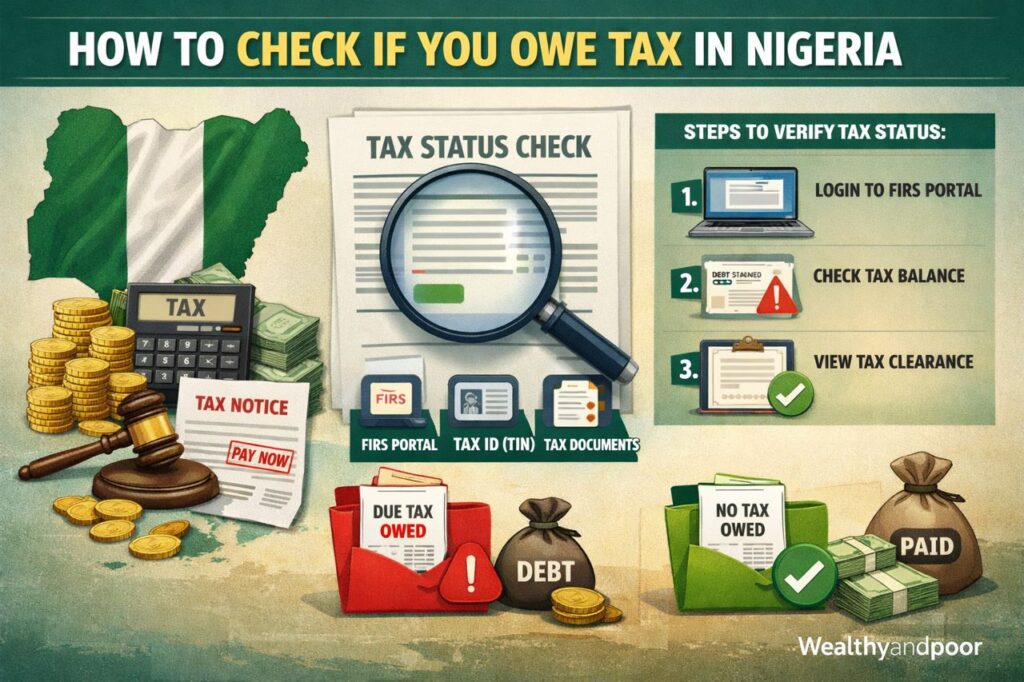

In Nigeria’s evolving tax environment, knowing your tax status is no longer optional it is a financial necessity. With increased enforcement by the Federal Inland Revenue Service (FIRS) and state tax authorities, individuals and businesses are expected to stay compliant or face penalties. Yet, many Nigerians are still unsure how to confirm whether they owe taxes at all.
This article explains, in clear terms, how to check if you owe tax in Nigeria, the systems involved, and what steps to take if you discover an outstanding liability.
Why It Matters to Know Your Tax Status
Nigeria continues to struggle with low tax compliance. Reports show that a significant number of eligible taxpayers either underpay or fail to pay taxes altogether, contributing to revenue gaps and increased scrutiny by authorities.
For individuals and businesses, the consequences of ignoring tax obligations can include penalties, interest charges, frozen accounts, and even legal action. Understanding your status early helps you stay ahead and avoid unnecessary complications.
- Check Your Tax Identification Number (TIN)
The first step in determining whether you owe tax is confirming your Tax Identification Number (TIN). This is your unique identity in Nigeria’s tax system.
If you are employed, your employer typically registers you under the Pay-As-You-Earn (PAYE) system. Business owners and self-employed individuals are required to register directly with the relevant tax authority.
To verify your TIN:
- Visit the Joint Tax Board (JTB) TIN verification portal
- Enter your name or business details
- Confirm your registration status
If you do not have a TIN, it is likely that you are not yet fully captured in the tax system but this does not exempt you from liability.
- Review Your Tax Records with the Relevant Authority
Tax obligations in Nigeria are split between:
- FIRS (for companies, VAT, and federal taxes)
- State Internal Revenue Services (for personal income tax)
- To check if you owe taxes:
- Log into your tax authority’s online portal (if available)
- Visit their office physically
- Request your tax statement or account history
For example, residents in Lagos would typically deal with the Lagos State Internal Revenue Service (LIRS), while companies interact more with FIRS.
Your tax record will show:
- Filed returns
- Payments made
- Outstanding balances (if any)
- Check Your Tax Clearance Certificate (TCC) Status
A Tax Clearance Certificate (TCC) is one of the clearest indicators of your tax standing. It confirms that you have paid your taxes for a specified period (usually the last three years).
If you are unable to obtain a TCC, it may indicate:
- Unpaid taxes
- Incomplete filings
- Discrepancies in your records
Many financial and official transactions in Nigeria such as government contracts or loan applications require a valid TCC.
- Review Employer Deductions (For Employees)
If you are a salaried worker, your employer deducts tax under the PAYE system. However, errors can occur.
To confirm your status:
- Check your payslips for monthly tax deductions
- Request your annual tax summary from your employer
- Cross-check with your state tax authority
In some cases, employers deduct taxes but fail to remit them properly. This can create liabilities in your name, making verification essential.
- Use Digital Tax Platforms and Tools
Nigeria is gradually adopting digital tax systems to improve compliance and transparency. Platforms now allow taxpayers to:
- View obligations
- Track payments
- Receive alerts on outstanding taxes
For instance, tax compliance tools are emerging to help individuals and SMEs understand exactly what they owe and when payments are due.
These tools are especially useful for business owners managing multiple tax types such as VAT, withholding tax, and company income tax.
- Watch for Official Notices or Tax Letters
One of the most direct ways to know you owe tax is receiving a notification from a tax authority.
These notices may come in the form of:
- Demand notices
- Audit invitations
- Assessment letters
Ignoring such communication can escalate the issue, leading to penalties or enforcement actions. It is always advisable to respond promptly and seek clarification if needed.
- Conduct a Self-Assessment
For self-employed individuals and business owners, tax responsibility largely depends on self-assessment.
Ask yourself:
- Have I filed my annual tax returns?
- Have I declared all income sources?
- Have I paid applicable taxes like VAT or withholding tax?
If the answer to any of these is “no,” there is a strong possibility that you owe tax.
What to Do If You Owe Tax
Discovering that you owe tax is not the end of the road. In fact, early action can significantly reduce penalties.
Steps to take include:
- Request a breakdown of your tax liability
- Verify the assessment to ensure accuracy
- Negotiate payment terms if necessary
- Pay promptly to avoid additional charges
In some cases, tax authorities may allow installment payments, depending on the situation.
Conclusion
Checking whether you owe tax in Nigeria is a critical step toward financial responsibility. With increasing digitisation and enforcement, ignorance is no longer a viable excuse.
By verifying your TIN, reviewing your records, monitoring deductions, and responding to official notices, you can stay compliant and avoid unnecessary stress.
Ultimately, the goal is not just to avoid penalties but to build a transparent financial profile that supports your personal and business growth.









Comments