
How to Know If Your Employer Pays Your Tax
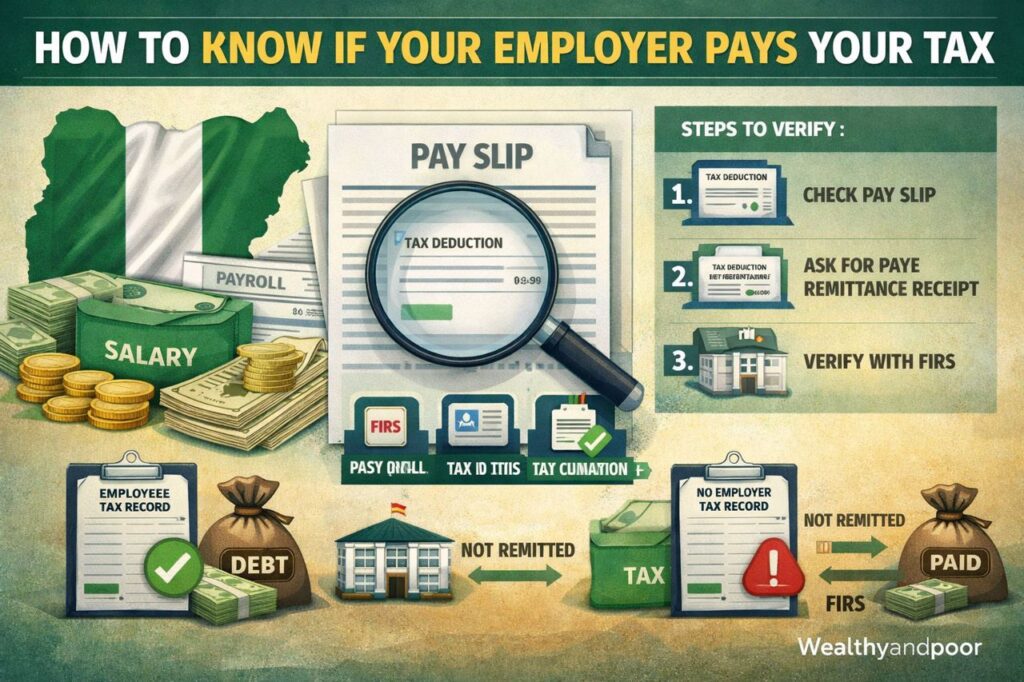

In Nigeria’s formal employment system, paying personal income tax is often not something employees do directly. Instead, it is handled through the Pay-As-You-Earn (PAYE) system, where employers deduct tax from salaries and remit it to the appropriate tax authority. But a critical question many workers still ask is: How can you be sure your employer is actually paying your tax?
This question is more important than it seems. Failure by an employer to remit taxes can expose employees to compliance issues, especially when applying for loans, visas, or government contracts. Here is a clear, practical guide to help you confirm whether your employer is meeting their tax obligations on your behalf.
Understanding How PAYE Works
Under Nigerian tax law, employers are legally required to deduct personal income tax from employees’ salaries and remit it monthly to the relevant tax authority.
This system ensures that tax is collected at the source before salaries are paid. Employers must also file annual returns detailing employee earnings and taxes paid.
In simple terms, if you are a salaried worker, your tax should already be deducted before your salary hits your account.
Key Signs Your Employer Is Paying Your Tax
- Your Payslip Shows PAYE Deductions
The first and most immediate indicator is your monthly payslip.
A compliant employer will clearly itemise deductions such as:
- PAYE (Personal Income Tax)
- Pension contributions
- National Housing Fund (if applicable)
If your payslip does not show any tax deduction especially if you earn above the minimum taxable threshold it may be a red flag.
- You Receive a Tax Clearance Certificate (TCC)
One of the strongest proofs that your employer is paying your tax is your Tax Clearance Certificate.
A TCC is an official document issued by the tax authority confirming that your taxes have been paid for a specified number of years. According to tax guidelines, employees can use a TCC or payroll records like Form H1 as proof of tax remittance.
You typically need a TCC for:
- Visa applications
- Government contracts
- Loan approvals
- Property transactions
If you apply and cannot obtain a TCC, it may indicate your taxes have not been properly remitted.
- Your Employer Provides Annual Tax Statements
Employers are required to file annual tax returns and may provide employees with summaries of their earnings and deductions.
This document often includes:
- Total annual salary
- Total PAYE deducted
- Remittance details
If your employer cannot provide this, it’s worth asking questions.
- You Are Registered with a State Tax Authority
Employees under PAYE are usually registered with a State Internal Revenue Service (e.g., Lagos State Internal Revenue Service if you work in Lagos).
You can confirm your status by:
- Requesting your Tax Identification Number (TIN)
- Checking your records with the tax office
If you have no tax record at all, your employer may not be remitting your deductions.
- Your Net Salary Reflects Tax Deductions
Another practical clue is your take-home pay.
Nigeria’s PAYE system uses graduated tax rates ranging roughly from 7% to 24% depending on income level.
If your salary seems unusually “untouched” (no noticeable deductions), it may suggest tax is not being deducted or remitted.
Red Flags to Watch Out For
Even if deductions appear on your payslip, that doesn’t automatically mean the tax is being remitted. Watch for these warning signs:
- No Tax Clearance Certificate despite years of employment
- Employer avoids tax-related questions
- No TIN issued to you
- Inconsistent or unclear payslips
Complaints from former employees about tax issues
Remember: some employers deduct tax but fail to remit it a serious compliance issue.
Why It Matters
You might assume that tax compliance is solely your employer’s responsibility, but in reality, it can affect you directly.
If your taxes are not properly remitted:
- You may struggle to obtain a Tax Clearance Certificate
- You could face delays in official transactions
- Your financial records may appear incomplete
Nigeria already faces significant tax compliance challenges, with many individuals and entities failing to meet obligations. This makes it even more important for employees to verify their own status.
What to Do If You Suspect Non-Compliance
If you believe your employer is not paying your tax:
- Request clarification from your HR or finance department
- Ask for your TIN and tax records
- Visit your State Internal Revenue Service office
- Apply for a Tax Clearance Certificate to confirm your status
- Keep personal records of payslips and employment details
If necessary, you can escalate the issue to the relevant tax authority.
Conclusion
In Nigeria’s PAYE system, tax payment is designed to be seamless for employees but that doesn’t mean you should ignore it. Verifying that your employer is actually remitting your tax is a simple but essential step in protecting your financial and legal standing.
A payslip is a good start, but real confirmation comes from official records especially your Tax Clearance Certificate. In a system where compliance gaps still exist, being proactive is not just wise; it is necessary.












Comments