
How to Write a Tax Complaint Letter
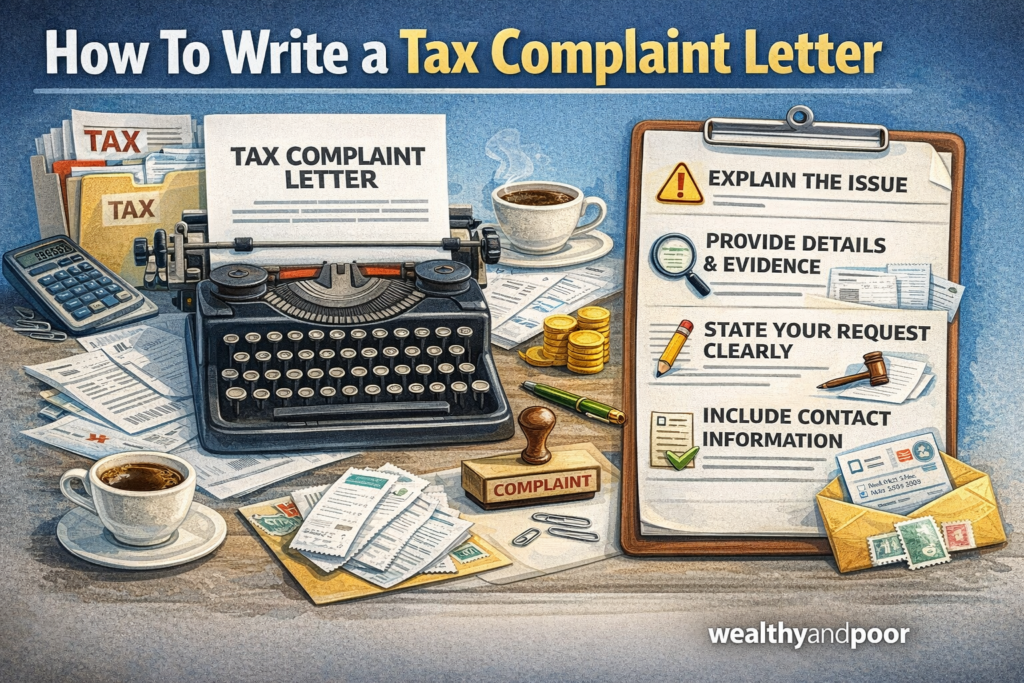

In Nigeria’s evolving tax environment, disputes between taxpayers and authorities are not uncommon. Whether it’s an incorrect assessment, unexplained penalties, or compliance disagreements, knowing how to formally raise your concerns can make a significant difference.
A well-written tax complaint letter is more than just a grievance it is a structured legal and administrative tool that can influence how quickly and fairly your issue is resolved.
This article explains how to write an effective tax complaint letter in a clear and professional way.
Why a Tax Complaint Letter Matters
A tax complaint letter serves as an official record of your dispute with a tax authority such as the Federal Inland Revenue Service (FIRS) or a state internal revenue service. It demonstrates that you are engaging through proper channels and provides a documented basis for review, correction, or escalation.
Importantly, tax authorities expect communication to be formal, precise, and supported by evidence. According to guidance on responding to tax notices, clear documentation and structured responses significantly improve the chances of resolving disputes efficiently.
When Should You Write a Tax Complaint Letter?
You should consider writing a tax complaint letter in the following situations:
- You disagree with a tax assessment
- You have been wrongly charged penalties or interest
- Your tax payment was not properly recorded
- You received a demand notice without clear justification
- There are discrepancies in your tax records
In many cases, Nigerian tax regulations allow taxpayers to formally object within a limited period often 30 days making timely communication essential.
Key Elements of a Tax Complaint Letter
An effective tax complaint letter must be structured, factual, and professional. Below are the essential components:
- Your Contact Information
Start with your full name (or company name), address, phone number, and email. This ensures the tax authority can easily identify and respond to you.
- Date
Include the date the letter is written. This is important for tracking timelines, especially where statutory deadlines apply.
- Tax Authority’s Details
Clearly state the name and address of the relevant tax office (e.g., FIRS office or state tax authority).
- Subject Line
Use a direct subject line such as:
“Complaint Regarding Tax Assessment [Reference Number]”
This immediately informs the recipient about the purpose of your letter.
- Reference to the Tax Notice
Mention the notice or assessment you are disputing, including:
- Notice number
- Date issued
- Tax type (e.g., VAT, CIT, PAYE)
This aligns your complaint with the authority’s records and avoids confusion.
- Writing the Body of the Letter
The body of your tax complaint letter should be clear, concise, and evidence-based.
- Opening Paragraph: Acknowledge the Issue
Start by acknowledging receipt of the tax notice. For example:
- “We acknowledge receipt of your notice dated [insert date] regarding the assessment of [tax type].”
This shows professionalism and cooperation.
- State Your Complaint Clearly
Explain exactly what you are disputing. Avoid emotional language focus on facts.
Examples:
- Incorrect income calculation
- Duplicate tax charges
- Misapplied tax rates
- Be specific and direct.
- Provide Supporting Evidence
Attach documents that support your position, such as:
- Tax returns
- Bank statements
- Receipts and invoices
- Financial statements
Tax authorities often rely on available records when making assessments, so providing accurate documentation strengthens your case.
- State Your Desired Resolution
Clearly outline what you want the authority to do. This could include:
- Reassessment of tax liability
- Removal of penalties
- Correction of records
- Refund of overpaid tax
Being specific helps the authority respond appropriately.
- Maintain a Professional Tone
Even if the issue is frustrating, your tone should remain:
- Respectful
- Neutral
- Professional
This increases the likelihood of a constructive response.
- Closing the Letter
End your letter with:
- A polite closing (e.g., “Yours faithfully”)
- Your name and signature
- Company stamp (if applicable)
You may also include a statement requesting acknowledgment or feedback within a specified timeframe.
Sample Tax Complaint Letter Format
Below is a simple structure you can adapt:
- [Your Name / Company Name]
- [Address]
- [Email / Phone Number]
- [Date]
- The Tax Authority
- [Office Address]
- Subject: Complaint Regarding Tax Assessment – [Reference Number]
Dear Sir/Madam,
I write to formally express my concern regarding the tax assessment issued on [date], with reference number [insert number].
Upon review, I believe the assessment contains inaccuracies, particularly in relation to [briefly state issue]. Specifically, [explain clearly].
Attached are relevant documents, including [list documents], which support my position.
In light of the above, I kindly request a review and correction of the assessment.
Thank you for your attention to this matter. I look forward to your response.
Yours faithfully,
[Your Name]
Practical Tips for Success
- Act quickly: Delays can lead to penalties or enforcement actions
- Keep copies: Always retain copies of your letter and attachments
- Use official channels: Submit via recognized email, portal, or physical office
Follow up: If there’s no response, send reminders or escalate
Similar to financial complaint processes in Nigeria, structured documentation and clear communication improve response time and resolution outcomes.
Conclusion
Writing a tax complaint letter is not just about raising an issue it is about presenting a well-reasoned case backed by facts and documentation. In Nigeria’s increasingly structured tax system, authorities are more responsive when taxpayers communicate clearly and professionally.
A carefully drafted complaint letter can mean the difference between prolonged disputes and a swift resolution. By following the steps outlined above, individuals and businesses can protect their financial interests while maintaining compliance with tax regulations.












Comments