
List of Business Taxes in Nigeria
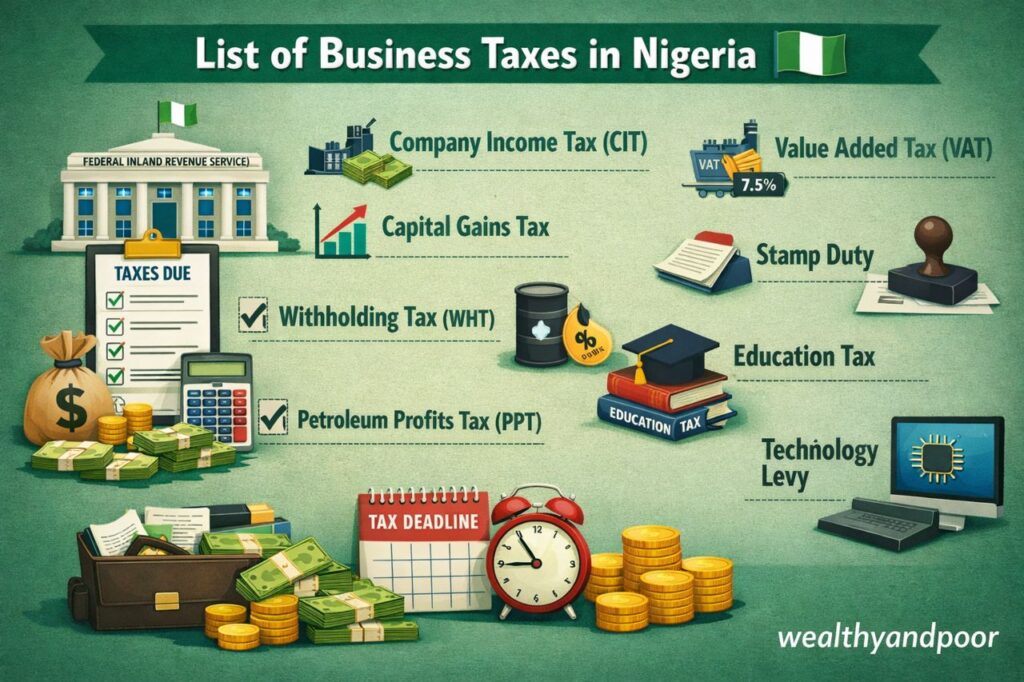

Doing business in Nigeria comes with a range of tax obligations. Whether you’re running a small shop in Port Harcourt, Lagos, or a larger company with national reach, knowing the taxes that apply to your enterprise is essential not just for compliance, but for smart financial planning.
Nigeria’s tax system is administered at three levels of government: federal, state, and local. Each tier has its constitutional right to collect specific taxes and levies from businesses operating within its jurisdiction.
Below is a clear breakdown of the most important business taxes you should understand.
Companies Income Tax (CIT)
This is the principal federal tax on business profits. Every company incorporated or operating in Nigeria must pay tax on its income, although small companies with lower turnover may qualify for exemptions or reduced rates.
Tax Summaries
Rate: 30% for large companies (turnover > ₦100 million)
Medium companies: 20% (some laws set this band slightly differently depending on turnover thresholds)
Small companies: exempt from CIT if turnover is below set limits
Who pays: All resident companies and non-resident companies with Nigeria-source income.
Why it matters: CIT is the most significant tax expense for many businesses. Accurate accounting and planning can reduce liabilities and improve growth.
Value-Added Tax (VAT)
VAT is a consumption tax applied to most goods and services sold in Nigeria. It’s collected by businesses from customers and remitted to the tax authorities.
Tax Summaries
Current rate: 7.5%
Who charges VAT: Registered businesses selling taxable goods or services
Exemptions: Basic food items, educational materials, medicines, agricultural goods, and certain services are exempt or zero-rated.
Why it matters: VAT affects pricing and profit margins. Businesses must register for VAT and file returns regularly.
Tertiary Education Tax (Education Tax)
This tax supports the development of higher education in Nigeria and is paid by companies operating in the country.
Rate: Typically around 2.5% of assessable profits
Who pays: Nigerian incorporated companies
Purpose: Funds the Tertiary Education Trust Fund (TETFund).
Even though this tax is relatively small compared to CIT or VAT, it’s mandatory and must be filed alongside other corporate returns.
Petroleum Profit Tax (PPT)
For companies in the oil and gas sector, the tax structure is different.
This applies to upstream petroleum operations (like extraction and drilling)
Rates can vary depending on contract types, sometimes reaching higher percentages than standard corporate tax (reflecting the profitability of oil operations).
Because oil remains a major part of Nigeria’s economy, PPT generates significant revenue so businesses in this industry need expert tax planning.
Withholding Tax (WHT)
Withholding tax is not a standalone tax on business profit, but a pre-payment mechanism. It’s deducted at source on certain payments like fees, commissions, rents, and professional services.
Rates: 2.5% to 10%, depending on transaction type
Who deducts: Businesses paying contractors or suppliers
Purpose: Encourages early collection and ensures compliance with tax duties.
This is especially important for financial and consulting services, where clients deduct tax before payment.
Capital Gains Tax (CGT)
Any business that sells assets like property, machinery, or investments may owe capital gains tax on the profit made from those sales.
Rate: Usually 10% of net gain
Applies to: Companies and sometimes individuals disposing of business-related assets.
Good record keeping here can prevent under-reporting and unexpected tax bills.
National Information Technology Development Levy (IT Levy)
Certain large companies are subject to this levy aimed at supporting technology infrastructure and digital advancement.
Who pays: Companies with turnover above a set threshold
Rate: Around 1% of profit before tax
Included sectors: Telecommunications, banking, insurance, and internet service providers.
State and Local Taxes
Beyond federal taxes, businesses must also be aware of charges from state and local governments such as:
- Business Premises Tax – based on commercial property used for business
- Land use and development levies – property-related taxes
- Local service levies – fees for sanitation, signage, or signage permits
Promotion, entertainment, hotel, or education taxes in some states.
These vary widely across states, so local tax registration and compliance are essential.
Conclusion
Nigeria’s tax landscape might seem complex, but breaking it down shows a mix of federal levies (like CIT, VAT, and PPT), special levies (like education tax and IT levy), and state/local charges that apply to businesses. Keeping good books, understanding your obligations early, and seeking professional advice can make doing business smoother and legally compliant.
If you’re starting a business or expanding operations, use this guide as your starting point and follow up with official resources like:
Federal Inland Revenue Service (FIRS) – primary federal tax authority
State Internal Revenue Services – for regional levies
professional tax consultants for compliance support.









Comments