
Tax for Startups in Nigeria Explained
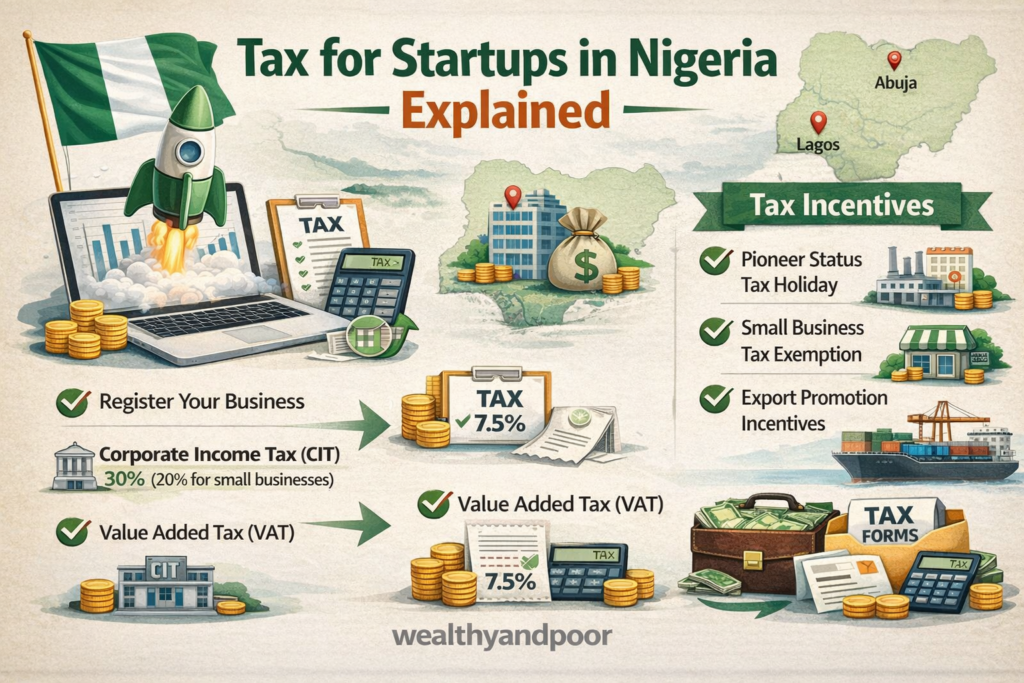

Nigeria’s startup ecosystem has grown rapidly in recent years, driven by innovation in sectors such as fintech, e-commerce, logistics, health technology, and digital services. However, beyond building products and attracting investors, one of the most important responsibilities for founders is understanding the tax system.
Tax compliance is not only a legal requirement but also a key factor in maintaining credibility with regulators, investors, and financial institutions. Fortunately, Nigeria’s tax framework—especially after several reforms and the introduction of the Nigeria Startup Act 2022 includes incentives and reduced tax rates designed to support early-stage companies.
This article explains how taxation works for startups in Nigeria, the major taxes applicable, available incentives, and what founders need to know to remain compliant.
Understanding Startup Taxation in Nigeria
In Nigeria, startups are generally taxed under the same corporate tax framework as other businesses. Once a company is registered with the Corporate Affairs Commission (CAC), it is expected to register with the Federal Inland Revenue Service (FIRS) for tax purposes.
The taxes applicable to startups depend largely on three factors:
- The company’s annual turnover
- The sector it operates in
- Whether the startup qualifies for special incentives under government programs
Nigeria operates a tiered corporate tax system designed to reduce the burden on smaller businesses.
Company Income Tax (CIT)
Company Income Tax is the primary tax paid by businesses in Nigeria. It is charged on the profits of registered companies.
The applicable tax rate depends on the startup’s annual turnover:
- Company Category
- Annual Turnover
- CIT Rate
- Micro companies
This tiered structure was introduced to support small businesses and encourage entrepreneurship. For instance, a startup with a turnover of ₦20 million annually does not pay company income tax, while a company generating ₦60 million will pay 20% tax on its taxable profits.
Key Taxes Startups May Pay
Apart from Company Income Tax, startups in Nigeria may be subject to several other taxes depending on their activities.
- Value Added Tax (VAT)
Value Added Tax is charged on goods and services supplied by businesses.
Current VAT rate: 7.5%
Startups must register for VAT if their annual turnover exceeds ₦25 million.
Businesses collect VAT from customers and remit it to the government through the Federal Inland Revenue Service.
Withholding Tax (WHT)
Withholding tax is deducted at source on certain payments such as:
- Professional services
- Consultancy services
- Contract payments
Typical withholding tax rates range from 5% to 10%, depending on the type of transaction.
The Trusted Advisors Legal Practice
For startups, this tax often applies when paying vendors, consultants, or contractors.
Pay-As-You-Earn (PAYE) Tax
If a startup hires employees, it must deduct Pay-As-You-Earn (PAYE) tax from staff salaries and remit it to the relevant state tax authority.
PAYE operates on a progressive system with tax rates that increase with income levels. Employers are responsible for filing these deductions monthly.
Pension Contributions
Although technically not a tax, Nigerian employers must contribute to employee pension schemes.
- Employer contribution: 10% of salary
- Employee contribution: 8% of salary
This is mandatory for companies with at least three employees.
Tax Incentives Available to Startups
Nigeria has introduced several incentives to encourage innovation and investment in the startup ecosystem.
- Tax Holiday Under the Startup Act
The Nigeria Startup Act 2022 provides tax incentives for companies that obtain an official “startup label.”
Qualified startups can enjoy:
- Corporate income tax exemption for up to three years
- Extension of the tax holiday for an additional two years depending on performance.
During this period, startups can reinvest profits into growth rather than paying taxes.
- Pioneer Status Incentive
Another major tax relief program is the Pioneer Status Incentive, granted to companies operating in industries considered important for economic development.
Eligible businesses may receive:
- 3- year corporate tax holiday
- Extension up to 5 years total depending on eligibility.
This incentive is commonly granted to sectors such as:
- Technology
- Manufacturing
- Agriculture
- Renewable energy
Capital Gains Tax Relief
Certain startup shares may qualify for capital gains tax exemptions, especially when investors hold the shares for a specified period. This policy encourages venture capital investment in early-stage companies.
Tax Compliance Requirements for Startups
For startups in Nigeria, compliance involves more than just paying taxes. Companies must also meet reporting and filing obligations.
- Registering With FIRS
After incorporation, startups must register with the Federal Inland Revenue Service (FIRS) to obtain a Tax Identification Number (TIN).
This number is required for:
- Opening corporate bank accounts
- Filing tax returns
- Conducting official financial transactions
- Filing Annual Tax Returns
Every company must file an annual tax return, even if the business did not make profits.
Failure to file returns can result in:
- Financial penalties
- Interest charges
- Regulatory sanctions
- Maintaining Financial Records
Proper bookkeeping is essential for startups. Accurate records help determine:
- Taxable profit
- Deductible expenses
- VAT obligations
Poor documentation can lead to incorrect tax filings and potential disputes with tax authorities.
Common Tax Challenges for Startups
Despite available incentives, many startups struggle with tax compliance due to several factors:
- Limited Awareness
Many founders are unaware of tax incentives such as startup tax holidays or pioneer status benefits.
- Cash Flow Pressure
Early-stage startups often operate with limited funding, making tax obligations feel burdensome during growth phases.
- Administrative Complexity
Nigeria’s tax system involves multiple agencies, including:
- Federal Inland Revenue Service (FIRS)
- State Internal Revenue Services
- Regulatory authorities
Navigating these requirements can be difficult for first-time entrepreneurs.
The Future of Startup Taxation in Nigeria
Nigeria’s government continues to reform the tax system to improve compliance and stimulate economic growth. Recent reforms aim to simplify tax administration, increase transparency, and modernize tax collection processes.
For startups, these reforms could mean:
- Improved digital tax systems
- Expanded tax incentives
- Simplified filing processes
Conclusion
Taxation is an unavoidable part of running a startup in Nigeria, but the system has become more supportive of early-stage businesses in recent years. Through reduced tax rates, exemptions for small companies, and incentives under the Startup Act and pioneer status schemes, founders have opportunities to grow their businesses while managing tax obligations effectively.
For entrepreneurs, the key to success lies in understanding the applicable taxes, maintaining accurate financial records, and taking advantage of available incentives. By staying compliant and informed, startups can avoid penalties and focus on what truly matters building innovative businesses that contribute to Nigeria’s economic growth.











Comments