
What Triggers Tax Audits in Nigeria?
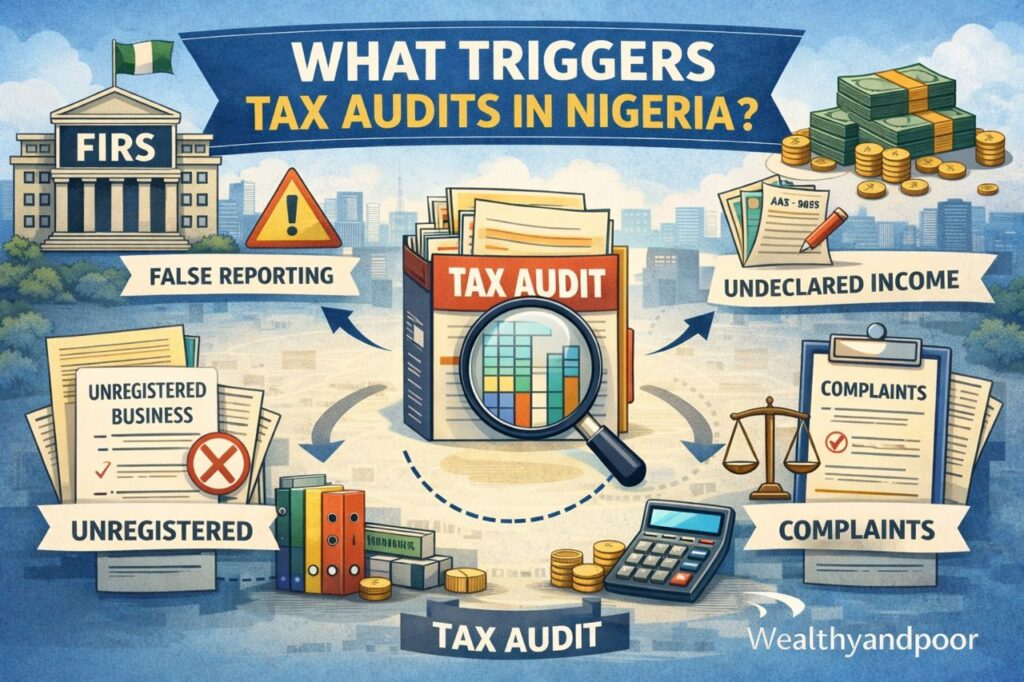

Tax compliance has become a central focus of Nigeria’s fiscal policy as the government seeks to increase non-oil revenue. In recent years, the Federal Inland Revenue Service (FIRS) and state tax authorities have strengthened enforcement mechanisms, using digital tools, data sharing, and risk-based assessments to identify taxpayers who may be underreporting income or failing to comply with tax obligations.
A tax audit is one of the key tools used by the authorities to ensure compliance. While many businesses fear audits, they are a routine part of tax administration and are often triggered by identifiable patterns or “red flags” in financial records and tax filings.
Understanding what typically triggers tax audits in Nigeria can help businesses and individuals stay compliant and reduce the likelihood of scrutiny from tax authorities.
Understanding Tax Audits in Nigeria
A tax audit is an examination of a taxpayer’s financial records and tax returns to verify that the correct amount of tax has been reported and paid. In Nigeria, audits are primarily conducted by the FIRS for federal taxes such as Company Income Tax (CIT), Value Added Tax (VAT), and Withholding Tax (WHT), while state revenue services handle personal income taxes and related levies.
Audits may take several forms, including desk audits where documents are reviewed remotely and field audits, which involve a more detailed examination of a taxpayer’s records at their business premises. Desk audits typically last a few weeks, while field audits may take several months depending on the complexity of the case.
Although some audits are selected randomly, most are triggered by specific risk indicators identified by tax authorities.
Inconsistent Financial Reporting
One of the most common triggers for a tax audit is inconsistency in financial records or tax filings. If the revenue declared in a company’s tax return does not match figures in its audited financial statements or bank transactions, it raises immediate concerns for the tax authority.
For instance, a company that reports significantly different revenue figures in its financial statements and tax returns may appear to be underreporting taxable income. Such discrepancies often prompt the FIRS to investigate further to determine whether taxes have been accurately calculated and paid.
Maintaining consistent records across financial statements, tax filings, and bank accounts is therefore essential for businesses seeking to avoid audit scrutiny.
Failure to File or Late Filing of Tax Returns
Late filing or failure to submit tax returns is another major red flag. Nigerian tax authorities closely monitor compliance timelines for various tax obligations, including Company Income Tax, VAT, PAYE, and Withholding Tax.
When a company repeatedly misses filing deadlines or fails to file returns entirely, it signals potential non-compliance and may trigger an audit. Authorities use electronic systems to track filing patterns, making it easier to detect irregularities and identify taxpayers who consistently fail to meet obligations.
In many cases, late filing also attracts penalties and interest, increasing the financial burden on businesses even before an audit begins.
Unusual Changes in Revenue or Profit
Significant fluctuations in revenue, profits, or tax liabilities can also attract attention from tax authorities. If a company reports a sudden decline in revenue or profits without a clear economic explanation, the tax authority may suspect that income has been concealed or misreported.
For example, if a company reports a dramatic drop in revenue while simultaneously expanding operations, hiring employees, or increasing expenses, such inconsistencies may prompt a closer examination of its financial records.
Similarly, large unexplained spikes in revenue can also trigger audits as authorities seek to verify the accuracy of reported figures.
Excessive Deductions or Expense Claims
Businesses are allowed to deduct legitimate expenses when calculating taxable income. However, claiming unusually high deductions or expenses without adequate documentation can raise red flags.
Tax authorities often scrutinize large or unusual expense claims, particularly when they significantly reduce a company’s taxable income. Excessive deductions may suggest attempts to artificially lower tax liability, especially if the supporting documentation is weak or inconsistent.
To avoid this trigger, businesses should ensure that all deductions are legitimate, well documented, and consistent with normal industry practices.
Repeated Losses Over Several Years
While businesses may legitimately experience losses, consistently reporting losses year after year can attract the attention of tax authorities.
If a company continues operating and expanding while declaring persistent losses, the tax authority may question whether revenue is being properly reported. This situation often prompts an audit to determine whether the business is accurately reflecting its financial position.
Authorities generally expect profitable activity over time, especially in established industries.
Payroll and VAT Irregularities
Discrepancies in payroll taxes or VAT filings are another common audit trigger. For instance, if a company’s payroll records do not align with PAYE remittances or employee data, the tax authority may investigate further.
Similarly, inconsistencies between VAT collected and VAT remitted can quickly attract scrutiny. Tax authorities frequently cross-check these records with financial statements and other filings to detect irregularities.
Accurate payroll management and consistent VAT reporting are therefore critical components of tax compliance.
Industry Risk and Targeted Audits
Certain industries are considered higher risk due to the complexity of transactions or the potential for tax avoidance. Sectors such as oil and gas, telecommunications, and financial services often face more frequent audits because of their economic significance and revenue potential.
Tax authorities also conduct sector-based compliance reviews, targeting specific industries where underreporting is believed to be common.
Businesses operating in these sectors should be particularly diligent in maintaining transparent and accurate financial records.
Whistleblower Reports and Third-Party Information
Audits may also be triggered by information received from external sources. This could include whistleblower reports, complaints from business partners, or data obtained from financial institutions and other government agencies.
With increasing data sharing among regulatory bodies, tax authorities now have more access to information that can reveal discrepancies between reported income and actual financial activity.
Finally, it is important to note that not all audits are triggered by suspicious activity. Tax authorities occasionally select taxpayers randomly to maintain compliance across the system and ensure that even compliant businesses remain accountable.
Random audits serve as a deterrent against tax evasion and reinforce the importance of proper record-keeping.
Conclusion – Staying Audit-Ready
Tax audits are an inevitable part of a functioning tax system, but they do not have to be disruptive. Businesses can significantly reduce their audit risk by maintaining accurate financial records, filing tax returns on time, reconciling accounts regularly, and keeping supporting documentation for all transactions.
More importantly, cultivating a culture of compliance ensures that even if an audit occurs, the process will be straightforward and manageable.
As Nigeria continues to modernize its tax administration and strengthen enforcement, businesses that prioritize transparency and proper record-keeping will be better positioned to operate confidently in an increasingly regulated environment.











Comments