Why You’re Paying Multiple Taxes in Nigeria
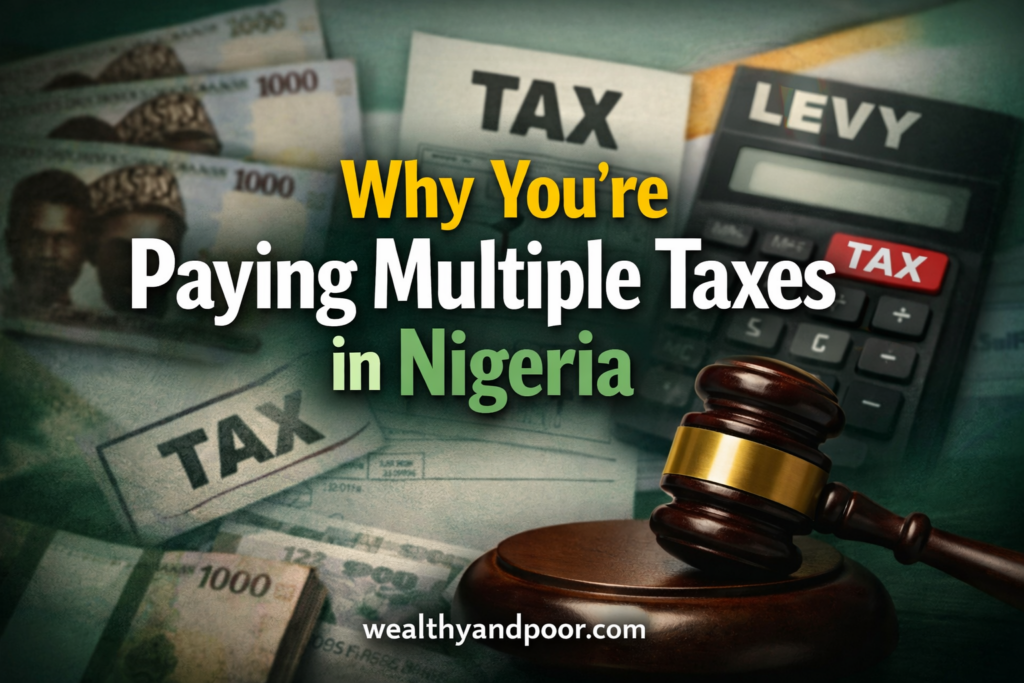

If you’ve ever felt like your income is being taxed repeatedly in Nigeria, you’re not wrong. Across the country, individuals and businesses are often subjected to multiple taxes, levies, and charges on the same income or activity.
The Nigerian tax environment is structured in a way that allows different tiers of government and multiple agencies to impose taxes, levies, and charges on the same income, transaction, or business activity. While each tax may be legal on its own, the overlap often creates a burden that many individuals and businesses experience as “multiple taxation.”
At the core of this issue is Nigeria’s three-tier system of government—federal, state, and local. Each level has the authority to collect certain taxes, and in practice, this often leads to duplication. For example, a business owner may pay Company Income Tax to the federal government, then pay business premises levies to the state, and still face local government charges like signage fees, environmental levies, and market taxes. Even when these taxes are meant to cover different obligations, they frequently target the same source of income or activity.
Another reason you’re paying multiple taxes is the lack of coordination between tax authorities. Agencies often operate independently, with overlapping mandates and poor data sharing. This results in situations where different bodies demand payments for similar purposes. A small business, for instance, might be asked to pay sanitation fees by one authority and environmental fees by another, even though both are essentially addressing the same issue.
The informal sector also plays a role in this problem. Because a large part of Nigeria’s economy operates outside formal tax structures, governments rely heavily on visible, compliant individuals and businesses for revenue. This leads to aggressive tax collection practices, repeated levies, and sometimes arbitrary charges imposed by local agents. For many entrepreneurs, especially in markets and transport sectors, daily or weekly collections by different groups feel like endless taxation.
Consumption taxes further deepen the experience of multiple taxation. When you earn income, you pay personal income tax. When you spend that same income, you pay Value Added Tax (VAT) on goods and services. In some cases, additional charges like stamp duties or electronic transfer levies apply when you move your money through the banking system. This layered taxation means the same money is taxed at different stages—earning, spending, and transferring.
There is also the issue of unclear tax policies and enforcement. While Nigeria has laws that define which authority should collect specific taxes, enforcement is often inconsistent. This creates room for illegal collections and harassment by unauthorized agents. Many taxpayers end up paying simply to avoid disruption to their business or daily activities, even when the demand is questionable.
For businesses, especially startups and SMEs, regulatory compliance can feel like navigating a maze. Multiple registrations, licenses, and renewals come with separate fees. Without a centralized system or clear guidance, businesses may unknowingly duplicate payments or fail to distinguish between legitimate taxes and unofficial levies.
The economic impact of multiple taxation is significant. It reduces disposable income, discourages investment, and increases the cost of doing business. Many entrepreneurs pass these costs on to consumers through higher prices, which contributes to inflation and reduces purchasing power across the economy.
Efforts have been made to address this issue, including tax harmonization policies and the introduction of taxpayer identification systems. However, implementation remains a challenge. Until there is stronger coordination among government agencies, clearer communication of tax obligations, and stricter enforcement against illegal collections, multiple taxation will continue to affect everyday Nigerians.
Keeping proper financial records, verifying payment demands, and staying informed about your tax obligations can help you avoid unnecessary charges.









Comments