
Why Kuda Accounts Get Restricted
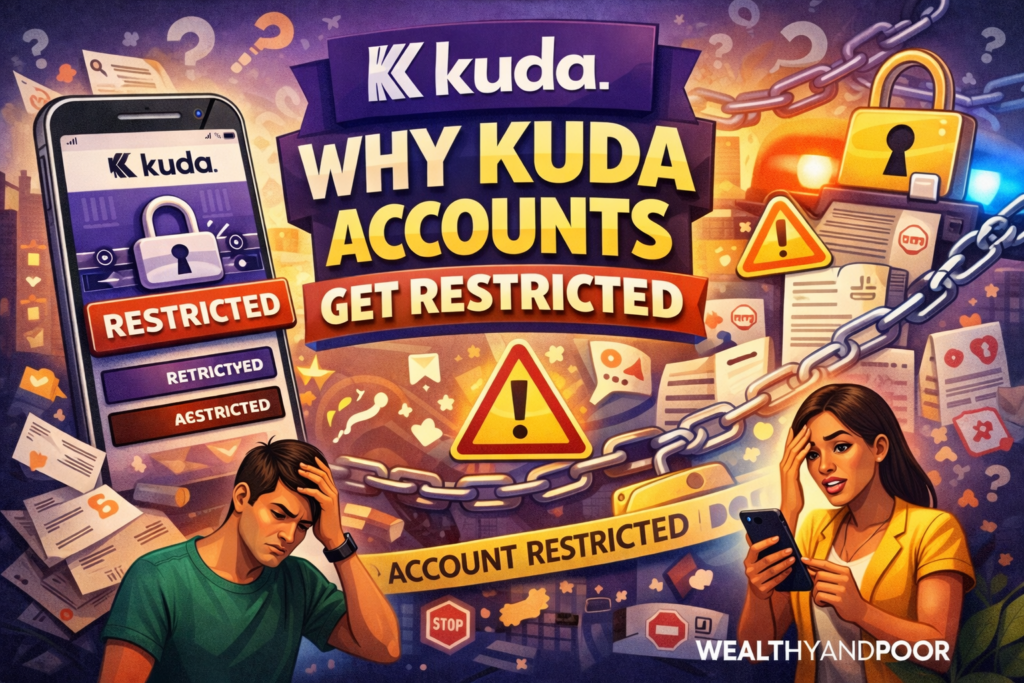

Imagine logging into your Kuda app ready to make a payment only to find your account restricted or blocked unexpectedly.
It’s frustrating, confusing, and often stressful, especially when money matters are urgent. But understanding why this happens can save you time, protect your finances, and help you prevent future restrictions.
In this article, we explain the real reasons Kuda accounts get restricted backed by official information from the bank and authoritative sources so you know what triggers these actions and how to handle them if they occur.
What Does “Account Restricted” Mean?
When Kuda restricts your account, it limits or temporarily blocks your ability to make transactions. You might still see your balance or some data, but you won’t be able to send money, pay bills, or use certain features until the issue is resolved. The restriction is usually a safety and compliance measure, not a punishment.
- Suspicious Activity or Fraud Alerts
This is the most common reason.
Kuda monitors account behaviors continuously. If the system detects activity that differs significantly from your normal pattern such as sudden large deposits or transfers, unusually frequent card funding, or unfamiliar logins it may flag your account as suspicious.
Examples include:
- Transferring a large sum immediately after a new or uncommon deposit.
- Multiple card top-ups in a short period.
- Logging in from an unfamiliar device or location.
Why it matters:
Financial institutions like Kuda use automated risk systems to stop fraud before it happens meaning your account might be restricted before any real loss occurs.
- Incomplete or Missing KYC/Verification Information
Kuda, like all regulated banks, must verify the identity of its users to comply with Know Your Customer (KYC) and anti-money-laundering (AML) laws. If your account lacks required documents (BVN, national ID, proof of address), or if information doesn’t match official records, restrictions may be placed until verification is complete.
Common trigger: An unverified account making certain transactions that require full verification.
- Breach of Terms and Conditions
Kuda’s legal terms specify types of activity that are prohibited including fraud, terrorism financing, and transactions linked to illegal goods or high-risk services. Engaging in or attempting to execute these prohibited actions can lead to account restrictions.
For example, attempting transactions without proper information, or using the account for prohibited services, can cause a block.
- Regulatory and Legal Obligations
Banks in Nigeria are regulated by the Central Bank of Nigeria (CBN) and must comply with its directives. In certain cases such as fraud investigations or compliance requests Kuda may restrict accounts without prior notice to follow legal requirements. A Nigerian Court of Appeal has even upheld banks’ rights to do this when fraud is suspected under contractual terms agreed upon by the customer.
- Safety Mode and Temporary Restrictions
Sometimes, Kuda doesn’t entirely block an account but puts it into what’s sometimes called Safety Mode. This limits transfer amounts and certain features while still allowing basic use. This can happen after logging in from a new device or performing unusual activity. It’s designed to protect your account while verifying your identity.
What Happens Next and How to Resolve It
If your account gets restricted, Kuda usually communicates the reason and next steps through the app, email, or customer support. Typical steps include:
Follow the in-app instructions: You may be asked to verify yourself or confirm recent activities.
- Contact customer support: Respond to emails or use in-app chat to provide documentation and explanation.
- Be patient and cooperative: Restrictions are often temporary and lifted once security or compliance checks are complete.
Tips to Prevent Future Restrictions
To reduce the chances of account restriction:
- Complete full verification early (BVN, ID, address).
- Avoid unusual transaction patterns (like large sums you don’t normally handle).
- Use the app from familiar devices.
- Keep personal info up to date.
Final Thoughts
Account restrictions can feel inconvenient, but they are usually motivated by security and regulatory compliance. Kuda’s systems work to prevent fraud before it happens which means restrictions are often proactive rather than punitive. With proper verification and regular usage habits, most users never encounter these issues and those who do can often fix them quickly with the right steps.
Kuda accounts are usually restricted as a protective measure rather than a punishment. Restrictions often occur when the system detects unusual transaction patterns, incomplete or inconsistent identity verification, or activities that conflict with banking regulations. In some cases, repeated failed transactions, suspected fraud, or links to disputed funds can also trigger a temporary hold. Ultimately, these restrictions are designed to safeguard both the user and the financial system, ensuring compliance, reducing risk, and maintaining trust within Kuda’s digital banking ecosystem.











Comments