
Are Fintech Apps Safe in Nigeria?
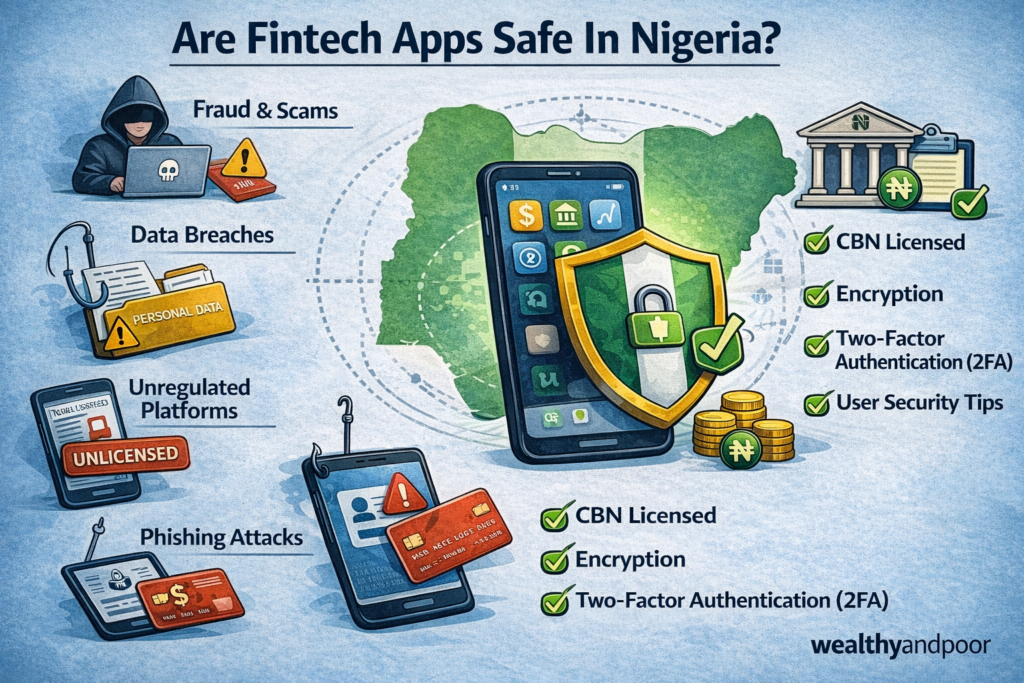

In the bustling digital markets of Lagos, the vibrant tech hubs of Abuja, and the mobile first lifestyles of millions across Nigeria, fintech apps are no longer a luxury they are essential.
Nigerians use fintech platforms to send money, save, borrow, pay bills, and even run businesses. Stories of someone getting paid instantly from abroad or settling rent with a few taps are common.
Yet, with convenience comes a question that looms large in conversations from family WhatsApp groups to boardrooms: “Are fintech apps safe in Nigeria?” Safety in this context doesn’t just mean whether money disappears, but also whether personal data, financial credentials, and digital identities are protected in a landscape of evolving cyber threats and regulatory gaps.
This article explores the safety of fintech apps in Nigeria from technical, regulatory, and user behavior perspectives giving you a grounded and detailed view rather than buzzwords.
Understanding What “Safety” Means
When we ask whether fintech apps are safe, we really mean:
- Security of funds: Can the money in the app be stolen?
- Data protection: Is personal and financial data stored and shared securely?
- Operational reliability: Do apps work as expected and remain available?
- Regulatory compliance: Are platforms supervised by Nigerian authorities?
Each of these can be true to varying degrees in different fintech providers.
Security Standards in Fintech Apps
- Encryption and Secure Communication
Most reputable fintech apps in Nigeria use strong encryption (such as SSL/TLS) to protect data in transit.
This means when information moves between your phone and the app’s servers, it’s scrambled so attackers cannot easily read it.
Why it matters: Without encryption, login passwords, bank account details, or transaction data could be intercepted by attackers on public Wi-Fi networks.
OWASP describes why encrypted communication is fundamental in secure apps.
- Multi-Factor Authentication (MFA)
Leading fintech platforms encourage or require multi-factor authentication such as a PIN plus a one-time SMS code or biometric login (fingerprint/face ID). These layers make it harder for attackers to access accounts with just a stolen password.
National Institute of Standards and Technology (NIST) on MFA benefits
Regulatory Oversight in Nigeria
Central Bank of Nigeria (CBN)
Fintech apps that move money such as wallets, payment apps, or lending platforms must be licensed or registered with the Central Bank of Nigeria (CBN).
This means they have to adhere to minimum capital requirements, operational standards, and periodic reporting.
Why this matters: A regulated platform is subject to supervision and must follow rules designed to protect consumers.
CBN list of payment service providers and guidelines
Data Protection Act
Nigeria passed the Nigeria Data Protection Regulation (NDPR) to safeguard personal data. Fintech apps handling user information should comply with NDPR requirements such as obtaining consent before collecting data and ensuring secure storage.
Common Risks and Threats in the Nigerian Context
- Phishing and Social Engineering
Many users fall victim not because the fintech platform is insecure, but because attackers trick them into sharing login details through fake messages or cloned websites.
Tip: Always double-check URLs and never share OTPs (one-time passwords). - SIM Swap and Account Takeovers
In Nigeria, SIM swap fraud where attackers convince mobile carriers to move your number to a new SIM can be used to intercept MFA SMS codes and access fintech accounts.
Safeguard: Enable app-based authenticators instead of SMS codes where possible. - Unregulated Platforms and Scams
Not all fintech apps are regulated. Some new platforms may operate without proper licensing, making them riskier because there is no durable legal protection or oversight.
Warning: Before signing up, check whether the platform is registered with CBN or a relevant authority.
What Legitimate Fintech Apps Typically Do to Be Safe
Safety Feature and What It Does
- Encryption (HTTPS)
Protects data moving to/from your phone - MFA (PIN/OTP/Biometrics)
Adds layers beyond passwords - Regular Audits
Independent security reviews catch flaws - Data Minimization
Stores only necessary user data - Regulatory Compliance
Meets CBN/NDPR reporting and protection rules
These aren’t just nice-to-haves they reduce the probability of compromise significantly.
What Users Can Do to Stay Safe
- Keep your app updated: Updates often fix security flaws.
- Use strong, unique passwords
- Avoid public Wi-Fi for financial transactions
- Enable app lock or biometrics
- Beware of unsolicited calls or messages asking for codes
- Simple behaviors greatly reduce risk.
So, Are Fintech Apps Safe in Nigeria? The Balanced Reality
Yes many reputable fintech apps operating in Nigeria today are reasonably safe when compared to global standards, largely because they:
- Use strong encryption
- Follow regulatory rules
- Implement modern authentication methods
However:
User behavior matters: Most breaches are caused by phishing and compromised credentials, not server hacks.
Not all apps are equal: Only use platforms with clear regulatory status and transparent security practices.
Threats evolve: Cyber attackers adapt quickly, so ongoing vigilance is essential.
In other words, fintech apps can be safe, but safety is shared between the platform and the user.









Comments