
Long Term vs Short Term Bank Investing
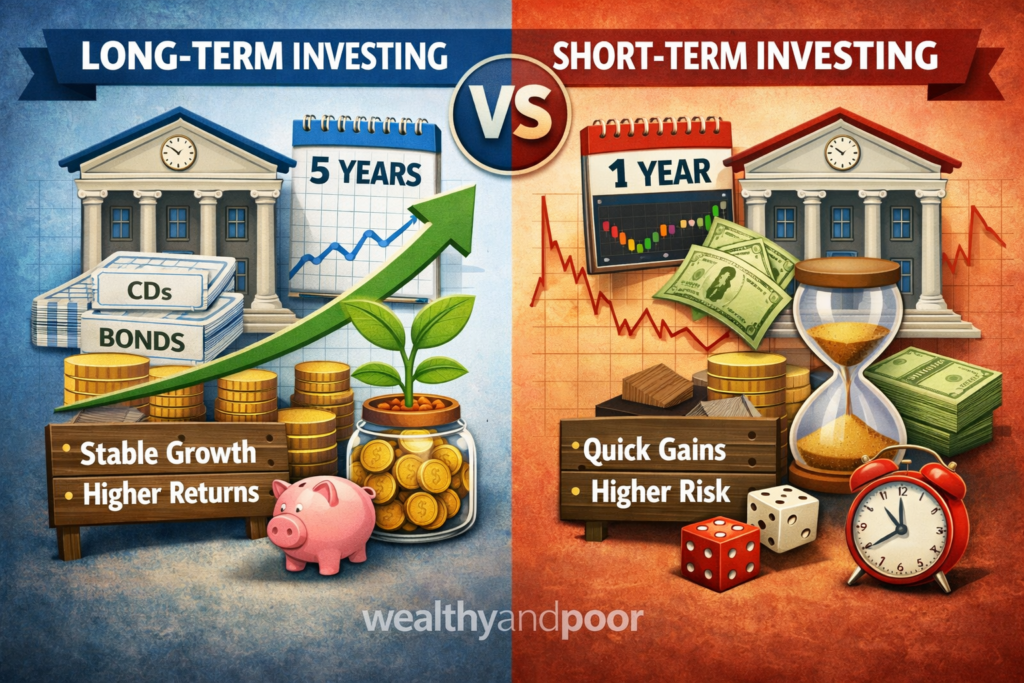

The Banking Sector Is Not a One Speed Investment
Bank stocks occupy a unique place in the market. They are cyclical, interest rate sensitive, heavily regulated, and deeply intertwined with macroeconomic conditions. For some investors, banks represent reliable dividend income and compounding returns over decades. For others, they are tactical trading instruments that respond sharply to rate decisions, earnings surprises, and economic data.
The difference between long term and short term bank investing is not merely about holding periods. It is about philosophy, risk tolerance, macroeconomic awareness, and capital strategy.
Understanding how banks generate returns and how those returns fluctuate is essential before choosing either approach.
Understanding How Banks Create Shareholder Value
Before comparing time horizons, investors must understand the core drivers of bank profitability:
- Net Interest Income (NII)
the spread between interest earned on loans and interest paid on deposits
- Net Interest Margin (NIM)
profitability of earning assets. Loan growth and credit quality. Capital adequacy ratios (e.g., CET1). Dividend and buyback policies
These factors influence both long term compounding potential and short term price volatility.
Long Term Bank Investing:
(Compounding Through Cycles)
Long term bank investing typically involves holding shares for several years often through economic cycles.
The Case for Long-Term Investing
- Dividend Compounding
Many established banks distribute regular dividends. Over time, reinvested dividends can significantly enhance total returns.
Strong banks with stable payout ratios and healthy capital buffers can generate consistent shareholder income.
- Economic Cycle Recovery
Banks are cyclical. They often decline during recessions and recover during expansions.
Long-term investors benefit from:
- Buying during downturns
- Holding through recovery
- Participating in earnings normalization
Historical market data show that financial sector stocks tend to recover alongside economic growth.
- Book Value Growth
Unlike many sectors, banks are often valued relative to book value (shareholders’ equity). Over time, well managed banks increase book value through retained earnings.
Long term investors focus on:
- Return on Equity (ROE)
- Growth in tangible book value
- Capital strength
The SEC provides guidance on analyzing financial statements
Risks of Long-Term Bank Investing
- Exposure to deep recessions
- Regulatory changes
- Structural disruption (FinTech competition)
- Prolonged low interest rate environments
However, diversified, well-capitalized institutions tend to survive and adapt.
Short-Term Bank Investing: Trading Volatility and Macro Events
Short-term bank investing focuses on weeks, months, or quarterly cycles. It is driven less by long term fundamentals and more by catalysts.
Key Drivers for Short Term Traders
- Interest Rate Announcements
Bank stocks often react immediately to central bank policy decisions. (The Federal Reserve’s monetary policy framework can be reviewed)
Rate hikes may boost margins temporarily, lifting bank stocks. Rate cuts may pressure margins but stimulate loan growth expectations.
Short-term traders position ahead of such events.
- Earnings Reports
Quarterly earnings releases often trigger sharp price swings based on:
- Net interest margin changes
- Loan loss provisions
- Forward guidance
Even small deviations from expectations can create significant volatility.
- Yield Curve Movements
Banks borrow short term and lend long term. Therefore, the shape of the yield curve matters.
An inverted yield curve can pressure margins and trigger selloffs.
Short-term investors monitor these shifts closely.
Advantages of Short-Term Bank Investing
- Ability to capitalize on volatility
- Reduced exposure to prolonged downturns
- Flexibility to rotate sectors quickly
Risks of Short-Term Bank Investing
- High sensitivity to macro headlines
- Market overreactions
- Timing risk
- Transaction costs
Short-term strategies demand constant monitoring of economic indicators and regulatory news.
Inflation and Economic Sensitivity
Bank stocks respond strongly to inflation expectations.
- For long term investors, inflation cycles are temporary fluctuations within broader growth trends.
- For short term traders, inflation data releases can cause immediate re-pricing.
Valuation Perspective: Price-to-Book and Earnings Multiples
Long-term investors often focus on:
- Price-to-Book (P/B) ratio
- Sustainable ROE
- Earnings consistency
Short-term investors focus on:
- Quarterly earnings momentum
- Analyst revisions
- Market sentiment
During recessions, valuation multiples compress sharply. Long-term investors may see opportunity. Short-term investors may see downside risk.
Risk Management Differences
Long-Term Approach:
- Diversification across banks
- Patience through downturns
- Emphasis on capital adequacy
- Dividend reinvestment
Short-Term Approach:
- Stop-loss strategies
- Event-driven positioning
- Active portfolio rotation
- Technical analysis integration
Both approaches require understanding of capital standards and liquidity requirements, detailed under Basel III
Which Strategy Is More Effective?
There is no universal answer.
Long-term investing benefits from:
- Compounding
- Dividend accumulation
- Economic recovery cycles
Short-term investing benefits from:
- Volatility
- Tactical macro positioning
- Event-driven catalysts
However, banking is structurally cyclical. Investors must align strategy with risk tolerance and time horizon.
Conclusion: Strategy Must Match Structure
Bank stocks are neither purely defensive nor purely speculative. They are cyclical, rate-sensitive, and capital-intensive institutions.
Long-term investors seek stability, capital growth, and dividend income through economic cycles. They focus on balance sheet strength, loan quality, and capital adequacy.
Short-term investors focus on rate movements, earnings surprises, inflation data, and yield curve shifts.
The difference between the two approaches is not about optimism or pessimism it is about time horizon, discipline, and understanding the structural mechanics of banking.
In financial markets, strategy without structural understanding becomes speculation. But when investors align their time horizon with the economic realities of the banking sector, both long term and short term approaches can be executed intelligently.
The key is clarity: know why you own the stock, how long you intend to hold it, and what risk factors could change your decision. That discipline more than timing defines success in bank investing.












Comments