
Fidelity Bank Transfer Limit in Nigeria
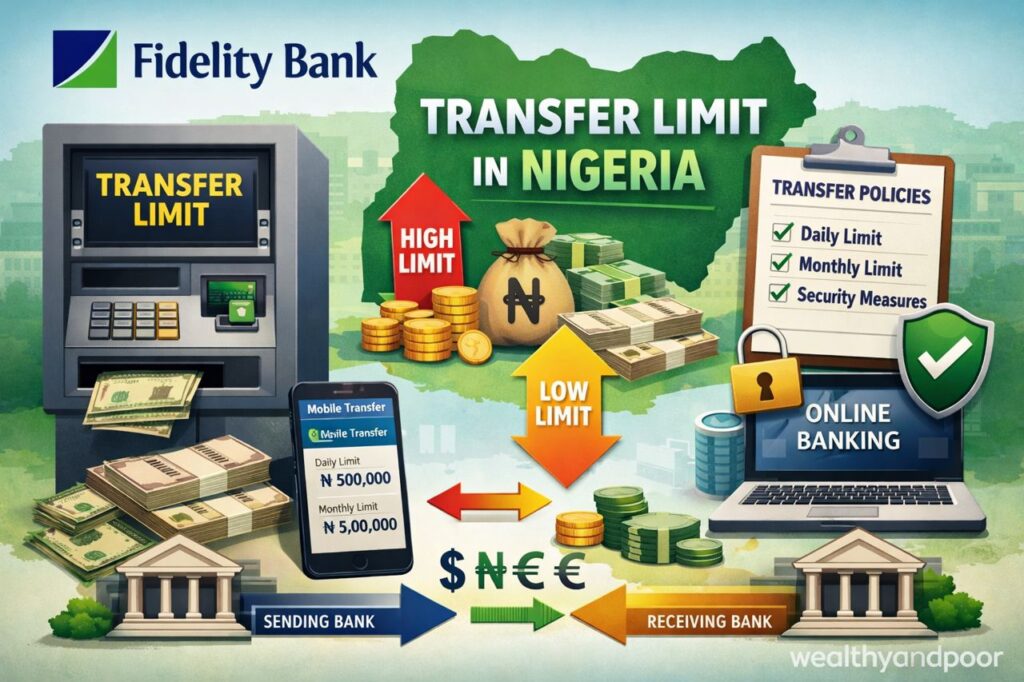

In Nigeria’s rapidly evolving digital banking space, understanding transfer limits is no longer optional it is essential. Whether you are sending money to family, paying for services, or running a small business, knowing how much you can move at once can save you time, frustration, and even financial risk. For customers of Fidelity Bank Nigeria, transfer limits vary depending on the channel used, with clear distinctions between USSD banking and mobile app transactions.
This article breaks down Fidelity Bank’s transfer limits in Nigeria, how they work, and what customers can do to increase them.
Understanding Fidelity Bank Transfer Channels
Fidelity Bank offers multiple ways to transfer money:
- USSD banking (*770#)
- Mobile banking app
- Internet banking platform
Each of these channels comes with its own transaction thresholds, largely driven by security considerations, regulatory compliance, and user verification levels.
Among these, USSD banking remains the most widely used in Nigeria due to its accessibility it works on any phone, without internet access.
Fidelity Bank USSD Transfer Limit
For many Nigerians, the *770# USSD code is the fastest way to send money. However, it comes with strict limits.
According to Fidelity Bank’s official guidelines:
- Maximum per transaction: ₦20,000
- Daily cumulative limit: ₦100,000
This means that even if you split your transfers into multiple transactions, you cannot exceed ₦100,000 in a single day using USSD.
These limits apply to:
- Transfers within Fidelity Bank
- Transfers to other Nigerian banks
The restriction is intentional. USSD banking is tied to a phone number and PIN, making it more vulnerable compared to app-based systems. Lower limits help reduce exposure in case of fraud or phone theft.
Why the USSD Limit Matters
At first glance, ₦20,000 per transaction may feel restrictive especially in an economy where daily expenses and business transactions often exceed that amount.
However, the limit serves key purposes:
- Fraud Prevention
Lower limits reduce the financial damage in case of unauthorized access.
- Simplicity for Basic Users
USSD is designed for quick, everyday transactions like:
- Sending money to family
- Buying airtime
- Paying small bills
- Regulatory Compliance
Banks must align with guidelines from regulators like the Central Bank of Nigeria (CBN), particularly around digital transaction security.
Fidelity Bank Mobile App Transfer Limit
For customers who need higher limits, the Fidelity mobile app offers significantly more flexibility.
While limits may vary depending on account type and security setup, reports indicate:
- Up to ₦200,000 per transaction (with PIN)
- Up to ₦1,000,000 daily (with token authentication)
This is a major upgrade compared to USSD banking.
Why the App Allows Higher Limits
The mobile app uses stronger authentication layers such as:
- Secure login credentials
- Transaction PIN
- Hardware or soft tokens
These added security measures give the bank confidence to allow higher transaction volumes.
Internet Banking Transfer Limits
Fidelity’s internet banking platform also allows customers to customize their transfer limits.
Although exact figures may depend on:
- Account tier
- Token activation
- Customer verification level
Users can typically increase their limits through the platform’s limit management settings or by contacting customer support.
Can You Increase Your Fidelity Transfer Limit?
Yes especially if you are using the mobile app or internet banking.
Here’s how:
- Upgrade Your Security Profile
- Activate a hardware token or soft token for higher transaction approval.
- Contact Customer Care
Fidelity Bank allows customers to request limit increases via:
- Phone
- Branch visit
- Use the Mobile App Instead of USSD
This is the simplest way to unlock higher limits instantly.
Charges on Fidelity Bank Transfers
While limits are important, transaction costs also matter.
For USSD transfers:
- Charges typically range from ₦10 to ₦25 depending on amount
- Plus a ₦6.98 USSD fee charged by telecom operators
These fees are relatively standard across Nigerian banks.
The difference is clear: USSD is built for convenience, while the mobile app is designed for scale.
Practical Implications for Customers
For everyday users, these limits influence how financial activities are structured:
- Salary earners may rely on mobile apps for rent and bulk payments
- Small business owners may need higher limits for supplier payments
- Casual users may find USSD sufficient for daily needs
Understanding these differences helps users choose the right channel instead of hitting unexpected transaction barriers.
Conclusion
Fidelity Bank’s transfer limits reflect a broader trend in Nigeria’s banking system: balancing convenience with security.
While USSD banking remains a powerful tool for financial inclusion, its lower limits are a deliberate safeguard. On the other hand, mobile and internet banking platforms reward users with higher limits but only after meeting stricter security requirements.
For customers, the takeaway is simple:
Use USSD for quick, small transfers
Switch to the mobile app for larger transactions
As digital banking continues to grow in Nigeria, being informed about these limits is not just helpful it is essential for smarter financial management.











Comments