
Union Bank Transfer Limit in Nigeria
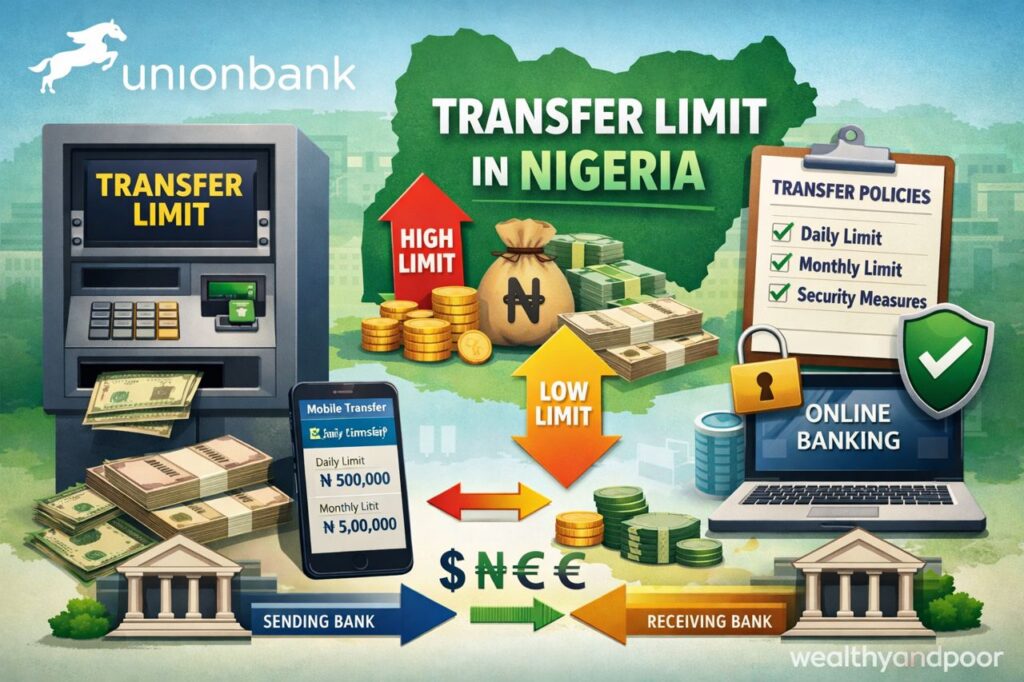

In Nigeria’s rapidly evolving digital banking space, transfer limits have become a critical factor shaping how individuals and businesses move money. For customers of Union Bank of Nigeria, understanding these limits is essential not just for convenience, but also for planning financial transactions effectively.
This article provides a detailed breakdown of Union Bank’s transfer limits across channels, how customers can increase them, and what these restrictions mean in the broader context of Nigeria’s cashless economy.
Understanding Union Bank Transfer Limits
Union Bank operates a tiered transfer limit system depending on the channel used mobile banking, internet banking, or USSD. These limits are designed to balance security, regulatory compliance, and customer flexibility.
- Default Online Transfer Limit
For customers using Union Bank’s internet banking platform (Union Online), the default daily transfer limit is ₦250,000.
This means that regardless of how many transactions are initiated in a day, the total value cannot exceed ₦250,000 unless the limit is adjusted.
However, the bank allows customers to increase this limit up to ₦5,000,000 daily through self-service options on the platform.
For transactions exceeding ₦5 million, customers are required to visit a physical branch to complete additional verification and documentation.
- USSD Transfer Limit
Union Bank’s USSD banking service (*826#) remains popular, especially among customers without smartphones or stable internet access.
The daily transfer limit via USSD is typically ₦100,000.
This lower threshold reflects the higher fraud risk associated with USSD transactions and the absence of advanced authentication layers like hardware tokens.
- Frequency of Transfers
Interestingly, Union Bank does not limit the number of transactions a customer can initiate daily. Instead, the restriction is based on the total cumulative amount transferred.
Customers can perform multiple transfers as long as they do not exceed their daily limit.
This flexibility is particularly useful for small business owners and individuals making multiple payments within a day.
How to Increase Your Transfer Limit
Union Bank provides a relatively straightforward process for customers who need higher transaction thresholds.
Via Internet Banking (Union online)
Customers can:
- Log in to their account
- Navigate to “Manage Transfer Limits”
- Input a new desired limit (up to ₦5 million)
- Authenticate using a token and security credentials
For limits above ₦5 million, customers must visit a Union Bank branch for manual processing and additional verification.
This tiered system reflects regulatory compliance requirements, particularly around anti-money laundering (AML) and fraud prevention.
Why Transfer Limits Exist
Transfer limits are not arbitrary they are shaped by a combination of banking regulations and risk management strategies.
- Fraud Prevention
Daily caps reduce the potential loss in case of unauthorized access or cyber fraud.
- Regulatory Compliance
Banks in Nigeria operate under guidelines from the Central Bank of Nigeria (CBN), which mandates transaction monitoring and reporting thresholds.
- System Stability
Limits help manage transaction volumes and prevent system overload, especially during peak banking hours.
Implications for Customers
For Individuals
For everyday users, the default ₦250,000 limit is often sufficient for:
- Bill payments
Transfers to family and friends
- Routine expenses
However, customers making high-value transactions such as rent payments or school fees may need to increase their limits in advance.
For Small Businesses
Entrepreneurs and SMEs using Union Bank accounts may find the default limits restrictive.
Businesses handling:
- Supplier payments
- Bulk salary transfers
- Inventory purchases
will benefit from upgrading their limits or using alternative channels like corporate banking platforms.
This multi-channel approach ensures that customers can choose based on urgency, transaction size, and convenience.
The Bigger Picture: Nigeria’s Cashless Push
Union Bank’s transfer limits must also be viewed within the broader push toward a cashless economy in Nigeria.
As digital payments continue to rise:
- Banks are tightening security frameworks
- Customers are encouraged to adopt digital channels
- Transaction monitoring is becoming more sophisticated
In this environment, transfer limits serve as both a protective mechanism and a regulatory tool.
Conclusion
Union Bank’s transfer limits reflect a careful balance between accessibility and security. While the default thresholds may seem restrictive at first glance, the bank provides clear pathways for customers to increase their limits based on their needs.
For users, the key takeaway is simple:
Understand your current limit, adjust it proactively, and choose the right channel for each transaction.
As Nigeria’s financial ecosystem continues to digitize, being informed about these operational details is no longer optional it is essential for efficient money management.












Comments