
Polaris Bank Transfer Limit in Nigeria
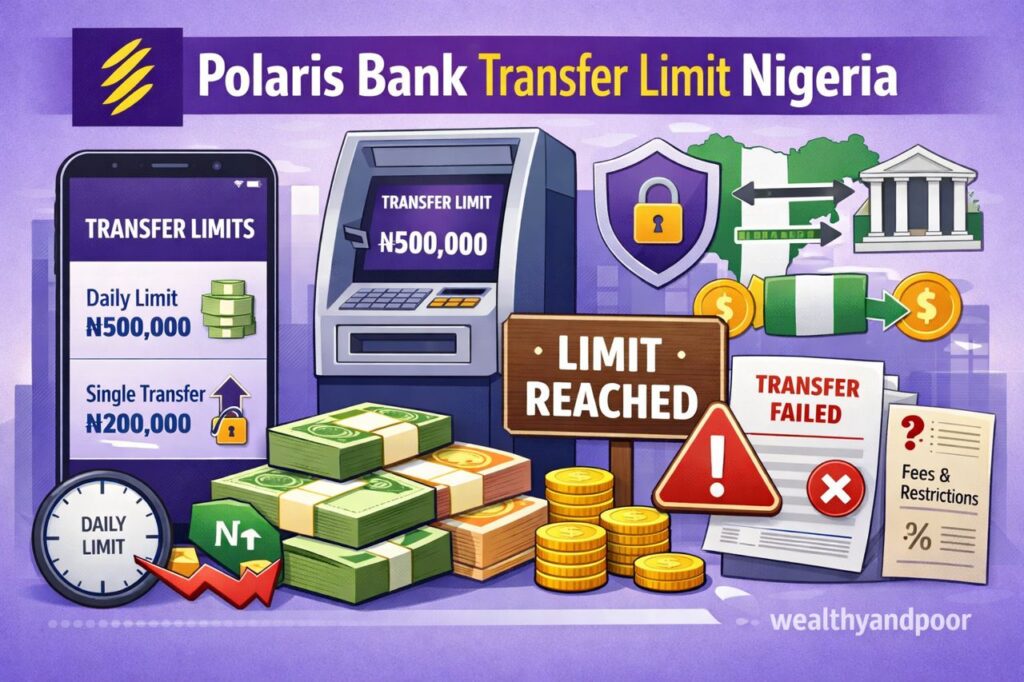

In Nigeria’s fast-evolving digital banking landscape, transfer limits remain a critical factor shaping how individuals and businesses move money. For customers of Polaris Bank, understanding these limits is essential for planning transactions, avoiding failed payments, and optimizing the use of digital channels.
This article provides a detailed, structured look at Polaris Bank’s transfer limits across its major platforms USSD, mobile app, and other channels while also examining how customers can increase these limits and what it means for everyday banking.

Overview of Polaris Bank Transfer Channels
Polaris Bank offers multiple channels for transferring funds, each with its own limits and security framework. The most widely used include:
- USSD banking (*833# Smart Code)
- Polaris mobile app
- Internet banking
- ATM and in-branch transfers
These channels are designed to balance convenience with security, which is why transfer limits vary significantly depending on the method used.
USSD Transfer Limit: Entry-Level Convenience
For many Nigerians, especially those without smartphones or reliable internet access, USSD banking remains the most accessible option. Polaris Bank’s USSD service operates through the short code *833#, allowing customers to transfer funds, pay bills, and buy airtime.
However, this convenience comes with a relatively low cap.
- Daily transfer limit (USSD): ₦50,000
This limit applies to cumulative transfers in a day, meaning users can perform multiple transactions as long as the total does not exceed ₦50,000.
The restriction is primarily a security measure. Since USSD transactions rely on basic authentication (PIN and phone number), lower limits help reduce exposure to fraud in case of SIM theft or compromise. - Mobile App Transfer Limit: Higher Flexibility
For customers using the Polaris Mobile app, the transfer experience is significantly more robust. With enhanced authentication features such as token verification and device binding, the bank allows higher transaction thresholds.
Default mobile app limit: up to ₦500,000 daily - Upgradeable limit: up to ₦1,000,000 or more (depending on verification level)
This makes the mobile app the preferred option for professionals, business owners, and individuals who need to move larger sums regularly.
Why Transfer Limits Exist
Transfer limits are not arbitrary they are part of a broader risk management framework used by banks and mandated by regulators like the Central Bank of Nigeria (CBN). Key reasons include:
- Fraud Prevention
Lower limits on USSD transactions reduce the potential loss in case of unauthorized access. - Regulatory Compliance
Banks must adhere to anti-money laundering (AML) and know-your-customer (KYC) requirements, which often dictate transaction thresholds. - System Integrity
Limits help prevent system overload and ensure smooth processing of transactions across banking networks.
How to Increase Polaris Bank Transfer Limits
Polaris Bank allows customers to increase their transfer limits, especially on digital platforms. The process typically involves:
- Via Mobile App
- Log in to the Polaris Mobile app
- Navigate to “Transfers”
- Select “Increase Transfer Limit”
- Choose a new limit and authenticate
Requirements for Higher Limits
- Debit card linkage
- Secure PIN setup
- Additional verification (OTP or token)
Customers who complete higher levels of verification can unlock significantly larger transfer thresholds, making the platform suitable for business transactions.
Comparing Polaris Bank Limits with Industry Standards
When compared with other Nigerian banks, Polaris Bank’s limits fall within the industry average:
- USSD limits across banks typically range between ₦20,000 and ₦100,000 daily
- Mobile app limits often range from ₦500,000 to ₦1,000,000 or higher
This positions Polaris Bank as competitive, especially for users who transition from USSD to app-based banking.
Implications for Customers
Understanding transfer limits is more than a technical detail it directly impacts financial behavior.
For Individuals
Low USSD limits may require multiple transactions or a switch to mobile banking for larger payments.
For Small Businesses
Merchants and entrepreneurs may find USSD insufficient, making the mobile app or internet banking essential.
For Corporate Users
Higher limits via digital platforms enable seamless payroll processing, vendor payments, and bulk transfers.
Tips for Managing Transfer Limits Effectively
To make the most of Polaris Bank’s transfer system, customers should:
- Upgrade to the mobile app for higher limits and better security
- Enable all security features, including PIN and OTP authentication
- Plan large transactions in advance to avoid disruptions
- Contact customer support if higher
limits are required beyond app thresholds
The Future of Transfer Limits in Nigeria
As Nigeria continues its push toward a cashless economy, transfer limits are likely to evolve. Banks are increasingly leveraging biometric verification, AI-driven fraud detection, and real-time monitoring systems.
For Polaris Bank, this could mean higher limits in the future, especially for fully verified users. The trend across the industry suggests a gradual shift toward more flexible, user-friendly transaction policies without compromising security.
Conclusion
Polaris Bank’s transfer limits reflect a careful balance between accessibility and security. While the ₦50,000 daily cap on USSD transactions may seem restrictive, it serves as a safeguard against fraud.
Meanwhile, the significantly higher limits on the mobile app provide a practical solution for users who need greater flexibility.
For customers in Nigeria, the key takeaway is clear: choosing the right banking channel and understanding its limits can make all the difference in managing money efficiently.












Comments