
How to Avoid Bank Charges in Nigeria
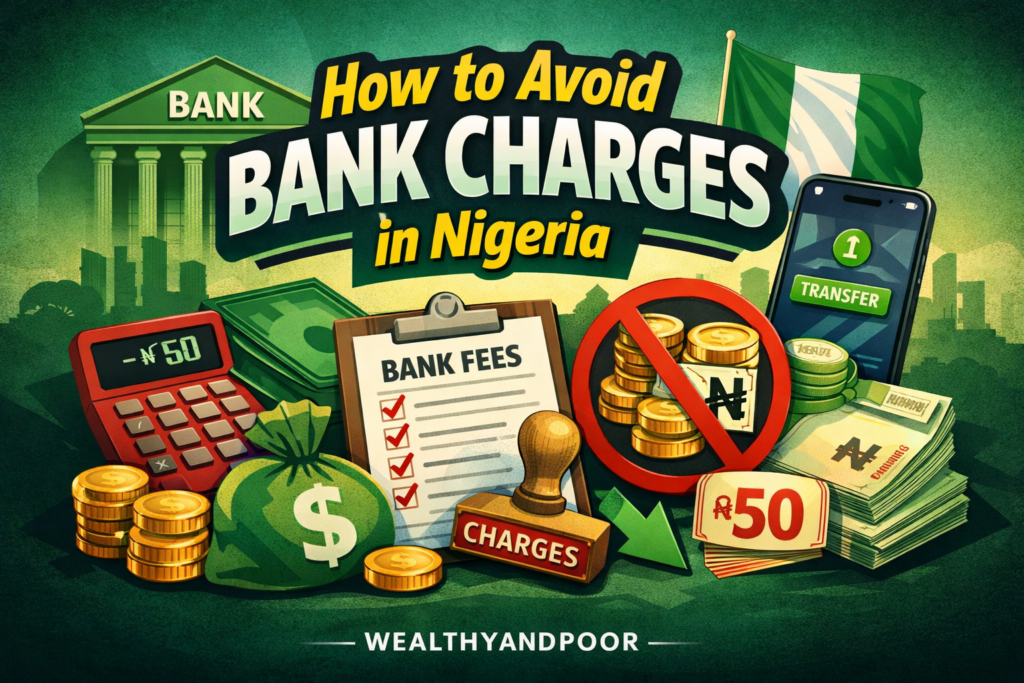

Bank charges in Nigeria ranging from transfer fees and ATM charges to SMS alerts and maintenance costs may seem small individually, but they accumulate quickly and reduce your overall savings. With the Central Bank of Nigeria regulating many of these fees, understanding how they work and how to avoid them is key to better financial management.
it’s important to know what you’re being charged for. Common bank fees include:
- Transfer charges (₦10–₦50 depending on amount)
- ATM withdrawal fees (after free withdrawals are exhausted)
- Card maintenance fees (₦50 quarterly for savings accounts)
- SMS alert charges (₦4–₦10 per message)
- Stamp duty charges (₦50 on inflows above ₦10,000 for current accounts)
Understanding Bank Charges in Nigeria
Choose the Right Bank Account Type
Not all accounts are the same. Some accounts attract fewer charges than others.
- Use salary or savings accounts with low or zero maintenance fees
- Avoid unnecessary current accounts unless needed for business
Compare banks’ fee structures before opening an account
Reduce Inter-Bank Transfers
Sending money to other banks often costs more than transfers within the same bank.
Stick to one or two primary banks
- Encourage frequent contacts (friends, family, customers) to use the same bank
- Use fintech platforms with cheaper or free transfers
- Limiting inter-bank transactions helps you avoid repeated ₦10–₦50 charges.
Use Mobile Apps and Online Banking
Digital banking channels are typically cheaper than physical banking.
- Use your bank’s mobile app for transfers and bill payments
- Avoid ATM and branch transactions when possible
- Batch multiple payments into one session
Online banking reduces transaction fees and saves time.
Avoid Excessive ATM Withdrawals
ATM withdrawals can become expensive after the free monthly limit.
- Withdraw larger amounts less frequently
- Use your bank’s ATM instead of other banks’ machines
- Consider cashless payments instead
The Central Bank policy allows limited free withdrawals before charges apply.
Turn Off SMS Alerts
- SMS alerts may look small but can cost hundreds monthly.
- Switch to email alerts (free)
- Use your banking app for transaction monitoring
- Disable SMS alerts in your account settings
This simple step can save ₦200–₦500 monthly.
Avoid Over-the-Counter Transactions
Transactions done inside the banking hall often attract extra charges.
- Use ATMs or apps instead of tellers
- Avoid unnecessary cheque processing
- Deposit money using ATM or mobile banking
Self-service channels are faster and cheaper.
Monitor Your Bank Statement Regularly
- Check your bank statement monthly
- Report unauthorized or duplicate charges immediately
- Understand every deduction on your account
The CBN requires banks to clearly describe all charges on transaction receipts.
Be Aware of Stamp Duty Charges
Stamp duty is unavoidable in some cases, but you can manage it.
- Applies mainly to current accounts
- Avoid unnecessary large deposits above ₦10,000
- Use savings accounts where applicable
Understanding when it applies helps you avoid surprises.
Use Fintech Alternatives Wisely
Fintech platforms in Nigeria often provide:
- Free transfers
- Lower transaction fees
- Cashback offers
However, always verify their reliability and security before switching.
Negotiate Charges Where Possible
Some charges are negotiable, especially for:
- Business accounts
- High-volume transactions
- Corporate banking services
The CBN allows negotiation on certain fees between banks and customers.
Avoiding bank charges in Nigeria is not about eliminating them completely it’s about being smart and intentional with your banking habits. By choosing the right account, using digital channels, reducing unnecessary transactions, and staying informed, you can significantly cut down on avoidable fees.
In today’s economy, every naira counts. The less you lose to hidden charges, the more you keep for savings, investments, and personal growth.











Comments