
NIP Transfer Meaning in Nigeria
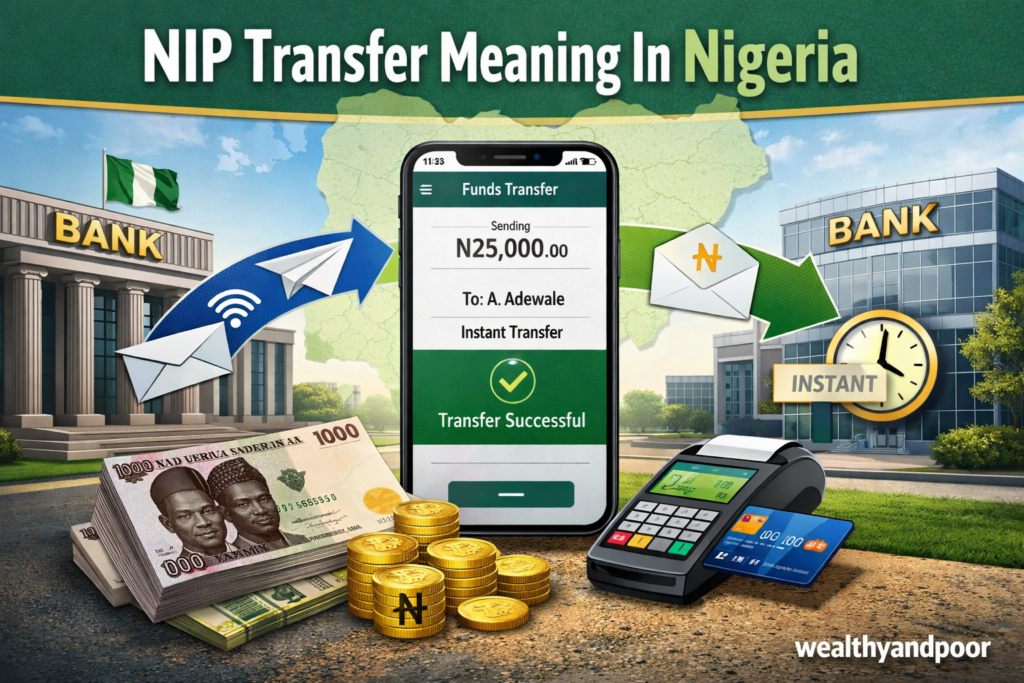

In today’s fast-moving financial landscape, speed and convenience have become essential in how Nigerians send and receive money. Whether you are paying for goods, transferring funds to family, or running a business, one term you have likely encountered is NIP transfer. But what exactly does it mean, and why has it become the backbone of digital payments in Nigeria?
This article breaks down the meaning of NIP transfers in Nigeria, how they work, their benefits, and why they dominate the country’s banking system.
What Does NIP Mean in Nigeria?
NIP stands for NIBSS Instant Payment, a real-time electronic funds transfer system used by banks and financial institutions in Nigeria.
It is an account-based platform that allows money to be transferred instantly from one bank account to another, regardless of the bank involved. Once a transfer is initiated, the recipient typically receives the funds within seconds.
The system is operated by the Nigeria Inter-Bank Settlement System (NIBSS) and connects hundreds of financial institutions, making it the central infrastructure behind most bank transfers in the country.
The Origin and Evolution of NIP
NIP was developed in 2011 to solve a major problem in Nigeria’s banking sector slow interbank transfers. Before its introduction, transfers between banks could take hours or even days to complete.
With the launch of NIP, Nigeria transitioned into a real-time payment ecosystem. Today, it is one of the largest instant payment systems in Africa and processes billions of transactions annually.
Its growth has been driven by increasing smartphone usage, the rise of fintech platforms, and the Central Bank of Nigeria’s push toward a cashless economy.
How NIP Transfers Work
At its core, an NIP transfer is a digital communication process between banks.
When you initiate a transfer:
- Your bank sends a payment request through the NIBSS central system
- The system verifies the recipient’s account details
- The receiving bank is notified instantly
- Funds are credited to the recipient’s account in real time
This entire process happens within seconds, making NIP one of the fastest payment systems available in Nigeria.
Interestingly, what moves between banks is not physical cash but secure electronic messages that update account balances.
Key Features of NIP Transfers
NIP transfers have several defining characteristics that set them apart from traditional bank transfers:
- Instant Transfers
Funds are delivered almost immediately after the transaction is completed.
- 24/7 Availability
NIP operates round the clock, including weekends and public holidays.
- Account Number-Based
Transfers are made using the recipient’s bank account number, making the process simple and accessible.
- Wide Accessibility
You can perform NIP transfers through:
- Mobile banking apps
- USSD codes
- Internet banking platforms
- ATMs and POS terminals
- Name Enquiry Feature
Before confirming a transfer, you can verify the recipient’s name linked to the account number, reducing errors.
Why NIP Transfers Are So Popular in Nigeria
NIP has become the preferred method of transferring money in Nigeria for several reasons:
- Speed and Convenience
Unlike traditional transfers that may take hours or days, NIP delivers funds instantly, making it ideal for urgent transactions.
- Reliability
The system is designed to ensure high success rates and transaction transparency, boosting user confidence.
- Supports All Financial Institutions
NIP connects commercial banks, microfinance banks, fintech apps, and mobile money operators, making it universally usable.
- Drives the Digital Economy
NIP has played a major role in the growth of fintech companies and digital payments in Nigeria.
NIP effectively replaced older interbank transfer methods, making banking faster and more efficient.
Are NIP Transfers Safe?
Yes, NIP transfers are generally secure. The system includes safeguards such as:
- Account name verification
- Transaction status tracking
- Centralized monitoring by NIBSS
However, because transfers are instant, they are difficult to reverse once completed, so users must double-check recipient details before sending money.
Common Issues with NIP Transfers
Despite its efficiency, users sometimes experience challenges:
- Failed Transactions
Occasionally, money may be debited without immediate credit to the recipient due to network issues.
- Delayed Reversals
If a transaction fails, banks may take time to reverse the funds.
- Transfer Limits
Banks impose daily or per-transaction limits based on regulatory guidelines.
The Role of NIP in Nigeria’s Financial Future
NIP is more than just a payment system it is the foundation of Nigeria’s modern financial ecosystem. It powers:
- Mobile banking apps
- Fintech platforms
- Online businesses
- Everyday peer-to-peer transactions
As digital payments continue to grow, NIP is expected to evolve further, possibly integrating with cross-border payment systems and new financial technologies.
Conclusion
NIP transfers have revolutionized the way Nigerians move money. By enabling instant, reliable, and accessible bank-to-bank transfers, the system has become a cornerstone of the country’s financial infrastructure.
Understanding what NIP means and how it works is essential for anyone using banking services in Nigeria today. Whether you are a student, entrepreneur, or salary earner, NIP remains the fastest and most efficient way to send money.












Comments