
Bank vs Fintech Apps in Nigeria
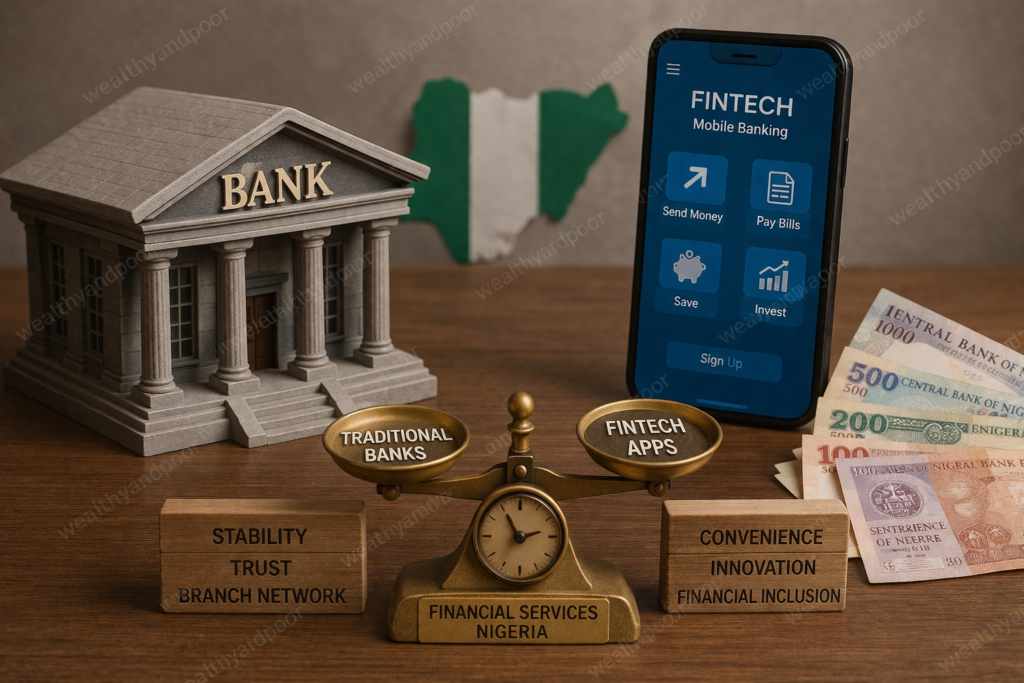

Nigeria’s financial ecosystem is undergoing one of the most profound transformations in its history. Traditional banks long the backbone of the economy are now sharing the stage with a fast growing wave of fintech apps offering everything from instant transfers to microloans and digital investments. What was once a clear-cut industry has evolved into a dynamic contest between legacy institutions and agile technology driven platforms.
This article explores how banks and fintech apps compare in Nigeria today, where each stands, and what the future holds.
The Rise of Fintech in Nigeria
Over the last decade, fintech has emerged as a dominant force in Nigeria’s financial services sector. The country now hosts hundreds of fintech startups and accounts for a significant share of Africa’s fintech funding and innovation.
Several factors have driven this growth. Nigeria’s youthful population, increasing smartphone penetration, and a large unbanked population created fertile ground for digital-first financial solutions.
The results are visible in adoption rates. Financial inclusion in Nigeria rose to about 64% by 2025, largely driven by mobile banking and fintech platforms.
At the same time, digital payments have surged dramatically, with billions of real time transactions recorded annually.
Fintech apps such as mobile wallets, payment platforms, and digital banks are no longer niche they are becoming mainstream tools for everyday transactions.
Traditional Banks: Still Powerful, But Under Pressure
Despite the fintech surge, traditional banks remain deeply entrenched in Nigeria’s financial system. They control large customer bases, regulatory trust, and access to capital.
Banks continue to generate substantial revenue from digital transactions alone. In fact, Nigerian banks collectively earn hundreds of billions of naira annually from e- payment fees and commissions.
However, their dominance is being challenged. Fintech competition and system inefficiencies have begun to impact bank revenues and customer loyalty.
One key weakness is agility. Traditional banks often struggle with slow innovation cycles, legacy systems, and bureaucratic processes making it difficult to match the speed of fintech startups.
Fintech Apps: Speed, Simplicity, and Innovation
Fintech apps have built their success on three major pillars:
- User Experience
Fintech platforms prioritize simplicity. Opening an account, transferring money, or paying bills can often be done within minutes, without visiting a branch.
- Speed and Accessibility
Unlike banks that may process transactions in batches or with delays, fintech apps typically offer real-time transfers and instant notifications.
- Financial Inclusion
Fintech has played a critical role in reaching underserved populations. Mobile wallets and agent networks allow people in rural areas or without traditional bank accounts to access financial services.
This has helped bridge a long-standing gap in Nigeria, where millions were previously excluded from formal banking.
Key Differences: Banks vs Fintech Apps
- Regulation and Trust
Banks operate under strict regulatory frameworks and are widely perceived as safer, especially for large deposits. Fintech apps, while regulated, often operate under lighter frameworks, which can raise concerns about risk and security.
- Product Range
Banks offer a broader range of services corporate banking, international trade finance, and complex lending products. Fintech apps tend to focus on retail users, offering payments, savings, and microloans.
- Cost and Fees
Fintech apps often provide lower fees or even free services to attract users, while banks still rely on transaction charges as a major revenue source.
Fintech companies are built on modern infrastructure, while banks often rely on legacy systems that can lead to downtime and slower updates.
- Collaboration, Not Just Competition
Interestingly, the relationship between banks and fintechs is not purely competitive. Increasingly, both sectors are collaborating.
Open Banking regulations introduced in Nigeria are enabling secure data sharing between banks and fintech companies, fostering innovation and improving customer experience.
Many fintech platforms rely on banking infrastructure for settlement and compliance, while banks are adopting fintech solutions to improve their own digital offerings.
This hybrid model suggests that the future of finance in Nigeria may not be about one replacing the other but about integration.
Challenges Facing Both Sides
For Banks
- Legacy infrastructure and slow innovation
- Customer dissatisfaction due to service downtime
- Competition from more agile fintech platforms
For Fintech Apps
- Regulatory uncertainty
- Rising concerns around fraud and cybersecurity
- Profitability pressures as competition increases
Both sectors must also navigate Nigeria’s evolving regulatory environment and growing demand for secure digital transactions.
The Future: Who Wins?
The question of “bank vs fintech” may be the wrong one to ask. Evidence suggests that both are shaping a shared future.
Fintech is driving innovation, improving access, and redefining user expectations. Meanwhile, banks provide stability, trust, and the financial backbone of the economy.
Nigeria’s financial system is becoming increasingly digital, with electronic transactions growing rapidly and cash usage declining.
In this environment, the winners will likely be institutions whether banks or fintechs that can combine trust, speed, affordability, and innovation.
Conclusion
The battle between banks and fintech apps in Nigeria is less about displacement and more about evolution. Fintech has exposed inefficiencies in traditional banking and forced a wave of digital transformation. At the same time, banks remain indispensable due to their scale, regulatory strength, and financial depth.
For consumers, this competition is a win. It means better services, lower costs, and more choices.
As Nigeria moves toward a fully digital financial ecosystem, the line between banks and fintech apps will continue to blur creating a new era of financial services defined not by institutions, but by experience.












Comments