
Bank account blocked how to fix
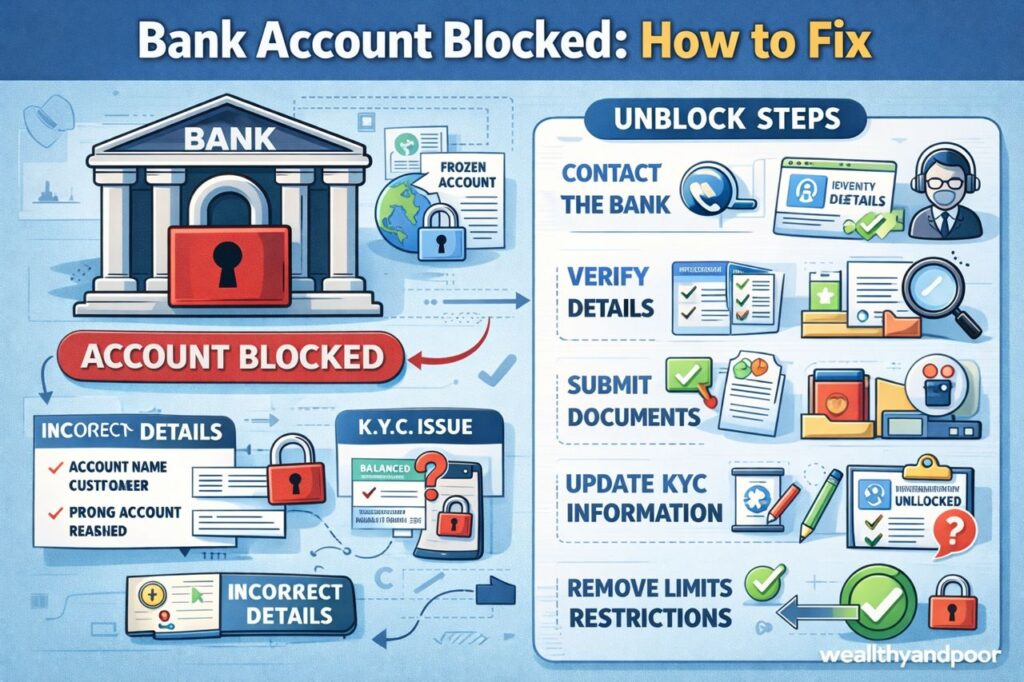

A blocked or frozen bank account is one of the most frustrating financial situations anyone can face. One moment you are making transfers or paying bills, and the next, your account is restricted with little or no explanation. For individuals and businesses alike, this disruption can affect cash flow, damage credibility, and create unnecessary panic.
However, a blocked account is rarely permanent. In most cases, it is a temporary restriction triggered by compliance checks, security concerns, or legal instructions. The key to resolving it lies in understanding why it happened and taking the right steps quickly.
What Does It Mean When Your Bank Account Is Blocked?
When a bank blocks your account, it limits your ability to withdraw, transfer, or use funds. You may still receive money, but you cannot access it until the issue is resolved. This action is usually part of regulatory compliance or fraud prevention measures.
Banks are required to monitor accounts for suspicious activity, identity verification issues, and legal directives. If something appears unusual, they may temporarily restrict access to protect both the customer and the financial systems.
Common Reasons Bank Accounts Get Blocked
Understanding the cause is the first step to fixing the problem. Below are the most common triggers:
- Incomplete KYC or BVN Issues
Failure to update your Know Your Customer (KYC) details or discrepancies with your Bank Verification Number (BVN) can lead to account restrictions. In Nigeria, BVN plays a critical role in identity verification and fraud prevention.
- Suspicious or Unusual Transactions
Large deposits, rapid transfers, or transactions that don’t match your normal pattern may trigger fraud alerts. Banks often freeze accounts as a precaution while investigating such activity.
- Legal or Regulatory Orders
Accounts can be blocked due to court orders, tax authorities, or law enforcement investigations. In such cases, the bank cannot reverse the restriction without official clearance.
- Fraud Links or Cybercrime Investigations
Even if you are not directly involved, receiving funds linked to fraudulent activity can result in your account being flagged and frozen.
- Debt or Financial Obligations
Unpaid loans, taxes, or legal debts can lead to account restrictions after a court judgment or regulatory action.
- Dormant or Inactive Accounts
Accounts that remain unused for a long time may be temporarily restricted until reactivation procedures are completed.
Step-by-Step Guide: How to Fix a Blocked Bank Account
Resolving a blocked account requires a calm and structured approach. Here are the key steps:
- Confirm the Exact Reason
Start by checking your banking app, SMS alerts, or email notifications. Look for terms like “KYC pending,” “restricted,” or “compliance issue.” If unclear, contact customer care or visit your bank branch immediately.
- Provide Required Documents
Banks typically request documents to verify your identity or transactions. These may include:
- Valid ID (National ID, Passport, Driver’s License)
- Proof of address
- Source of funds (salary slip, invoice, contract)
Providing accurate information quickly speeds up resolution.
- Resolve KYC or BVN Issues
If the issue is related to verification, update your details immediately. This is one of the fastest problems to fix.
- Address Legal or Debt Issues
If a legal authority is involved, you may need to:
- Settle outstanding debts
- Obtain a court clearance
- Work with a lawyer if necessary
Banks cannot override these restrictions without official approval.
- Explain Suspicious Transactions
If your account was flagged due to unusual activity, clearly explain the source and purpose of funds. Supporting evidence (receipts, contracts) is essential.
- Follow Up and Escalate if Needed
If the issue is not resolved within the bank’s stated timeline, escalate through:
Bank complaint channels
Regulatory bodies (e.g., Central Bank complaint platforms)
Important Warning: Loan App Threats
Many Nigerians receive messages from loan apps claiming they will “block your account” if you don’t repay a loan. This is misleading.
Loan apps cannot directly freeze your bank account. Only authorized institutions like courts or regulators have that power.
How Long Does It Take to Unblock an Account?
The timeline depends on the cause:
- KYC issues: 24–72 hours
- Suspicious activity review: A few days to weeks
- Legal cases: Weeks or longer
Prompt action and accurate documentation can significantly reduce delays.
How to Prevent Your Account from Being Blocked
Prevention is always better than cure. To avoid future issues:
- Keep your KYC and BVN details updated
- Avoid sudden large or unusual transactions without explanation
- Do not receive funds from unknown or suspicious sources
- Regularly monitor your account activity
- Be cautious of phishing scams and fake bank messages
Conclusion
A blocked bank account can feel alarming, but it is often a protective measure rather than a punishment. The most important thing is not to panic. Instead, identify the cause, respond promptly, and cooperate with your bank.
In today’s highly regulated financial environment, transparency is key. The faster you provide clear and accurate information, the sooner your account will be restored and your financial life can return to normal.












Comments