
Why your ATM card is not working
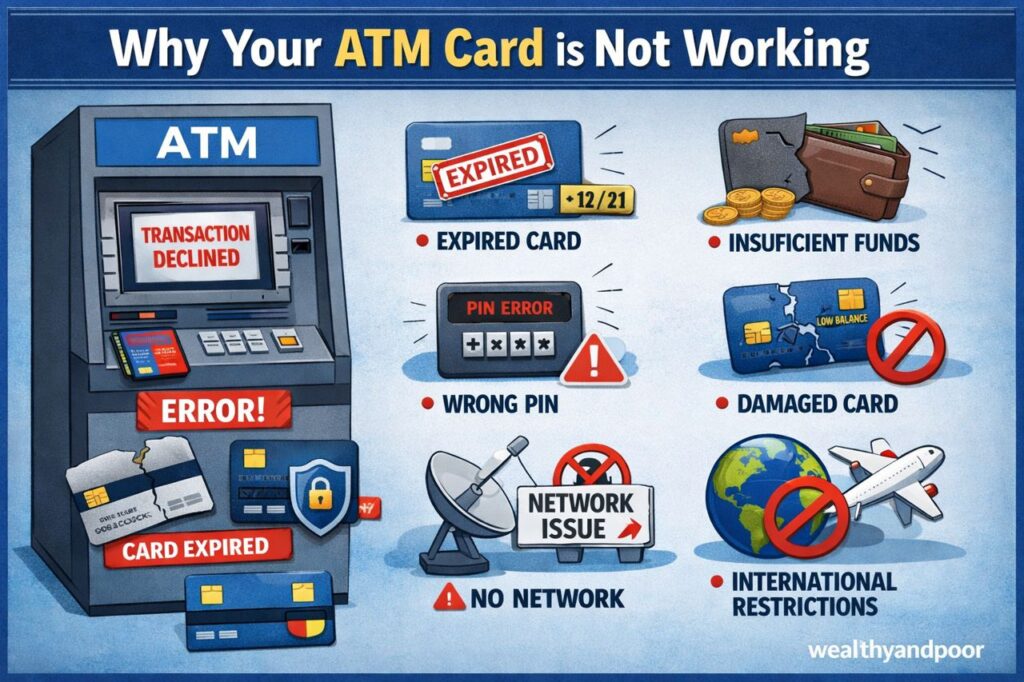

Few things are as frustrating as standing at an ATM or checkout point, only to see the message: “Transaction Declined.” Whether you’re trying to withdraw cash, pay bills, or make a purchase, a failed ATM card transaction can disrupt your day and even cause embarrassment.
The truth is, an ATM card doesn’t stop working randomly. In most cases, there are clear financial, technical, or security related reasons behind it. Understanding these reasons is the first step to fixing the problem quickly.
- Insufficient Funds in Your Account
The most common reason your ATM card is not working is simply that you don’t have enough money available in your account.
Even if you believe you have funds, pending transactions or ATM charges may reduce your available balance below the withdrawal amount. Banks typically decline transactions that exceed your balance to prevent overdrafts.
What to do:
Always check your account balance before making withdrawals or payments, especially if you’ve recently made purchases.
- You’ve Reached Your Daily Transaction Limit
Most banks in Nigeria and globally place daily limits on ATM withdrawals and card spending. Once you hit that limit, further transactions will be declined even if you still have money in your account.
What to do:
Wait until the next day or request a higher limit from your bank.
- Incorrect PIN Entry
Entering the wrong Personal Identification Number (PIN) is another frequent cause. If you enter the wrong PIN multiple times, your card may be temporarily blocked for security reasons.
What to do:
Double-check your PIN. If blocked, contact your bank to reset or unblock your card.
- Your Card Has Expired
ATM cards come with an expiry date. Once the card expires, it automatically stops working even if your account is active.
What to do:
Request a replacement card from your bank before or after expiration.
- Damaged or Faulty Card
If your ATM card is physically damaged such as a scratched magnetic strip or faulty chip the machine may not be able to read it.
This often happens if the card has been bent, exposed to heat, or used frequently over time.
What to do:
Replace the card immediately if it shows signs of wear or damage.
- Bank Security Blocks or Suspicious Activity
Banks use automated systems to detect unusual transactions. If your transaction appears suspicious such as a large withdrawal or activity in a new location the bank may block your card as a precaution.
What to do:
Contact your bank to confirm your identity and lift the restriction.
- Account Restrictions or Freeze
If your account is flagged for issues such as suspected fraud, unresolved disputes, or regulatory checks, your ATM card may stop working.
What to do:
Reach out to your bank immediately to understand the issue and resolve it.
- Network or ATM Machine Issues
Sometimes, the problem isn’t your card it’s the ATM itself. Network downtime, poor connectivity, or machine faults can cause transactions to fail.
Additionally, some ATMs only accept certain card types (e.g., Visa or Mastercard), meaning your card may not be compatible.
What to do:
Try another ATM or wait and retry later.
- Card Not Activated
If you just received a new ATM card and haven’t activated it, it won’t work for withdrawals or payments.
What to do:
Activate your card via ATM, mobile app, or bank branch as instructed.
- Exceeded Withdrawal Attempts
Repeated failed attempts such as multiple incorrect PIN entries can cause the ATM to temporarily block your card or even retain it.
What to do:
Avoid repeated trials. Contact your bank if your card is retained.
- Technical or System Glitches
Banking systems are not immune to downtime. Maintenance, software errors, or backend issues can temporarily prevent transactions from going through.
In Nigeria, users sometimes experience these issues during peak banking hours or system upgrades.
What to do:
Wait for a while and try again, or use alternative channels like mobile banking.
How to Prevent ATM Card Issues
To avoid future problems, consider these simple precautions:
- Regularly monitor your account balance
- Keep your card safe from physical damage
- Memorize your PIN and never share it
- Enable transaction alerts
- Inform your bank before unusual or large transactions
- Always have an alternative payment method
Conclusion
An ATM card not working can feel alarming, especially when you urgently need cash. However, in most cases, the issue is minor and can be resolved quickly once you identify the cause.
From insufficient funds to security blocks and technical glitches, understanding these common triggers gives you control over your banking experience. Instead of panicking at the ATM, take a moment to assess the situation your solution is often just a simple step away.












Comments