
How to Recover Money Sent to the Wrong Account
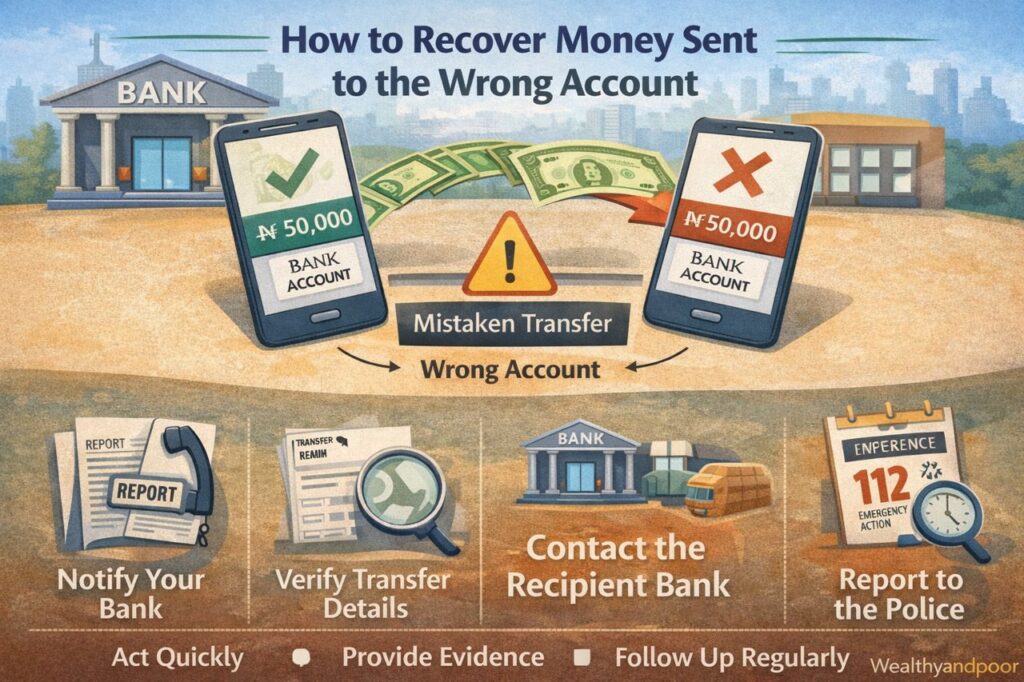

In today’s fast moving digital banking environment, a single wrong digit can send your hard earned money into a stranger’s account within seconds. With the widespread use of mobile banking apps, USSD transfers, and fintech platforms in Nigeria, such mistakes are becoming more common and more stressful.
The good news is that recovery is possible. However, it is rarely automatic. It requires urgency, persistence, and often, a clear understanding of banking and legal procedures.
This article provides a structured, real world guide on how to recover money sent to the wrong account, especially within the Nigerian financial system.
Understanding the Problem
Erroneous transfers typically occur due to human error mistyping account numbers, selecting the wrong saved beneficiary, or rushing through transactions. Once the transaction is completed and the funds land in a valid account, banks cannot simply reverse it without due process.
This is because the receiving account belongs to another individual, and banking regulations protect customer privacy and ownership rights.
Immediate Actions: What to Do First
- Act Immediately
Time is critical. The earlier you act, the higher your chances of recovery. If the funds are still in the recipient’s account, reversal is significantly easier.
- Contact Your Bank
Notify your bank instantly via:
- Customer care
- Mobile app complaint feature
- Email or physical branch visit
Provide key details such as:
- Transaction ID
- Date and time
- Amount sent
- Recipient account details
Banks can initiate contact with the receiving bank and attempt to notify the recipient.
- Try Reaching the Recipient
In some cases, especially with fintech platforms, the recipient’s phone number may be visible. A direct appeal can sometimes resolve the issue quickly if the recipient is honest.
The Role of Banks in Recovery
Banks act as intermediaries they cannot debit a customer’s account without authorization or legal backing.
If the recipient agrees, the bank can process a reversal quickly. However, if the recipient refuses or ignores requests, the bank’s role becomes limited.
This is where escalation becomes necessary.
Escalation Options
- File a Complaint with Regulatory Authorities
You can escalate the issue to the Central Bank of Nigeria (CBN) through its consumer protection channels.
The CBN can:
- Mediate disputes
- Sanction non-compliant banks
- Push for resolution without court action
Some cases are resolved at this stage without legal proceedings.
- Legal Action: The Court Process
If the recipient refuses to return the funds, the most effective route is obtaining a court order.
Step by Step Legal Process
- File a Case in Court
Magistrate Court (for smaller amounts)
High Court (for larger sums)
- Include Necessary Parties
The recipient (beneficiary)
The receiving bank
- Request a Reversal Order
Ask the court to instruct the bank to debit the recipient’s account and credit yours.
- Submit Court Order to the Bank
Once approved, the bank verifies the order and processes the reversal.
- Freezing the Recipient’s Funds
Courts can also direct banks to:
- Place a Post No Debit (PND) restriction on the account
- Track funds across accounts linked to the recipient’s BVN
This prevents the recipient from withdrawing or hiding the money.
What If the Money Has Been Withdrawn?
Recovery becomes more complex but not impossible.
Courts can authorize:
- Recovery from other accounts linked to the recipient
- Future deductions from incoming funds
In essence, the recipient becomes indebted until the full amount is repaid.
Legal Perspective: Why You Can Recover Your Money
Under legal principles such as unjust enrichment, a person who receives money in error is not entitled to keep it.
If they knowingly spend the funds after being notified, they may face:
- Civil liability
- Criminal charges such as fraud or theft
Common Challenges
Despite clear procedures, recovery is not always straightforward. Key challenges include:
- Uncooperative recipients
- Delays in court processes
- Partial withdrawal of funds
- Bank verification timelines
Typically, recovery may take 1–4 weeks or longer, depending on the case.
Preventive Measures
While recovery is possible, prevention is far better.
To avoid future mistakes:
- Always double-check account numbers
- Use saved beneficiaries carefully
- Confirm recipient names before sending
- Start with a small test transfer for large payments
Conclusion
Recovering money sent to the wrong account is possible, but it is rarely instant. It requires swift action, proper documentation, and sometimes legal intervention.
The Nigerian financial system provides clear pathways from bank complaints to court orders but success often depends on how quickly you respond and how cooperative the recipient is.
Ultimately, while the law is on your side, the burden of recovery lies with the sender. In an era of instant payments, a moment of caution can save weeks or even months of stress.












Comments