
How to Read Your Bank Statement Properly in Nigeria

Understanding your bank statement properly is one of the simplest but most powerful financial habits you can develop in Nigeria. Yet, many people either ignore it or only glance at their account balance without paying attention to the details. A bank statement is more than just a summary of your money; it is a full financial report that shows how money flows in and out of your account over a specific period, usually monthly.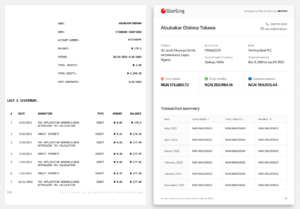
When you receive your bank statement whether from your mobile app, email, or printed copy the first thing to pay attention to is the basic account information. This section confirms that the statement actually belongs to you. It contains your name, account number (often partially hidden for security), bank name, and the statement period. Many Nigerians overlook this part, but it is important because errors here can indicate deeper issues like account mix-ups or fraud.
Next comes the summary section, which gives you a quick overview of your financial position within that period. This includes your opening balance, total deposits (money coming in), total withdrawals (money going out), and your closing balance. Think of this as a snapshot of your financial activity. If your closing balance looks lower than expected, this section helps you immediately see whether it’s due to excessive spending, bank charges, or fewer inflows.
The most important part of your bank statement is the transaction details section. This is where many people get confused, but it is also where the real story of your money lies. Each transaction includes the date, description, and amount. Credits represent money entering your account such as salary, transfers, or business income while debits show money leaving your account, like withdrawals, transfers, POS payments, or online purchases.
In Nigeria, transaction descriptions can sometimes appear coded or unclear, especially with abbreviations from banks or payment platforms. For example, POS payments, ATM withdrawals, USSD transfers, and bank charges may appear in shortened formats. Instead of ignoring these entries, it is important to review each one carefully. If you don’t recognize a transaction, don’t assume it is correct verify it immediately. Many fraud cases start with small, unnoticed deductions.
Another key area to focus on is bank charges and fees. Nigerian banks often apply charges such as SMS alerts, ATM withdrawal fees (especially from other banks), transfer charges, and maintenance fees. These may seem small individually, but over time they can significantly reduce your balance. By reviewing your statement regularly, you can identify unnecessary charges and take action, such as reducing transactions or switching to more cost-effective banking options.
Reading your bank statement properly also means checking for consistency and accuracy. You should compare your statement with your own records especially if you run a business or side hustle. This process, known as reconciliation, helps you confirm that every transaction is legitimate and correctly recorded. Any duplicate charges, missing deposits, or unusual withdrawals should be reported to your bank immediately.
Beyond error detection, your bank statement is a powerful tool for financial planning. By going through your transactions, you can identify spending patterns how much you spend on food, transport, subscriptions, or impulse purchases. This awareness allows you to cut unnecessary expenses and improve your savings. Many Nigerians struggle with money not because they don’t earn enough, but because they don’t track where their money goes.
It is also important to understand the difference between your transaction history and your official bank statement. While your banking app may show real-time transactions, your bank statement is the official record used for important purposes like loan applications, visa processing, or financial audits. This is why accuracy and proper understanding matter.
To read your bank statement properly, you need to go beyond just checking your balance. Pay attention to every section, understand each transaction, question anything unfamiliar, and use the information to make better financial decisions. Once you build this habit, your bank statement stops being a boring document and becomes a powerful tool for controlling your money and securing your financial future.











Comments