
Naira Depreciation: What It Means for You
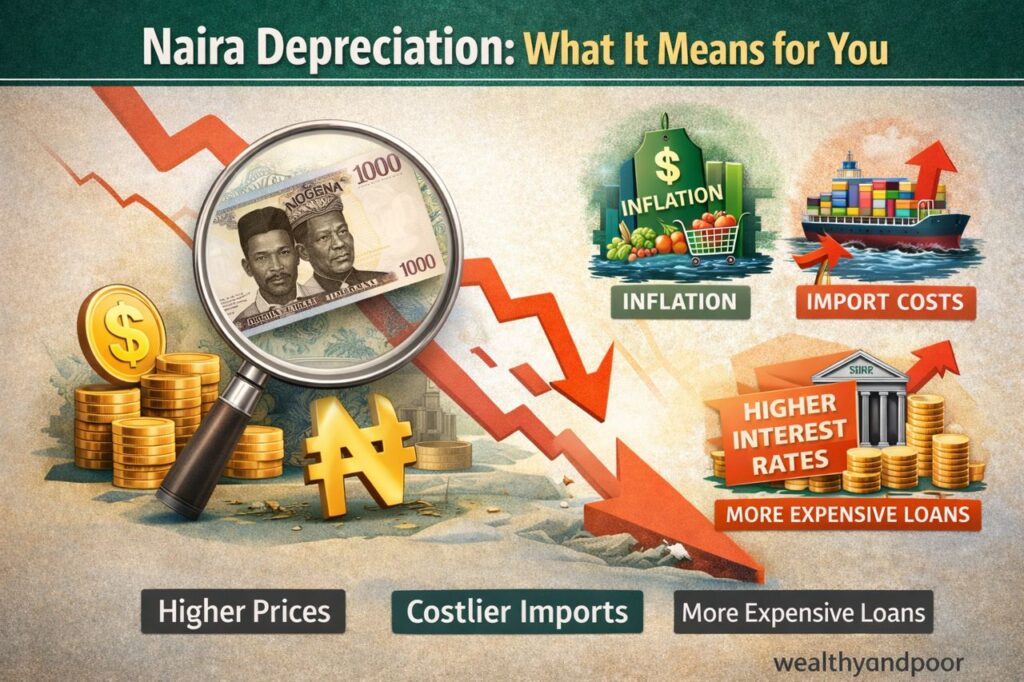

The falling value of the Nigerian naira is no longer an abstract economic headline it is something Nigerians feel daily. From rising food prices to higher transport fares and increasing school fees, the effects of currency depreciation are deeply personal. Whether you are a salary earner, business owner, student, or investor, the weakening naira quietly reshapes your financial reality.
This article breaks down what naira depreciation really means and, more importantly, how it affects your everyday life.
Understanding Naira Depreciation
At its core, currency depreciation means that the naira loses value relative to other currencies, especially the US dollar. In simple terms, it takes more naira to buy the same amount of dollars than it did before.
This matters because Nigeria operates a largely import dependent economy. From fuel and pharmaceuticals to machinery and even some food items, a significant portion of what Nigerians consume is either imported or produced using imported inputs. When the naira weakens, the cost of these goods automatically rises.
Why the Naira Keeps Falling
Several structural factors drive the depreciation of the naira:
- Heavy Dependence on Imports
Nigeria imports a wide range of goods and production inputs. When demand for foreign currency rises to pay for these imports, pressure mounts on the naira.
- Limited Dollar Supply
Nigeria earns most of its foreign exchange from crude oil exports. When oil prices fall or production drops, dollar inflows decline, weakening the naira.
- Inflation and Economic Policy
High inflation and inconsistent foreign exchange policies can erode confidence in the naira, pushing investors and businesses to seek more stable currencies.
- Market Psychology
Expectations matter. When businesses and individuals believe the naira will continue to fall, they adjust prices and behavior in ways that accelerate depreciation.
What It Means for Your Daily Life
- Rising Cost of Living
The most immediate effect of naira depreciation is inflation. When the currency weakens, imported goods become more expensive and that cost is passed on to consumers.
You see it in everyday situations:
- Food prices increase, even for “locally produced” items
- Transport fares rise due to higher fuel and spare parts costs
- Rent and school fees adjust upward
As one analysis puts it, “you do not have to buy dollars to feel the dollar” exchange rate changes are embedded in nearly everything you pay for.
Reduced Purchasing Power
Your income may remain the same in naira terms, but its real value declines. In practical terms, your salary buys less than it did a few months ago.
This is particularly harsh for fixed income earners who do not have the flexibility to adjust their earnings in line with inflation.
Pressure on Businesses
For businesses, especially small and medium enterprises, naira depreciation creates multiple challenges:
- Higher cost of raw materials
- Increased operating expenses
- Difficulty planning due to exchange rate volatility
Many businesses respond by increasing prices or cutting costs sometimes through layoffs or reduced services.
Impact on Savings and Investments
If your savings are held in naira, depreciation erodes their value over time. This is why many Nigerians increasingly look for alternatives such as:
- Dollar-denominated investments
Foreign assets - Inflation-hedged instruments
On the flip side, exporters and those earning in foreign currency may benefit, as they receive more naira for each dollar earned.
Debt Becomes More Expensive
If you have loans tied to foreign currencies, naira depreciation increases your repayment burden. Even local borrowing can become more expensive as interest rates rise to combat inflation.
The Bigger Economic Picture
Naira depreciation does not only affect individuals it reshapes the entire economy.
- Inflation rises: Higher import costs push up general price levels.
Economic uncertainty increases: Businesses delay investments due to unpredictability. - Income inequality widens: Those with access to foreign currency are better protected than those without.
In some cases, even large corporations feel the impact.
Currency devaluation can lead to massive losses for companies operating in Nigeria due to increased costs and exchange rate adjustments.
Are There Any Benefits?
While largely painful, naira depreciation is not entirely negative.
- Boost for exports: Nigerian goods become cheaper in international markets.
- Encouragement of local production: High import costs can push businesses to source locally.
- Foreign investment opportunities: A weaker currency can attract investors looking for lower entry costs.
However, these benefits often take time to materialize and depend on strong supporting policies.
What You Can Do
While individuals cannot control exchange rates, they can adapt:
- Diversify income sources: Explore opportunities that earn in foreign currency.
- Invest wisely: Consider assets that hedge against inflation.
- Reduce unnecessary imports: Support local alternatives where possible.
- Budget more carefully: Expect price volatility and plan ahead.
Conclusion
Naira depreciation is more than a macroeconomic issue it is a daily financial reality for millions of Nigerians. It shapes what you can afford, how businesses operate, and how the economy evolves.
Understanding how it works gives you an edge. It allows you to anticipate changes, make better financial decisions, and protect your purchasing power in uncertain times.
In an economy where exchange rates increasingly dictate living standards, awareness is no longer optional it is essential.










Comments