
What Happens When Too Many People Transfer at Once
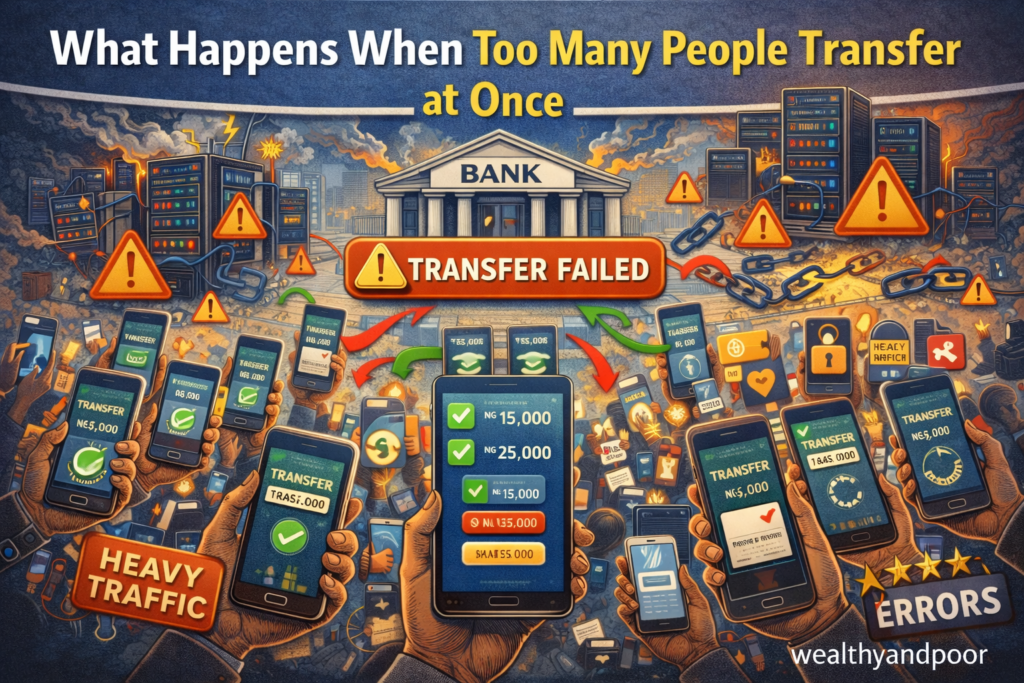

In today’s digital economy, bank transfers are expected to be instant. With a tap on a mobile app or a quick USSD code, money is supposed to move seamlessly from one account to another. But behind that simplicity lies a complex financial infrastructure one that can strain, slow down, or even break when too many people try to transfer money at the same time.
Across Nigeria, this scenario is increasingly common. Whether it’s salary week, festive periods, or late night transaction spikes, millions of users often flood banking systems simultaneously. The result is a familiar experience: delayed transfers, failed transactions, or the dreaded “debited but not credited” message.
This article explains what really happens when too many people initiate transfers at once and why the system doesn’t always keep up.
The Hidden Journey of a Bank Transfer
A bank transfer is not a direct movement of cash from one account to another. Instead, it is a coordinated process involving multiple systems:
- Your bank’s internal servers
- Interbank switching platforms (like NIBSS in Nigeria)
- The receiving bank’s systems
- Telecom and internet infrastructure
Each transfer request passes through these layers before completion. Even though the process feels instant, it is actually a series of checks, verifications, and confirmations happening within seconds.
However, when transaction volumes surge, this process becomes congested.
- System Congestion: When the Pipeline Gets Crowded
The most immediate effect of too many simultaneous transfers is network congestion.
Nigeria’s banking ecosystem relies on shared payment infrastructure. When millions of users initiate transfers at once especially during peak periods like month-end or holidays the system becomes overwhelmed.
This congestion leads to:
- Slower processing times
- Transactions getting stuck in queues
- Increased likelihood of failed transfers
Think of it like traffic on a busy highway. When too many cars enter at once, movement slows down or stops entirely.
- Delays and “Pending” Transactions
When systems are overloaded, transfers often don’t fail immediately they stall.
A transaction may show as:
- “Pending”
- “Processing”
- “In progress”
This means the transfer has been initiated but not fully completed between the sending bank, receiving bank, and payment system.
In many cases, your account may already be debited while the receiving bank has not yet confirmed the credit. This creates anxiety for users, especially in urgent payment situations.
- Failed Transfers and Error Messages
If the system cannot handle the load, it may reject transactions entirely.
High transaction volume is one of the leading causes of transfer failure in Nigeria.
Common outcomes include:
- Instant failure notifications
- Timeout errors during processing
- Reversed transactions after several hours or days
Even with strong internet on your device, server side overload can still cause failure because the bottleneck is not your connection, but the bank’s infrastructure.
- “Debit Without Credit” Situations
One of the most frustrating consequences of high transfer traffic is the mismatch between debit and credit.
Here’s what happens:
- Your bank successfully debits your account
- The transaction request is sent to the payment system
- The receiving bank fails to confirm due to congestion or downtime
- The result: your money appears to be “missing.”
This situation, commonly reported during peak periods, occurs because settlement between banks has not been completed.
In most cases, the money is not lost it is simply in transit and will either be completed or reversed.
- System Downtime and Temporary Outages
When transaction volumes exceed system capacity, parts of the banking infrastructure may go offline.
This can affect:
- Mobile banking apps
- USSD services
- ATM and POS transactions
- Interbank transfer systems
During such outages, users may be unable to send money at all.
Sometimes, banks intentionally limit services during peak stress to prevent total system collapse.
- Slower Settlement Between Banks
Even when transfers appear instant, actual settlement between banks can take longer.
In many systems, transactions are grouped and processed in batches rather than individually.
When volumes are high:
- Batch queues grow longer
- Reconciliation takes more time
- Final confirmation is delayed
This explains why some transfers take minutes or even hours despite being labeled “instant.”
- Increased Risk Controls and Security Checks
High transaction activity can also trigger automated security systems.
Banks monitor for:
- Unusual transaction spikes
- Fraud patterns
- Suspicious account behavior
When too many transactions occur simultaneously, some may be flagged for additional checks, leading to further delays.
Why This Problem Is Getting Worse
Nigeria’s rapid shift toward digital payments has significantly increased transaction volumes.
Factors driving this include:
- Growth of mobile banking apps
- Increased use of USSD services
- Expansion of fintech platforms
- Cashless policy adoption
While infrastructure has improved, demand is growing even faster putting continuous pressure on the system.
What It Means for Users and Businesses
When too many people transfer money at once, the consequences extend beyond inconvenience:
- Businesses may lose sales due to failed payments
- Individuals may miss deadlines (rent, school fees, bills)
- Trust in digital banking may decline
For small businesses especially, a delayed transfer can disrupt daily operations.
Conclusion: A System Under Pressure
When too many people transfer money at once, the banking system doesn’t “break” instantly it slows, queues, delays, and sometimes fails. What users experience as a simple error message is often the result of deep infrastructure strain across multiple interconnected systems.
The good news is that most of these issues are temporary. Transactions usually go through eventually or are reversed. However, as digital banking continues to grow, the pressure on financial infrastructure will only increase.
For now, the reality remains: in peak moments, even “instant” transfers are only as fast as the system can handle.












Comments