
Why Some Bank Accounts Stop Receiving Money
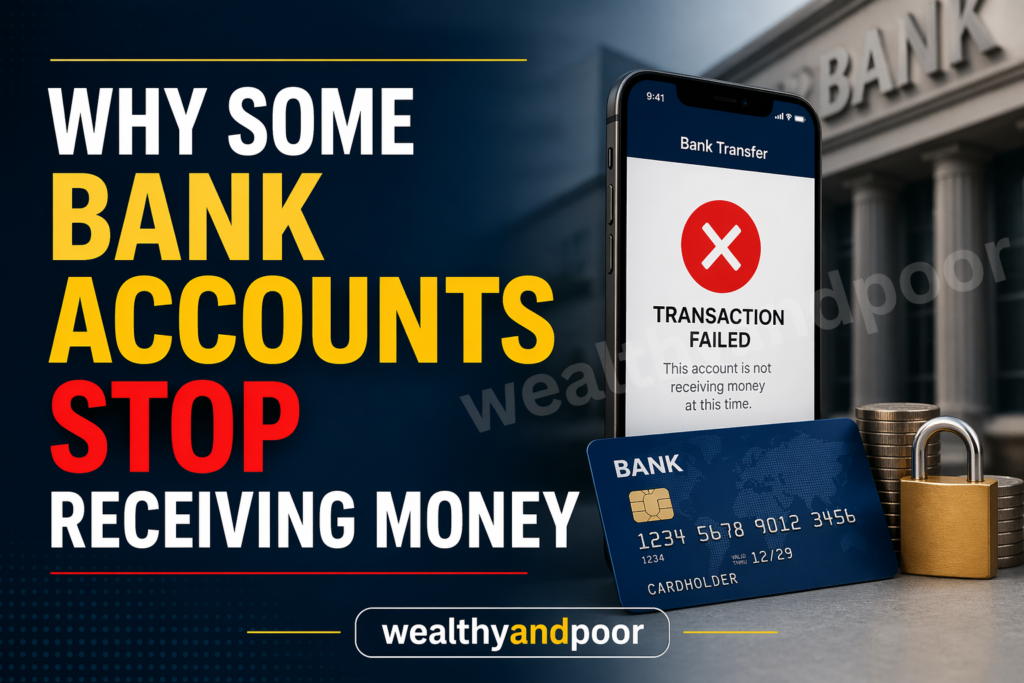

In Nigeria’s fast-evolving banking system, it can be alarming when your account suddenly stops receiving transfers. One day everything works fine, the next alerts stop coming in, and senders complain of failed transactions. This situation is more common than many people think, and it’s usually not random.
Based on verified reports, regulatory guidelines, and banking practices in Nigeria, here are the real reasons some bank accounts stop receiving money and what you should do about it.
1. Account Has Been Restricted or Frozen
One of the most common reasons is a restriction placed on the account.
Banks in Nigeria may temporarily block inflows (and sometimes outflows) if they detect suspicious activity. This includes unusual transaction patterns, sudden large deposits, or links to flagged accounts.
In some cases, restrictions are tied to fraud reports. Following a 2025 Court of Appeal ruling, banks can restrict accounts immediately if fraud is suspected, especially under customer agreement terms and Central Bank of Nigeria (CBN) guidelines.
Also, regulatory bodies like the EFCC or court orders can legally freeze accounts during investigations.
2. Dormant or Inactive Account Status
If you haven’t used your account for a long time, it may become dormant.
In Nigeria, accounts with no transactions for extended periods are classified as inactive and eventually dormant.
Dormant accounts can have limited functionality including restrictions on receiving or processing transactions until reactivation.
Additionally, under CBN policy, funds in long-term dormant accounts may be transferred into an unclaimed balances pool after many years.
3. KYC (Know Your Customer) Issues
Incomplete or outdated account information can silently block your account from receiving funds.
Banks are required to comply with strict KYC regulations. If your account lacks:
- Valid ID
- BVN linkage
- Updated phone number or address
4. BVN or Compliance Restrictions
The Central Bank of Nigeria can place accounts or BVNs under watch for suspicious or fraudulent activities.
While loan apps cannot block your account, regulatory authorities like the CBN or law enforcement agencies can impose restrictions if your BVN is flagged.
5. Legal or Debt-Related Issues
If there is a court case, unpaid debt, or financial dispute, your account may be restricted.
For example: Court judgments against you Fraud investigations, Debt recovery actions.
Banks act on legal instructions and may block account activity until the issue is resolved.
6. System or Network Issues
Sometimes, the issue isn’t your account it’s the banking system.
Nigeria’s interbank transfer system occasionally experiences:
- Delays in settlement
- Failed NIP transfers
- Bank server downtime
In such cases, transfers may appear “pending” or fail entirely.
7. Account Closure or Tier Limitations
If your account has been closed (intentionally or by the bank), it will no longer receive funds.
Also, low-tier accounts (like Tier 1 accounts without full documentation) have transaction limits. Once exceeded, incoming transfers may be blocked.
How to Fix an Account That Isn’t Receiving Money
If you’re facing this issue, take these steps immediately:
- Contact your bank: Visit the branch or use official support channels
- Check your account status: Confirm if it’s active, restricted, or dormant
- Update your KYC details: Provide valid ID and verify your BVN
- Request reactivation: Especially for dormant accounts
- Resolve legal/compliance issues: If flagged or under investigation
Conclusion: When a bank account stops receiving money, it’s rarely a glitch it’s usually tied to security, regulation, or account status. Nigerian banks operate under strict compliance frameworks, and even minor irregularities can trigger restrictions.
Understanding these triggers helps you act quickly, avoid financial disruptions, and maintain full control of your account.











Comments