
Why Transfers Show Successful But Not Delivered
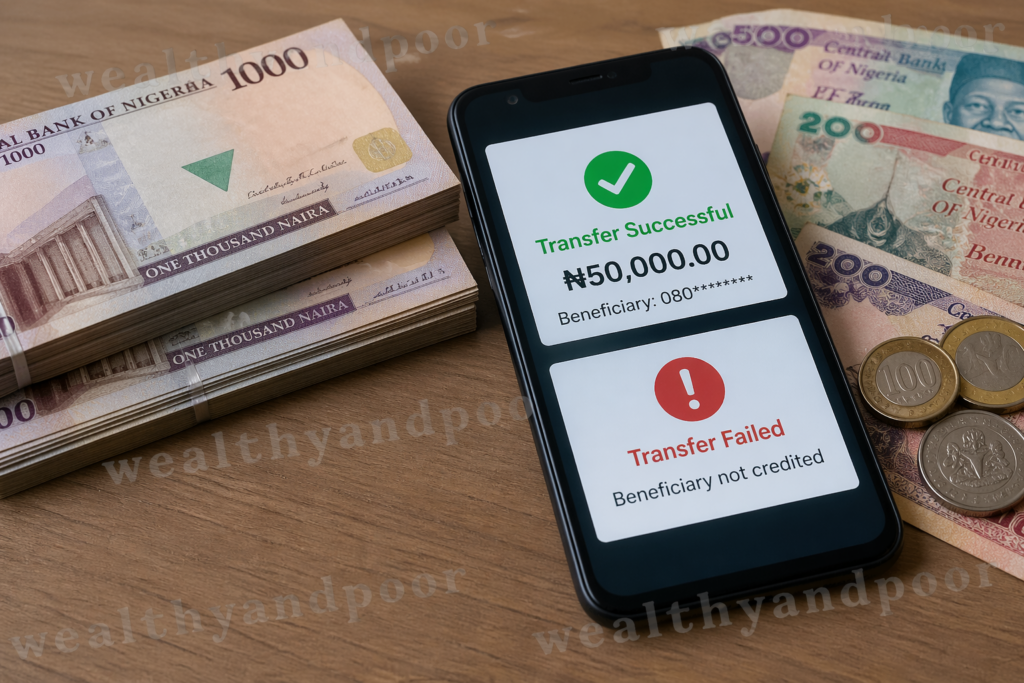

In today’s fast moving digital economy, bank transfers are expected to be instant, seamless, and reliable. Across Nigeria, millions of people depend on mobile apps, USSD codes, and internet banking to send money within seconds. So when a transfer shows “successful” but the recipient hasn’t received the funds, it creates confusion, panic, and sometimes mistrust in the banking system.
But here’s the reality: a “successful” message does not always mean the transaction has fully completed. Behind that simple notification lies a complex chain of systems, approvals, and interbank processes that must align perfectly before money actually lands in the recipient’s account.
This article explains why this issue happens, what it really means, and what you should do when you encounter it.
What “Successful” Really Means
When your banking app shows “successful,” it usually means your bank has processed your request and debited your account. However, that is only one part of the transaction.
A complete transfer involves:
- Your bank (sending bank)
- A switching system (like interbank networks)
- The receiving bank
If any part of this chain is delayed or disrupted, the money may not reflect immediately even though your app says “successful.”
Why Transfers Show Successful But Not Delivered
- Interbank Network Delays
Most Nigerian bank transfers pass through shared payment infrastructure. During peak periods such as salary days, weekends, or holidays these systems can become overloaded.
When this happens:
- Your bank may mark the transaction as successful
- But the receiving bank hasn’t yet processed it
This delay creates the illusion that the money has “disappeared,” when it is actually still in transit.
- Receiving Bank Processing Lag
Even after a transfer is approved, the receiving bank still needs to post the funds to the recipient’s account. Some banks process incoming transactions in batches or with slight delays.
If the transfer arrives after a cut-off time, it may not reflect until later or even the next business day.
- System Glitches and Downtime
Banking systems are not immune to technical issues. Maintenance, upgrades, or unexpected outages can interrupt the final stage of a transaction.
In such cases:
- Your account gets debited
- The receiving bank never confirms the transaction immediately
This mismatch is one of the most common reasons people see “successful” without delivery.
- High Transaction Volume
Nigeria’s shift toward cashless payments has significantly increased transaction traffic. With more people using mobile banking and fintech platforms, systems are often under heavy load.
When transaction volumes spike:
- Processing slows down
- Some transfers are delayed or temporarily “stuck”
This is especially common at night or during peak usage periods.
- Incorrect or Mismatched Details
Even a small error in account number or bank selection can disrupt a transfer. In some cases, the system initially accepts the transaction but later fails to match it to a valid account.
When this happens:
- The transfer may appear successful
But the funds will not be delivered and will eventually be reversed
- Compliance and Security Checks
Banks now use strict fraud detection systems. Sometimes, a transaction is approved initially but later flagged for verification.
This can cause:
- Temporary delays
- Reversal after review
- Holding of funds within the system
These checks are essential for security but can slow down transfers.
- Settlement Delays Between Banks
Transfers don’t just move digitally they also require settlement between banks. If settlement windows are closed or liquidity is tight, the transaction may not complete immediately.
This is why late night transfers sometimes take longer to reflect.
What Happens to the Money?
In most cases, the money is not lost. It is either:
- Still processing within the system
- Held temporarily by the receiving bank
- Scheduled for automatic reversal
According to industry patterns, unresolved transfers are often reversed within hours or up to 24–48 hours if the transaction fails completely.
What You Should Do Immediately
If you experience this issue, take the following steps:
- Check Transaction Details
Look at your transaction history not just the pop up message. Confirm the status and note the session ID.
- Wait Briefly
Many delays resolve within a few minutes to a few hours. Avoid resending immediately to prevent double debit.
- Contact the Receiving Bank
If your bank shows “successful,” the issue may be on the recipient’s side. The receiver should contact their bank with the session ID.
- Contact Your Bank
If the money doesn’t reflect after 24 hours, report the issue to your bank and request tracking or reversal.
The Bigger Picture
The problem of “successful but not delivered” transfers highlights a deeper issue: the gap between user expectations and banking infrastructure.
Digital banking in Nigeria has grown rapidly, but infrastructure has not always kept pace. Increased usage, fintech expansion, and tighter fraud controls have made the system more complex and sometimes less predictable.
Conclusion
A transfer marked “successful” is not always the end of the journey it is often just the beginning of a multi step process happening behind the scenes.
Understanding this can help reduce panic and guide your next steps when things go wrong. In most cases, patience, proper documentation, and timely escalation are all you need to resolve the issue.












Comments