
Can Bank Transfers Be Reversed in Nigeria?
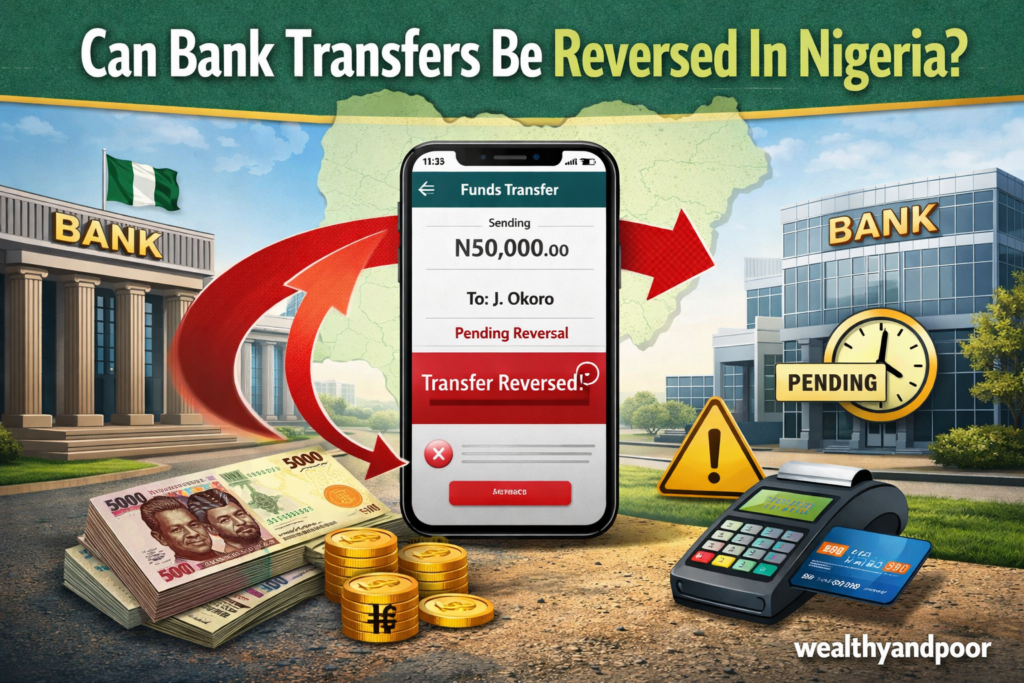

In today’s fast-paced digital banking environment, millions of Nigerians rely on instant transfers to move money between accounts. Whether through mobile apps, USSD, or internet banking, transactions are completed in seconds. But this speed comes with a critical question many people ask after making a mistake: can a bank transfer be reversed in Nigeria?
The answer is nuanced. While reversals are possible in some situations, they are not guaranteed, and the outcome often depends on timing, circumstances, and legal considerations.
Understanding How Bank Transfers Work in Nigeria
Most transfers in Nigeria are processed through systems like the Nigeria Inter-Bank Settlement System (NIBSS), which enables near-instant payments. Once a transfer is authorized using a PIN, OTP, or password, it is treated as final and binding.
According to insights from Wealthy and Poor, once a transaction is completed, banks cannot simply “undo” it like deleting a message.
This finality is intentional it ensures trust and efficiency in the financial system. However, it also means that errors can be difficult to fix.
When Can a Bank Transfer Be Reversed?
- Failed or Incomplete Transactions
If your account is debited but the recipient does not receive the money, this is classified as a failed transaction, not a completed one.
In such cases, the Central Bank of Nigeria (CBN) has clear rules:
- Failed ATM transactions must be reversed instantly or within 24–48 hours depending on the situation
- Banks may face penalties if they fail to process reversals within the required timeframe
This is the easiest type of reversal, because the money never truly left the banking system.
- Wrong Transfers (Sent to the Wrong Account)
This is where things become more complicated.
If you mistakenly send money to the wrong account:
- The transfer is considered valid and completed
- The bank cannot reverse it without consent from the recipient or a legal directive
However, recovery is still possible under certain conditions.
What Banks Typically Do:
- You report the error immediately
- Your bank contacts the receiving bank
- A Post No Debit (PND) may be placed on the recipient’s account to prevent withdrawal while the issue is investigated
If the recipient agrees, the money can be returned quickly.
- When Legal Action Becomes Necessary
If the recipient refuses to return the money, the situation may escalate legally.
In Nigeria:
- You may need to obtain a court order to compel reversal
- This involves submitting evidence such as transaction receipts and bank statements
Courts can authorize banks to debit the recipient’s account and return the funds, but this process can take time and legal expenses.
Why Banks Cannot Reverse Transfers Freely
Many people assume banks should be able to reverse any transaction on request. In reality, there are important reasons why they cannot:
- Ownership Rights
Once money enters another person’s account, it legally belongs to them unless proven otherwise. - Fraud Prevention
If reversals were easy, people could: - Pay for goods
- Receive the goods
- Then request a reversal
This would create widespread abuse of the banking system.
- Privacy and Legal Constraints
Banks cannot: - Share recipient details without authorization
- Debit an account without consent or court approval
Key Factors That Determine Success of Reversal
Whether a transfer can be reversed in Nigeria depends on:
- Speed of reporting: Immediate action improves chances
- Status of funds: If untouched, recovery is easier
- Recipient cooperation: Voluntary return is the fastest route
- Bank intervention: Early escalation he
- Legal backing : Court orders may be required in disputes
What You Should Do Immediately After a Wrong Transfer
If you send money to the wrong account, take these steps right away:
- Contact your bank immediately
- Provide transaction details (amount, time, recipient account, reference ID)
- Request urgent escalation
- Follow up regularly
- Be prepared for legal action if necessary
Speed is critical. Once the recipient withdraws or transfers the funds, recovery becomes significantly harder.
Conclusion
Bank transfers in Nigeria can be reversed but only under specific conditions.
Yes, reversals are possible for failed or incomplete transactions
Sometimes, wrong transfers can be recovered with quick action and cooperation
No, banks cannot automatically reverse completed transfers without consent or legal authority
In essence, Nigerian banking prioritizes transaction finality and system integrity, which protects the broader financial ecosystem but places responsibility on users to double-check details before sending money.












Comments