
Digital Wallets Explained: Everything Nigerians Need to Know
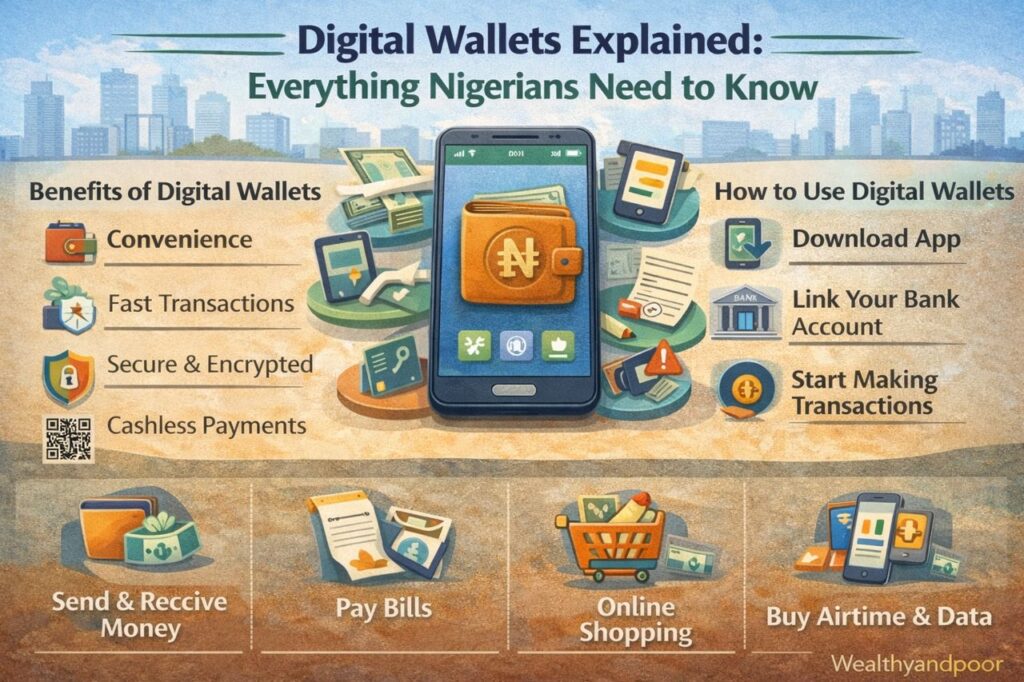

Nigeria’s financial ecosystem is undergoing a quiet but powerful transformation. What once depended heavily on cash transactions is now evolving into a fast paced, digital first economy powered by mobile technology and fintech innovation. At the center of this shift is the rise of digital wallets tools that are rapidly becoming essential for everyday financial life.
From paying utility bills to sending money across states in seconds, digital wallets are redefining how Nigerians interact with money. But despite their growing popularity, many still do not fully understand how they work, their benefits, and the risks involved. This article breaks it all down.
What Is a Digital Wallet?
A digital wallet also known as an e- wallet is a mobile application or online platform that allows users to store money electronically and perform financial transactions without using physical cash.
Think of it as a virtual version of your physical wallet. Instead of carrying cash or debit cards, everything is stored securely on your smartphone. You can send money, receive payments, pay bills, and shop online all from a single app.
In Nigeria, popular digital wallet platforms include Paga, OPay, PalmPay, and Chipper Cash, each offering slightly different features but serving the same core purpose: simplifying financial transactions.
How Digital Wallets Work
Digital wallets function by linking your account to a funding source this could be a bank account, debit card, or even cash deposits through agents. Once funded, you can carry out various transactions instantly.
Here’s a simplified process:
- Account Setup – Register with your phone number and complete identity verification (KYC).
- Funding the Wallet – Add money via bank transfer, card, or agent deposit.
- Transactions – Send money, pay bills, buy airtime, or shop online.
- Security Authentication – Transactions are protected using PINs, passwords, or biometrics.
These platforms use encryption and authentication systems to protect users, offering what many providers describe as “bank level security.”
Why Digital Wallets Are Growing in Nigeria
Several factors are driving the widespread adoption of digital wallets across the country.
- Cashless Policy and Economic Shifts
The push toward a cashless economy by the Central Bank of Nigeria has played a major role. This policy aims to reduce the volume of physical cash in circulation and improve transaction efficiency.
- Smartphone Penetration
With mobile phone usage exceeding 90% in Nigeria, digital wallets have become accessible to a large portion of the population.
- Financial Inclusion
Digital wallets are bridging the gap for millions of unbanked and underbanked Nigerians, allowing them to access financial services without a traditional bank account.
- Speed and Convenience
Transactions that once took hours or even days can now be completed in seconds, making digital wallets highly attractive for both individuals and businesses.
Key Features of Digital Wallets
Most digital wallets in Nigeria offer a range of features designed to simplify financial management:
- Money Transfers – Send and receive funds instantly
- Bill Payments – Pay electricity, internet, and TV subscriptions
- Airtime and Data Purchase – Recharge directly from your wallet
- Online Shopping – Store card details securely for quick checkout
- Virtual Cards – Enable international online payments
- Transaction History – Track spending and manage finances
These features make digital wallets more than just payment tools they are becoming full financial management platforms.
Benefits of Using Digital Wallets
- Convenience
No need to carry cash or visit a bank. Everything is accessible from your phone.
- Speed
Transactions are processed instantly, reducing delays in payments.
- Security
Sensitive card details are not exposed during transactions, lowering the risk of fraud.
- Accessibility
Even people without bank accounts can participate in the digital economy.
- Cost Efficiency
Digital transactions are often cheaper than traditional banking methods, especially for transfers and bill payments.
Risks and Challenges
Despite their advantages, digital wallets are not without risks.
- Cybersecurity Threats
As usage grows, so does the risk of fraud, hacking, and phishing attacks.
- Trust Issues
Many Nigerians remain skeptical about storing money digitally, especially due to past experiences with scams.
- Internet Dependence
Most digital wallets require internet access, which can be unreliable in some areas.
- Regulatory Concerns
The fintech space is still evolving, and regulatory frameworks continue to adapt to new technologies.
Safety Tips for Users
To use digital wallets safely, Nigerians should adopt basic security practices:
- Use strong, unique passwords
- Enable two-factor authentication
- Avoid public Wi-Fi for financial transactions
- Never share PINs or login details
- Regularly monitor transaction history
These simple steps can significantly reduce the risk of fraud.
The Future of Digital Wallets in Nigeria
The future of digital wallets in Nigeria looks promising. With increasing fintech innovation, regulatory support, and user adoption, digital wallets are expected to play an even bigger role in the economy.
Emerging trends include:
- Integration with savings and investment platforms
- Expansion into cross-border payments
- Use of artificial intelligence for fraud detection
- Growth of cryptocurrency-enabled wallets
Nigeria is already one of Africa’s leading fintech hubs, and digital wallets are at the heart of that momentum.
Conclusion
Digital wallets are no longer a luxury they are quickly becoming a necessity in Nigeria’s evolving financial landscape. They offer speed, convenience, and access to financial services for millions of people who were previously excluded from the formal banking system.
However, like any financial tool, they must be used with caution. Understanding how they work, their benefits, and their risks is essential for making informed decisions.
As Nigeria continues its journey toward a cashless economy, digital wallets will remain a central pillar reshaping how money is stored, moved, and managed in everyday life.











Comments