
Failed POS Transaction: What to Do
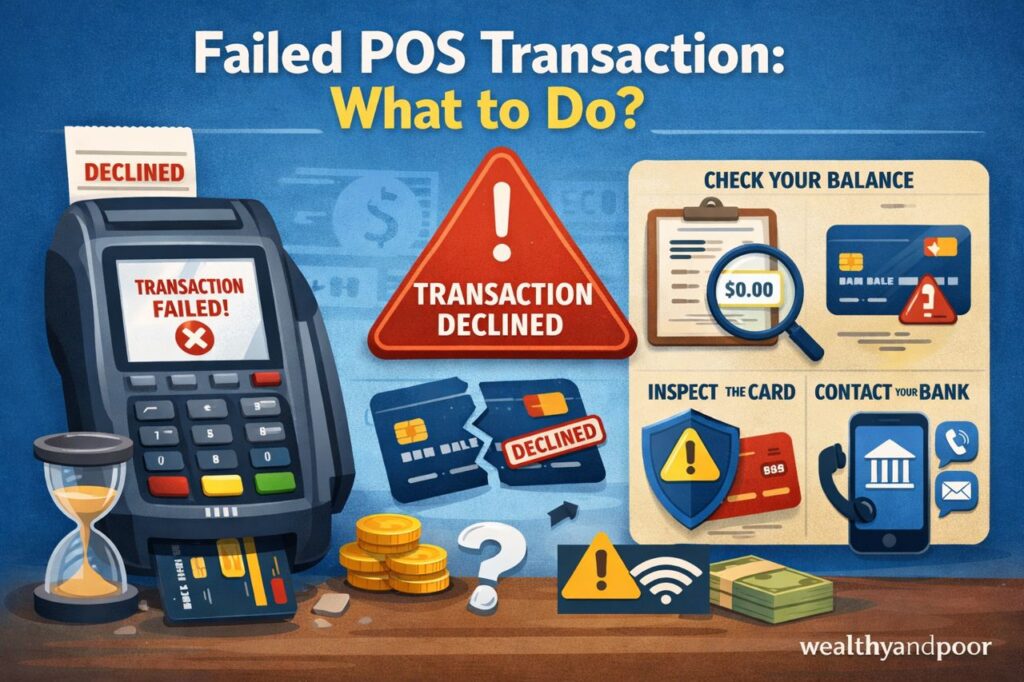

In Nigeria’s fast-growing cashless economy, Point of Sale (POS) machines have become a daily tool for payments and cash withdrawals. But with that convenience comes a common frustration: a transaction fails, yet your account is debited. It’s a situation that can cause panic, arguments between customers and agents, and temporary financial distress.
A failed POS transaction typically occurs when money leaves your account, but the merchant or agent does not receive confirmation of payment. This creates a “transaction in limbo” neither fully successful nor properly reversed.
Understanding what to do in this moment is critical. Acting too quickly or incorrectly can worsen the situation, while following the right steps can ensure your money is recovered smoothly.
What Happens During a Failed POS Transaction
A POS transaction involves multiple systems your bank, the merchant’s bank, payment processors, and network providers. If any of these systems experience delays or disruptions, the transaction may fail midway.
Common causes include:
- Poor network connectivity
- Bank server downtime
- Switching errors between payment processors
- Insufficient synchronization between systems
When this happens, your account may be debited, but the merchant receives no credit.
Immediate Steps to Take :
- Stay Calm and Do Not Retry Immediately
One of the biggest mistakes people make is attempting the transaction again immediately. Many failed transactions are actually “pending” and may still go through or reverse automatically.
Experts recommend waiting at least 5–15 minutes before taking further action.
- Collect and Secure Evidence
Before leaving the POS location, ensure you have proof of the transaction. This is your strongest tool for getting a refund.
Important details include:
- POS receipt (even if it says “failed”)
- Transaction amount and date
- Terminal ID and reference number (RRN)
- SMS or bank alert
Without these, tracing the transaction becomes more difficult.
- Confirm If You Were Actually Debited
Sometimes, a transaction may appear failed but was actually successful or vice versa.
Check:
- Your mobile banking app
- SMS alerts
- Account balance
Look for “pending” transactions, which may later resolve automatically.
- Wait for Automatic Reversal
In many cases, banks reverse failed POS transactions automatically.
Most reversals happen within 24 hours
Some may take up to 72 hours (3 business days) depending on the bank
This waiting period aligns with standard banking practices and regulatory expectations.
What to Do If the Money Is Not Reversed
If your money is not returned after 72 hours, it’s time to escalate the issue.
- Contact Your Bank
Reach out to your bank’s customer service through:
- Phone
- Mobile app
Physical branch. Provide the following:
- Transaction receipt or screenshot
- Date and time
- Amount debited
- Reference number (RRN)
- Request a complaint or dispute reference number for tracking.
Inform the POS Agent or Merchant
The POS operator can also assist by checking their system or contacting their payment provider (such as Moniepoint, OPay, or other aggregators).
They may confirm whether:
- The transaction reached their system
It was marked “failed,” “pending,” or “reversed”
This step helps avoid confusion between customer and merchant.
Follow Up and Track the Complaint
Do not assume the issue is resolved after reporting it.
- Monitor your account daily
- Keep copies of all communications
- Follow up regularly with your bank
Most banks notify customers once reversals are completed, but staying proactive helps speed up the process.
- Escalate If Necessary
If your bank fails to resolve the issue within a reasonable timeframe (typically up to two weeks), you can escalate the complaint to the regulatory authority.
Provide:
- Proof of transaction
- Evidence of prior complaint to your bank
- Full transaction details
- Regulatory intervention often compels faster resolution.
Key Mistakes to Avoid
When dealing with failed POS transactions, certain actions can make things worse:
- Retrying immediately: May lead to double debit
- Leaving without a receipt: Makes disputes harder
- Accepting verbal assurance only: Always demand proof
- Sharing sensitive details: Never disclose your PIN or full card details
These mistakes can delay your refund or expose you to fraud.
Advice for POS Agents and Merchants
Failed transactions are not just a customer problem they affect business credibility.
Best practices include:
- Never release cash or goods without confirmed payment
- Always print and provide receipts
- Maintain communication with your payment provider
- Reassure customers professionally and transparently
- Handling disputes calmly builds trust and protects your business reputation.
The Bigger Picture
Failed POS transactions highlight the growing pains of Nigeria’s digital payment ecosystem. While the system is improving, occasional failures are inevitable due to infrastructure challenges.
The good news is that most failed transactions are reversible, and financial institutions have systems in place to resolve them. The key lies in patience, proper documentation, and following the right process.
Conclusion
A failed POS transaction can feel alarming, especially when your money seems to disappear. But in most cases, it is a temporary issue not a permanent loss.
The smartest approach is simple:
Gather proof
Wait for automatic reversal
Escalate only when necessary
By staying informed and methodical, you can navigate these situations confidently and ensure your money is returned without unnecessary stress.












Comments